
You’re getting a quote for a panel repair and your repairer mentions OEM or aftermarket parts. You nod, but you’re not entirely sure what the difference is or whether it matters for your car.
It’s a fair question. The answer depends on your vehicle, the type of repair, and what you’re comfortable with. Here’s a straightforward breakdown to help you make a confident decision.
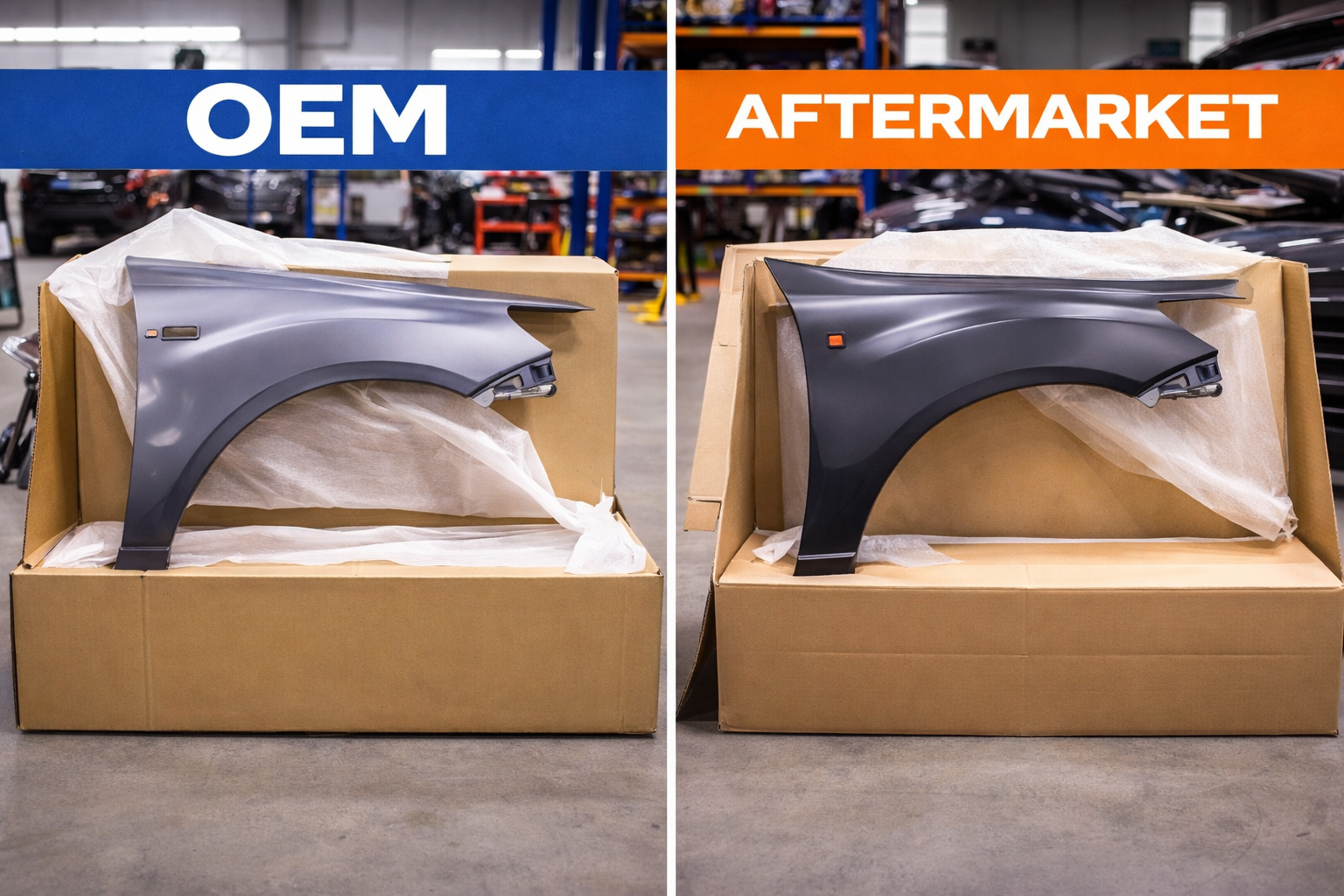
OEM is usually worth it when:
OEM is usually worth it when:
Quality aftermarket can be a good option when:
If you’re claiming through insurance, your insurer may specify aftermarket or non-genuine parts to keep the repair cost down. This is common across the industry, and it doesn’t always mean a worse result. But it’s worth understanding where you stand.
Your insurance policy’s product disclosure statement (PDS) sets out the rules on parts. Some policies specify genuine parts as standard. Others allow the insurer to choose, which usually means aftermarket or recycled components. A few give you the option to request OEM if you’re willing to cover the price difference.
It’s worth checking your PDS before you need it – not after the accident. Look for the section on repairs and parts. The wording will tell you what your insurer is committed to providing and what’s left to their discretion.
Whichever parts are used, Australian Consumer Law requires that repairs meet acceptable quality standards. That applies whether the parts are genuine or aftermarket. If something isn’t right after the work is done, you have rights.
Your panel beater can often help with this conversation. A good repairer will work with your insurer on your behalf and let you know if there’s a gap between what’s been approved and what they’d recommend for your specific repair. If you want to know more about how insurance claims work with panel repairs, we’ve written a separate guide on choosing your own panel beater for an insurance claim.

That depends on the car, the repair, and what you’re comfortable with. A two-year-old sedan under warranty and a twelve-year-old runabout with hail damage are different conversations entirely.
What matters most isknowing what’s going into your car before the work starts. A panel beater who explains the options and lets you weigh in – rather than making the call without telling you – is one worth sticking with.
If you need panel repair work in Richmond or inner Melbourne, talk to Automotive Panel Service. We’ll walk you through the parts options for your specific vehicle before we order anything.