
You’re washing the car and you spot it. A patch of bubbling paint along the bottom of a door, or a brown stain creeping out from under a wheel arch. The car still drives fine and you like it. So the question is simple: is this a quick fix, or the start of the end?
Here’s the honest answer. Most rust can be repaired. Whether it’s worth repairing is the real question. A rust repair can be as small as treating one spot, or as big as cutting out and replacing part of a panel. Surface rust caught early is usually a straightforward job. Rust that has eaten through the metal, or that sits in a part of the car that holds it together, is a much bigger call. Where the rust is, and how deep it goes, decides everything.
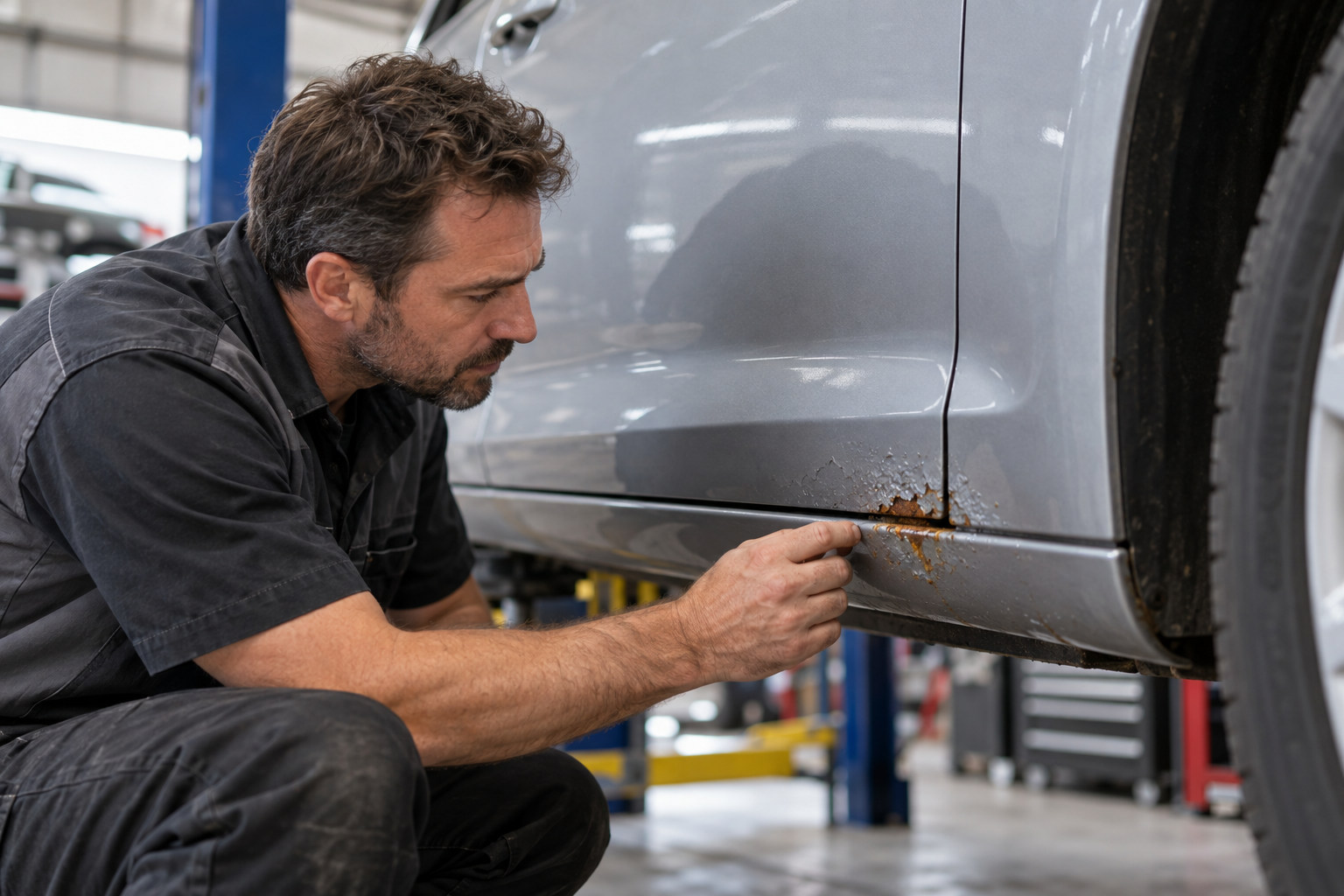
Almost all rust is repairable in the technical sense. A panel beater can cut out rusted metal and rebuild the area. The question owners really care about is whether that work is worth the money. That depends on how far the rust has gone.
Rust (also called corrosion) is what happens when bare metal meets air and moisture over time. It moves through three stages, and each one changes the answer.
Surface rust. This sits on the top layer only, usually where a stone chip or scratch has let moisture reach the metal. It shows up as bubbling paint or light brown patches. Caught here, it’s the cheapest and easiest to fix.
Scale rust. Left alone, surface rust digs in. The metal starts to flake and pit, and the surface no longer feels smooth. It’s still repairable, but more of the metal has to be treated or cut back.
Penetrating rust. This is the serious one, sometimes called structural rust. The rust has eaten right through the metal, leaving thin spots or holes. The metal can feel soft or crumble when pressed. In an outer panel, it can be patched. In a part that holds the car together, it’s a different conversation.
What shows on the surface is a clue to what’s happening underneath. This table maps the common signs to what they usually mean for a repair.
| What you see | What it usually means | What it means for repair |
|---|---|---|
| Bubbling or blistering paint | Surface rust starting underneath | Usually repairable, and cheapest if caught now |
| Brown or orange staining | Rust bleeding out from a chip, seam or edge | Repairable, once the source is found and treated |
| Flaking, rough or pitted metal | Scale rust, digging past the surface | Repairable, but more metal to cut back |
| Holes, or metal that flexes or crumbles | Penetrating rust through the metal | Needs a patch or a new panel, get it checked |
| Soft metal near a structural point | Structural rust in a load-bearing area | May affect safety and roadworthy status, inspect before driving far |
A table can only tell you so much. Rust often hides. What shows on the surface is usually smaller than what’s spreading behind it.
Once a panel beater can see how far the rust has spread, the choice is between saving the panel or replacing it.
Repairing the panel makes sense when the rust is contained. The bad metal is cut out, the sound metal around it is treated, a patch is welded or bonded in, and the area is primed and painted to match.
Replacing the panel is the honest call when the rust is widespread, when it runs along a structural seam, or when patching would cost more than a good replacement panel. Bolt-on parts like doors, bonnets and guards are often cheaper to swap than to rebuild. For a fuller look at how that decision works across all kinds of damage, see our panel repair versus panel replacement guide.
Rust doesn’t stop because you can’t see it. Cover it up and it keeps spreading underneath. Three common shortcuts fail for the same reason: they leave the rust in place.
Painting over it. Fresh paint on top of rust seals moisture in. The rust keeps eating the metal and comes back through the new paint, often within months.
Filling over it. Body filler can bridge a hole, but it doesn’t stop the rust behind it. The corrosion keeps growing until the filler cracks or drops out.
Rust converter on its own. Converters have a place as one step in a proper repair. Used alone on metal that’s already flaking or holed, they don’t rebuild strength. Weak metal is still weak.
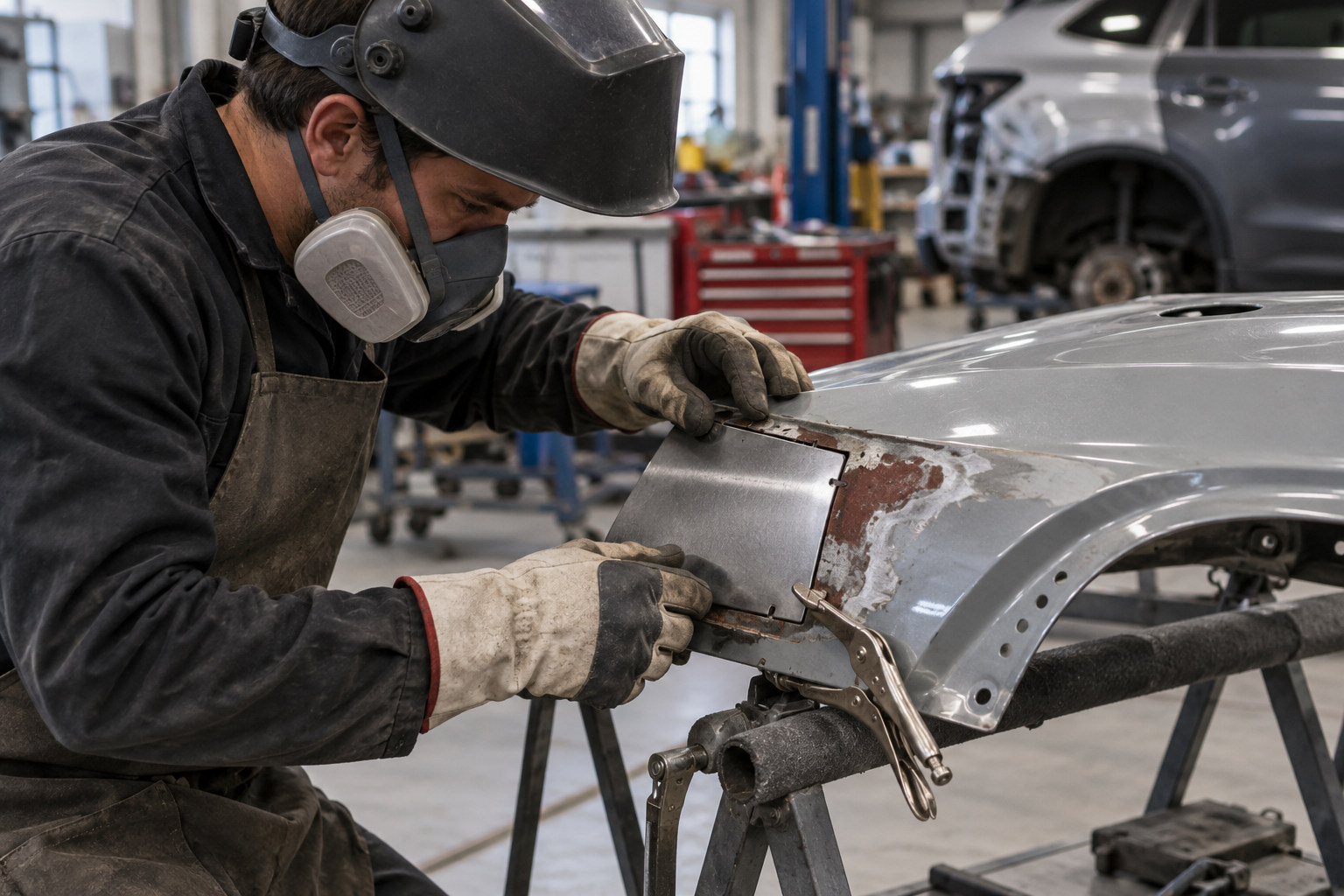
A proper rust repair removes the rust rather than hiding it. The steps are much the same whether it’s a small spot or a full patch.
Skip any step and the rust finds its way back.
There’s no flat rate. The car rust repair cost comes down to a few things.
Where the rust is. A flat, easy-to-reach panel is quicker to work on than a curved sill or an inner arch.
How deep it goes. A surface spot is a small job. Cut-and-weld work on holed metal takes far longer.
How much is affected. One spot is cheap. Rust in several places adds up fast.
Whether the panel can be saved. Sometimes a replacement panel is cheaper than hours of patching.
Paint matching. Blending the repair into faded or metallic paint adds work.
Small patches of surface rust are the cheapest to fix. A proper cut-out-and-patch repair on a panel costs more, and heavy structural rust costs the most, sometimes more than the car is worth. Every car is different, so the only reliable number is a written quote after we’ve seen it — book an inspection.
One thing rust usually isn’t is an insurance job. Comprehensive car insurance generally treats rust and corrosion as wear and tear, which most policies exclude. The exception is when a covered event, such as a flood or a crash, caused the damage directly. The Product Disclosure Statement (PDS) for your policy is the document that sets out what’s covered, so that’s the one to check before you assume either way.
Most rust is a cosmetic and value problem. Some of it isn’t. When rust reaches the parts of the car that carry load, it stops being about looks.
Areas like the chassis rails, the sills under the doors, suspension mounting points, and the metal around seatbelt anchor points all help the car hold together in a crash. Rust here can make the car unsafe. In Victoria, corrosion that weakens a structural area will fail a roadworthy inspection under Transport Victoria’s VSI 26 standard. Surface rust on an outer panel usually won’t. The difference is about strength, not looks.
When structural rust is widespread, the repair can cost more than the car is worth. That’s the point where a panel beater should tell you straight that it’s a write-off, rather than take your money.
Where a car lives makes a difference too. Cars that spend time near the bay, or get driven along the coast, cop more salt in the air, and salt speeds up rust. Older cars with worn paint and stone chips give that moisture a way in. If you park near the water in one of Melbourne’s bayside suburbs, it’s worth checking the usual spots once a year: door bottoms, wheel arches and sills.
If you’ve spotted bubbling paint or a brown stain and you can’t tell how far it’s gone, the safest move is to have someone look before it spreads. Rust only ever gets bigger, and more expensive to fix. Book it in at Automotive Panel Service in Richmond and we’ll tell you honestly whether it’s a small job, a bigger repair, or not worth doing. You’ll know where you stand before you spend a cent.
Can you fix rust on a car yourself?
A small patch of surface rust can be treated at home with care. Anything that’s flaking, holed, or near a structural part is a job for a panel beater. Painting or filling over rust without removing it first won’t hold.
Does rust come back after a repair?
Not if the rust was fully removed and the bare metal was sealed. Rust comes back when someone paints or fills over corrosion that was left in place.
How do I know if the rust is structural?
Location is the clue. Rust on outer panels is usually cosmetic. Rust on the chassis, sills, suspension mounts or near seatbelt anchor points is structural. Metal that feels soft or flexes is a warning sign. If in doubt, get it inspected.
Is a car with rust worth keeping?
It depends where the rust is and how deep it goes. Surface rust on panels is manageable and worth fixing early. Widespread structural rust can cost more to repair than the car is worth.
Will rust stop my car passing a roadworthy in Victoria?
Surface rust on outer panels usually won’t. Structural rust in load-bearing areas will fail under VSI 26, because it affects how the car protects you in a crash.