
There is a dent in your door, the paint over it still looks whole, and someone has told you it can come out without painting.
Paintless dent repair pushes the metal back into shape from behind the panel, using steel rods and shaped tips, so the paint the car left the factory with is never disturbed. It works while two things are true: the paint over the dent is unbroken, and the metal has been bent rather than stretched or sharply creased. When either of those fails, the panel has to be filled and painted instead.
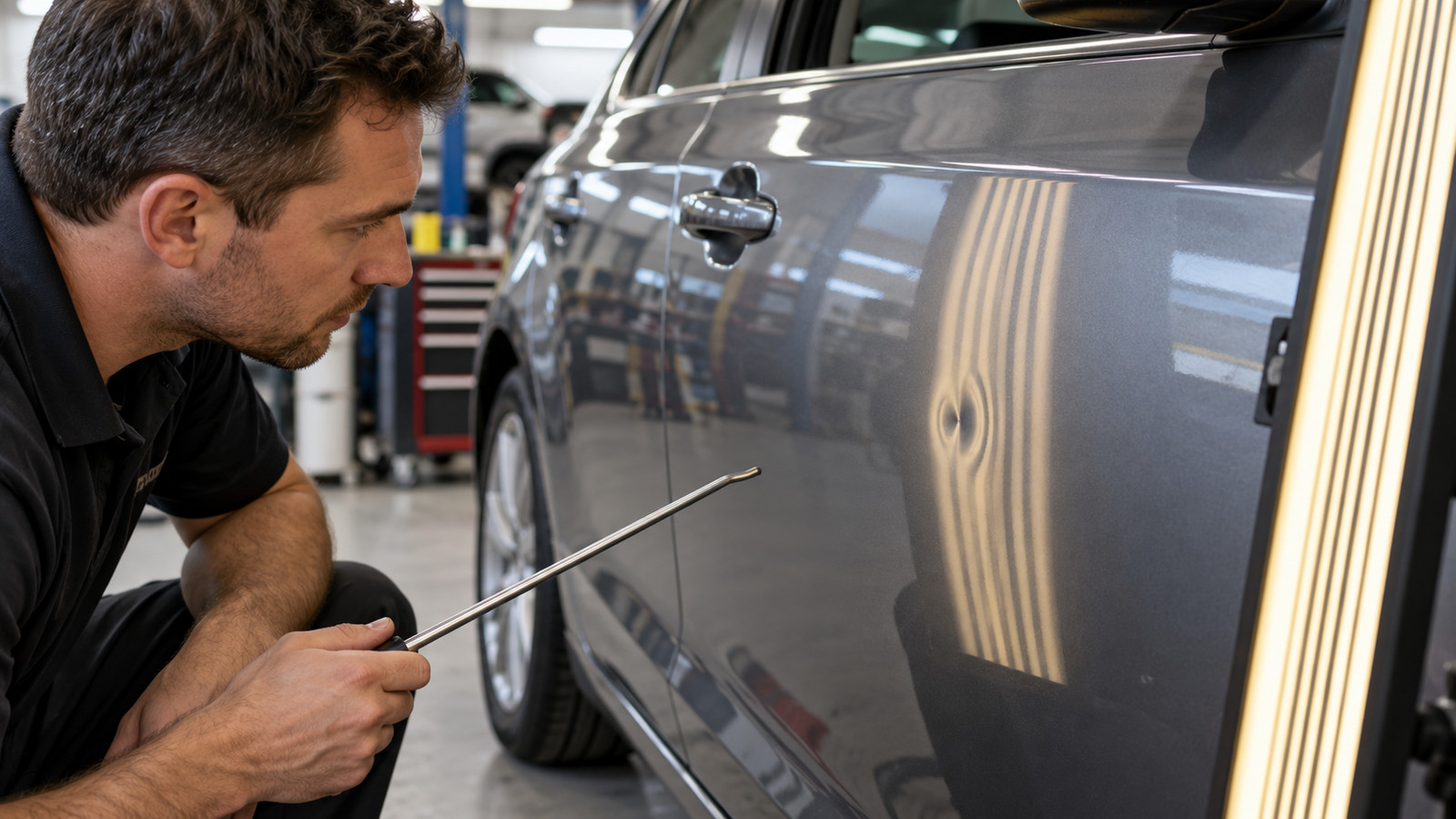
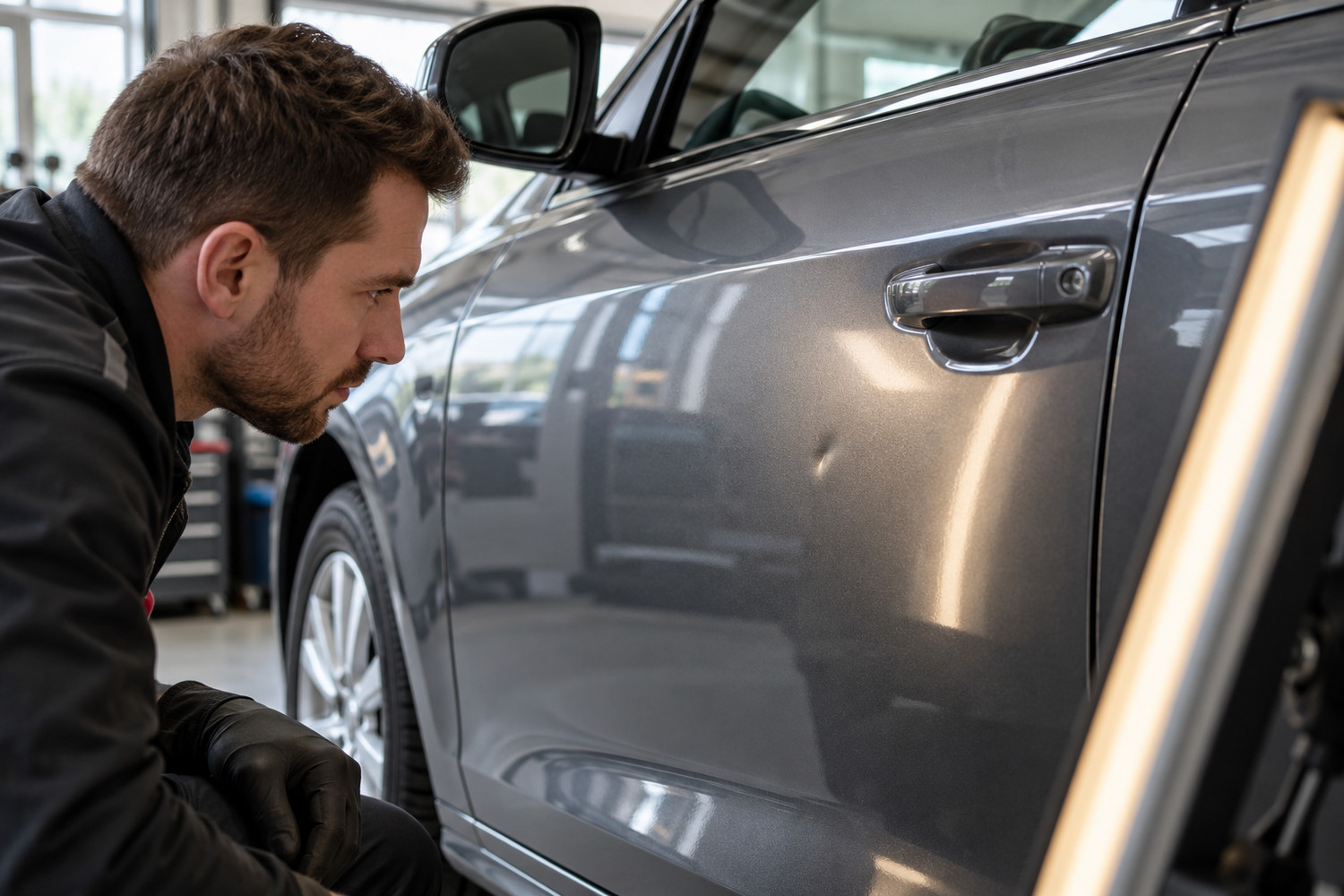
Paintless dent repair is a way of removing a dent without filler, primer or colour. The metal is worked back to its original shape and the paint on top of it stays where it is.
The same job goes by three names. Paintless dent repair, paintless dent removal, and PDR all describe the same work, so a search that turns up one of them has turned up all three.
The difference from a conventional repair is what happens to the surface. A conventional repair pulls the dent out, fills what is left of it, then primes, sprays and clears the panel. That finish is new paint. Paintless work leaves the panel wearing the paint it was built with.
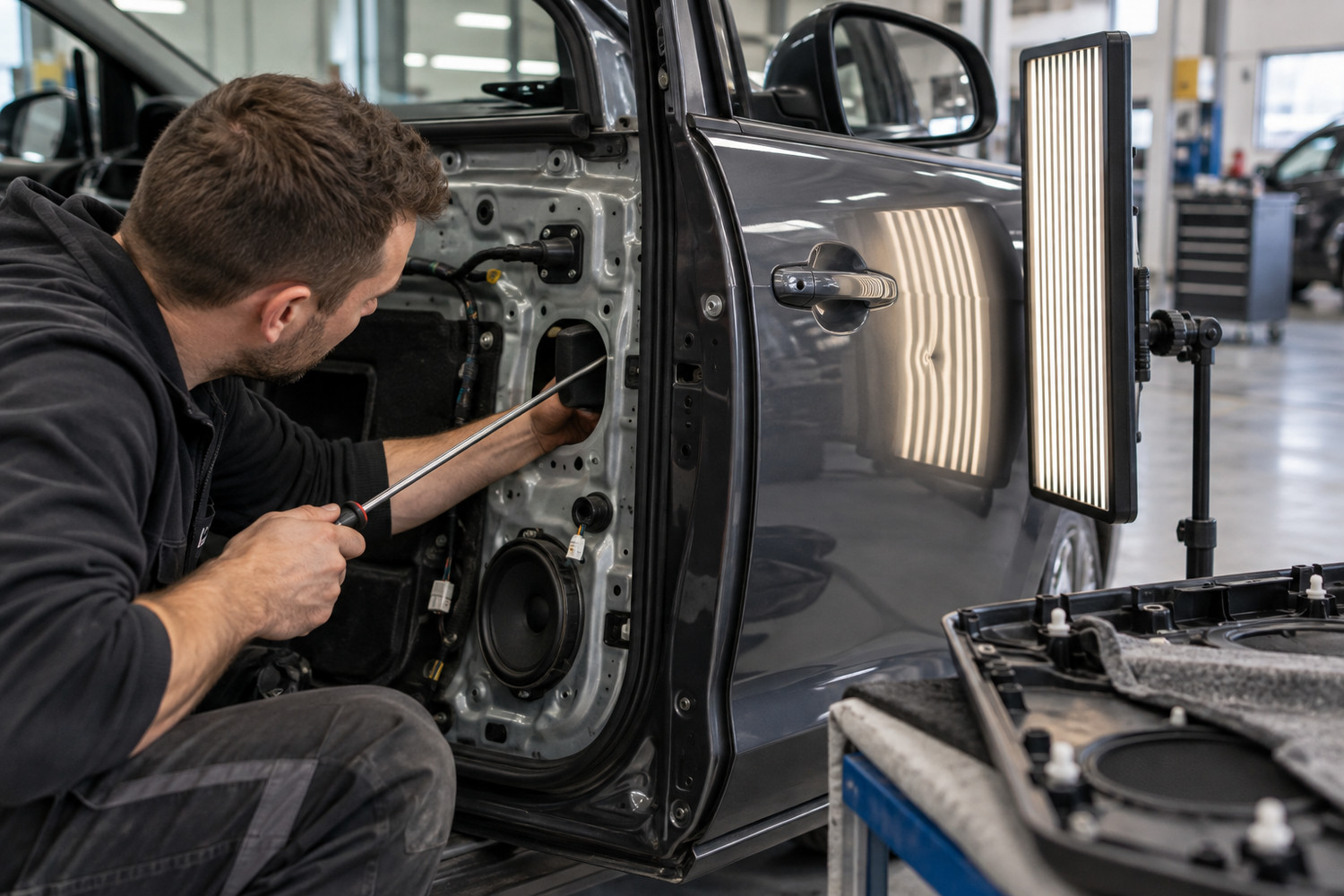
The work is done from the back of the panel wherever the back can be reached. Door trim comes off, a boot lining drops, or a rod goes in through a window channel. The low point of the dent is then found by feel.
Nothing is moved in one push. A steel rod with a shaped tip goes in behind the panel, and the metal is lifted in dozens of small pressures, starting at the centre and working outwards. Each push raises a small high spot around it, and those are tapped flat with a light knockdown tool before the next one.
Where nothing can get in behind the panel, the dent is pulled from the front instead. A plastic tab is glued to the paint, a puller lifts it, and the glue releases with alcohol. I-CAR describes this glue pulling as a method that lifts the dent without removing the paint or the coatings underneath, which is what keeps it in the paintless family. It struggles on dents smaller than a coin, and on dents caught between two body lines.
None of it is judged by eye. The panel is read under a line board, a striped board held so its reflection runs across the damage. Straight metal returns straight lines. Anything left in the panel bends them, and the work carries on until the reflection runs clean.
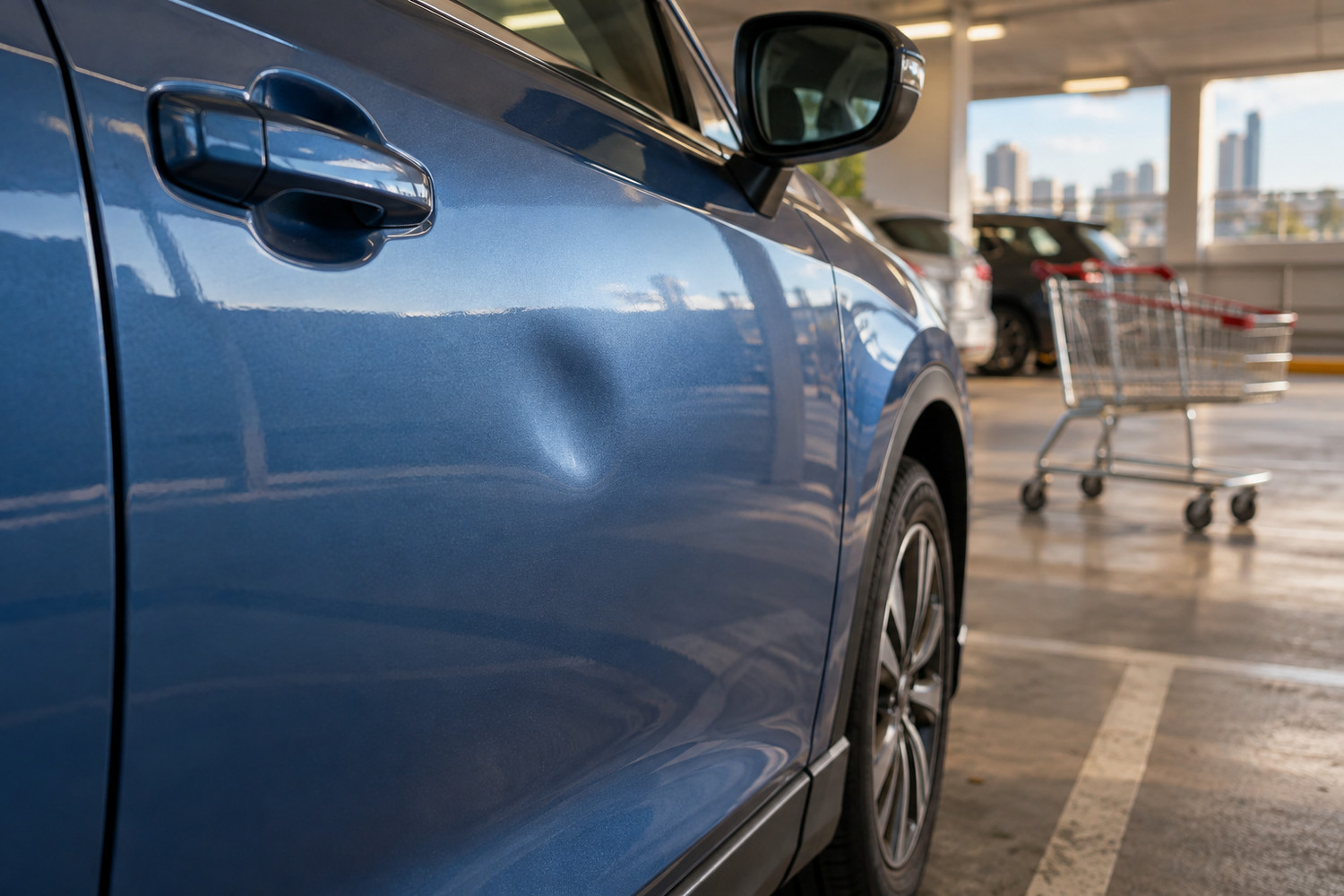
Paintless work suits shallow damage where the paint has come through intact. That covers most of the marks a car collects while it is parked.
What these have in common is not size. The metal has been moved out of shape without being stretched, and the paint has flexed with it instead of breaking.
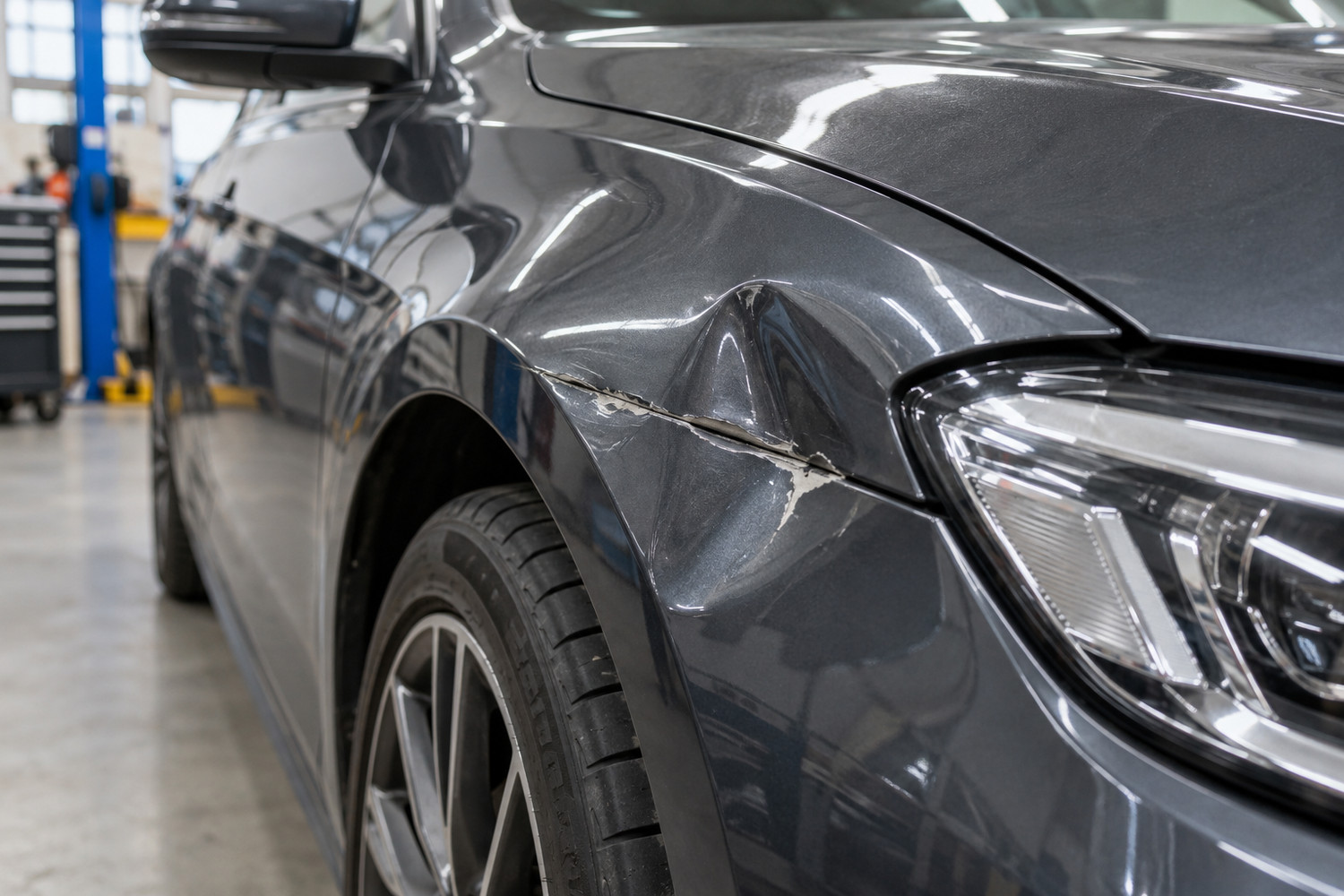
The limits are easy to state, and a repairer checks them in this order.
The quickest way to place your own dent is by what the damage looks like, rather than by where it sits on the car.
| What the damage looks like | The method it points to |
|---|---|
| Paint unbroken, dent shallow and rounded | Paintless |
| Paint unbroken, crease long and gradual | Paintless, with more time on it |
| Paint cracked, chipped or scraped through | Fill and paint |
| Sharp crease, or a deep dent with a hard edge | Fill and paint |
| Paint unbroken, metal stiff at a body line | Possible, slower, not always complete |
| Aluminium panel, metal stretched | Usually a new panel |
Steel that has only been bent still knows where it came from. Steel that has been stretched has nowhere left to go back to.
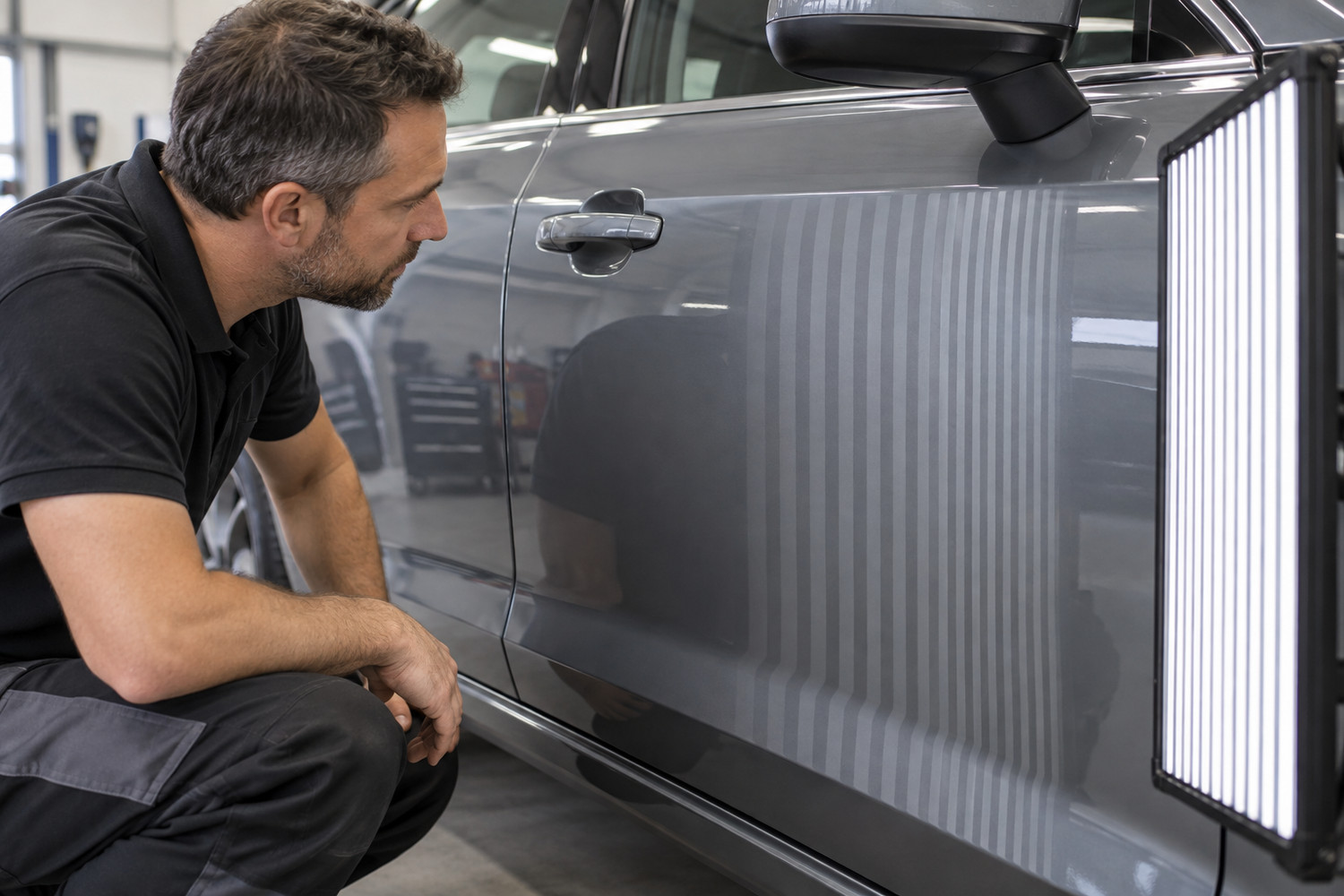
Each method is better at the damage it suits, and the honest answer runs in both directions.
Where the paint is whole and the metal has only been bent, paintless repair gives the better result. The panel keeps its original paint, and original paint cannot be reproduced afterwards. It is baked onto a bare body shell at temperatures a booth cannot use once the car is assembled, because the glass, the trim and the plastics would not survive them. A refinish is matched to that paint rather than identical to it. Leaving it alone removes the matching question, and removes the chance of the repair showing itself years later as two ages of paint weather apart.
Where the paint is broken or the metal is stretched, the conventional repair is the better and longer-lasting job. Pushing a paintless repair onto damage that does not suit it gives you a panel that is nearly right, with a low spot or a ripple that catches the light at the wrong angle. Filling and painting that panel gives one flat surface that stays flat.
One practical difference is worth knowing. Work without paint skips the drying and curing stages a refinish needs, because there is no new paint on the car to dry.
What dent repair costs is a separate question with a page of its own, because the price follows the dent rather than the method used on it.
Paintless dent removal starts with an assessment of the damage. The repair method depends on the shape of the dent, access behind it and the condition of the paint. Contact Automotive Panel Service to discuss the dent and the condition of the paint, then ask how to arrange a quote. The workshop can explain what it needs to see before recommending a repair.
Yes. They are two names for one process, and PDR is the short form of both. A workshop’s choice of name tells you nothing about how the job gets done.
On damage that suits the method, no. Nothing is sanded, stripped or sprayed, and the metal moves gently enough underneath for the paint to come through unmarked. Paint that had already split before the work began is the case where the method does not apply.
No. The metal is returned to its own shape rather than held out by anything, so there is nothing to let go afterwards. What can happen on unsuitable damage is that the dent never fully comes out in the first place, which is a limit of the damage rather than a fault that develops later.
Not in the same way. Plastic has no pressed steel shape to be brought back to, so the rods and tabs used on a panel do not apply to it. Bumper covers are eased back with controlled heat instead, which carries its own failure point.