

The lease ends in a few weeks and the handback notice has arrived. The car has a few marks on it. Repair them first, or hand it back and pay whatever comes?
Repair first only when two things are true. The mark sits outside the standard your lease is measured against. And the repair costs less than the charge you would otherwise pay. End of lease car damage is judged against a written guide, not against an opinion. The guide has numbers in it: dent sizes, scratch counts, bumper limits. A mark inside those limits is already accepted, so paying to remove it buys nothing back. Your own contract names the guide that counts.

Fair wear and tear is the deterioration a lessor treats as reasonable by the end of the contract. Your contract names a guide, and that guide is the standard. So the first step is the same for a novated, salary-packaged, or company lease: find that guide before deciding anything.
Mazda Finance defines it in its Mazda Assured guide, as deterioration consistent with your obligation to use and maintain the car. Toyota Fleet Management’s guide says an independent third party assesses the vehicle at the end of the lease, taking the kilometres travelled into account.
Scope and date sit on every guide. The Toyota Fleet Management guide is document TFM011, dated October 2024. Its standards are written for a passenger vehicle driven less than 100,000 kilometres. The guide also says it is not exhaustive, and that anything it does not cover is assessed in a reasonable way.
The finance product matters too. The Mazda Assured guide, dated October 2023, covers a guaranteed future value contract rather than an ordinary lease. It applies only where the car goes back on the expiry date. A guaranteed future value, or GFV, is the amount the financier has agreed to pay for the car at that point. Where the car does not meet the guide, the financier may reduce that agreed amount by the estimated cost of putting the car right.
Guides resemble each other for a reason. Mazda’s names its source: the fair wear and tear statement published by the Australian Finance Industry Association’s fleet leasing and rental division. That division was once the Australian Fleet Lessors Association, whose own guide dates from 2005. Treat the old guide as background, not as the standard your car faces.
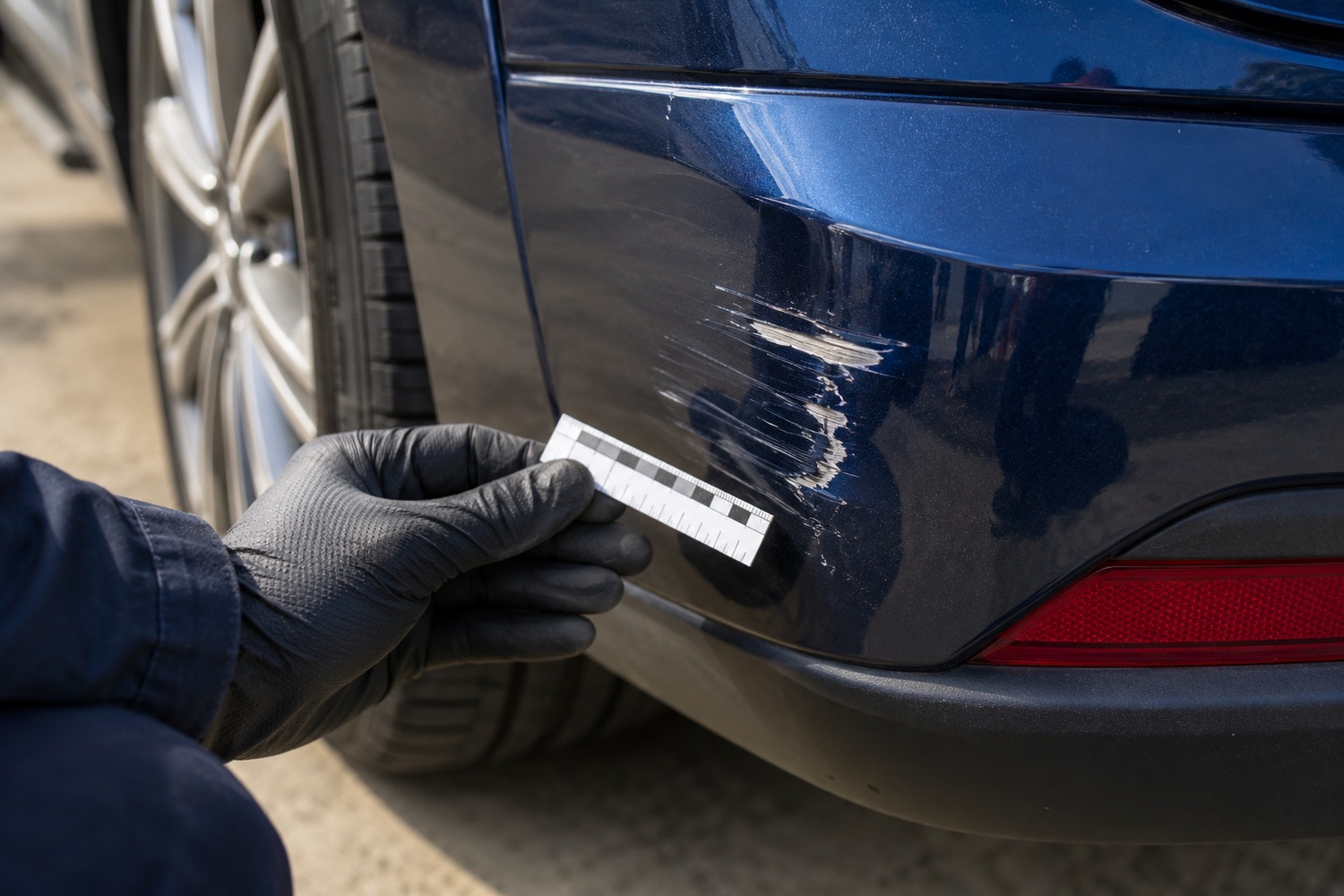
Each of these guides sorts the same marks into two groups, acceptable and unacceptable. The line between them is a size, a depth, or a count.
Toyota Fleet Management accepts chips up to 3mm across, six to a panel, and minor stone pitting. Its dent and scratch limits are in the table below, and bumpers have limits of their own.
The unacceptable columns in that guide are the ones to read twice.
| Body damage, car under 100,000 kilometres | Toyota Fleet Management guide, TFM011, October 2024 | Mazda Assured guide, October 2023 |
|---|---|---|
| Dents | Up to 2 a panel and 8 a car, at 30mm across by 2mm deep | Up to 2 a panel or 12 a car, excluding dents over 40mm across or over 2mm deep |
| Scratches | Acceptable if not through the colour coating, up to 3 a panel and 9 a car | Up to 5 a panel or 15 a car, with stated length and width exclusions |
| Bumper marks | Under 10 square centimetres and 1mm deep, or dents under 20 square centimetres, 2mm deep, 2 a bar | Under 10 square centimetres and 1mm deep, or dents under 20 square centimetres, 3mm deep, 3 a bar |
Those are two published standards side by side, for a car under 100,000 kilometres. Mazda’s dent and scratch rows cover paint, panelling, and the grille, with the bonnet and the bumper bars listed on their own. The Mazda guide also sets different numbers above that distance. Neither table predicts what an assessor will find on your car.
Kerbside parking around Richmond and the inner suburbs produces much of this list. Door edge chips, a scuffed rear bar, a dent in a front guard from a tight car park.
The guides cover more than the body. Tyres, wheels, and the interior each carry standards of their own. Those sit outside body repair work, so this article stops at paint, panels, and bumpers.

The comparison has two numbers in it. One is the charge or adjustment on your own assessment. The other is a quote to repair the same damage to the standard.
They are built differently. A lessor’s figure estimates the cost of restoring a panel. A repair quote is priced on the damage in front of the repairer. No published figure settles it for your car, including a sample figure printed in a lessor’s guide.
So get both numbers before you decide. Until the car is assessed, the charge is a guess. Until the damage is looked at, so is the repair.
A cheaper repair bill helps only if the finished work meets the standard. Poor panel and paint repairs sit in the unacceptable column. Work that shows can be charged on its own account, and nobody can promise that an assessor will accept a given repair.
Deciding whether to fix dents before selling a car you own is a different calculation. It is covered separately.
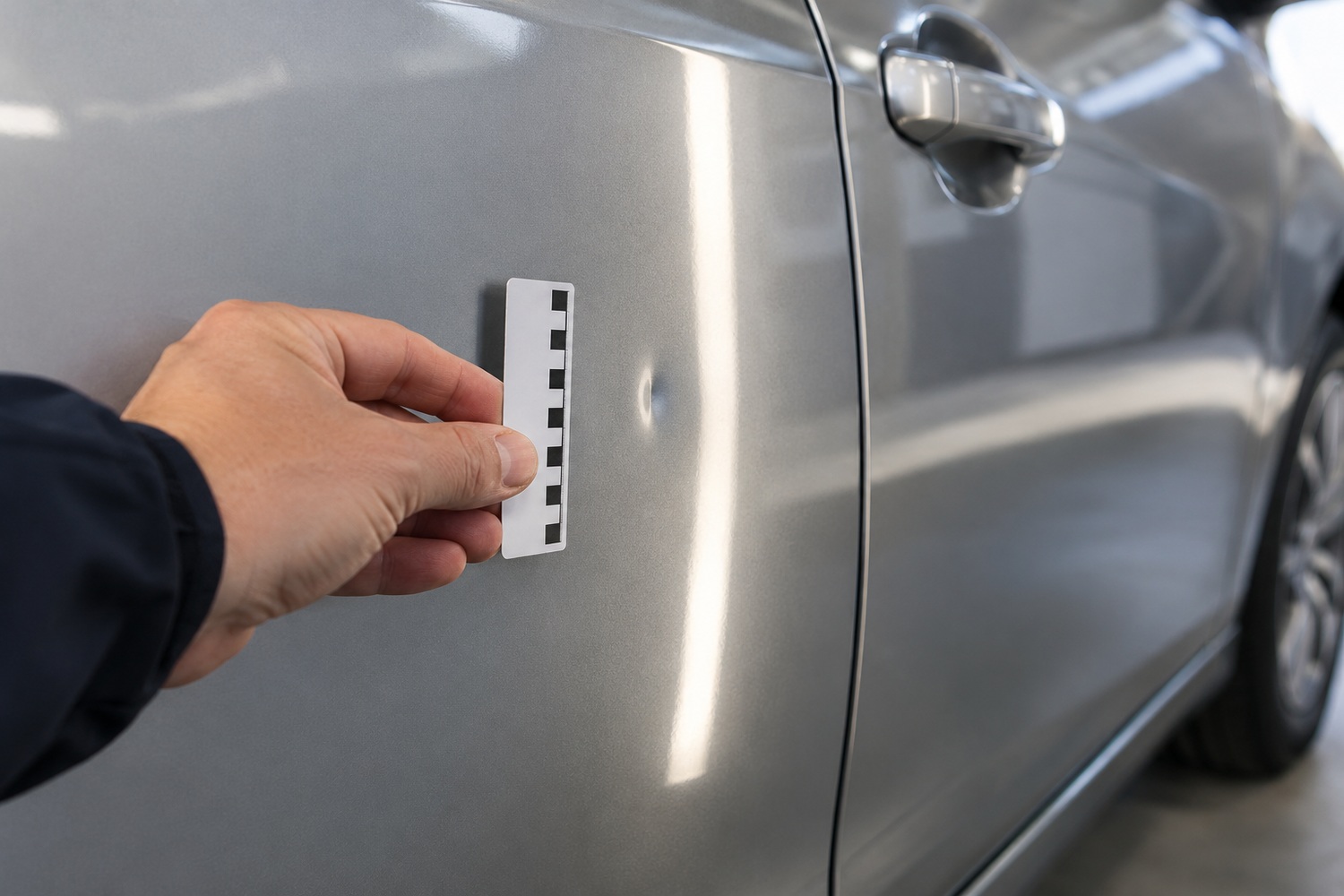
A mark already inside the accepted column costs nothing at handback. Repairing it to avoid a charge gains nothing.
Counts matter as much as size. Both guides limit dents per panel and per car, as well as how big each one can be. Three small dings on one door can fall outside a standard that would have accepted two.
The definitions decide more than they appear to. Mazda’s guide defines a dent as a depression in the surface with no paint surface penetration. It defines a scratch as an elongated mark that exposes base primer or metal. A scratch, by that definition, cannot be removed by cut and polish. So a shallow ding and a scratch through to the metal are different categories, not degrees of the same thing.
A separate article works through which repair suits which mark.
Measure the mark and count what is on the panel, then compare it against your own guide rather than the examples here.
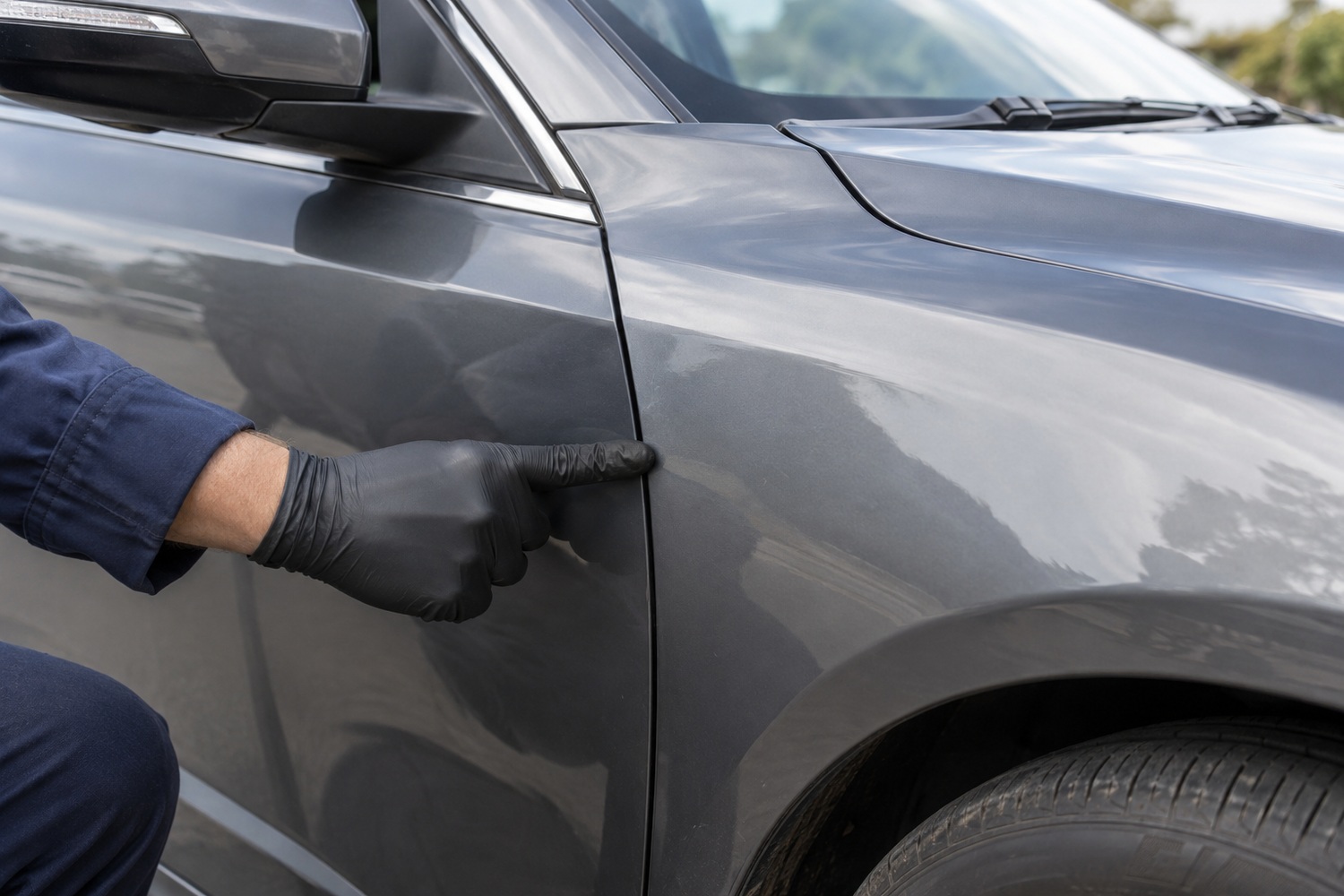
It can, and two of the guides here name it.
Toyota Fleet Management lists poor panel and paint repairs as unacceptable body work. The 2005 association guide calls obvious evidence of repair unacceptable, such as colour mismatch or misalignment between panels. Its summary table repeats that.
Mazda’s table does not carry the same line. Where its guide deals with repair quality, it asks for damage caused by fitting or removing equipment to be repaired to a professional standard.
Price is not the test either way. A cheap repair is not proof of bad work, and an expensive one is not proof of good work. The guides react to what shows. Colour that does not match the panel beside it, and a panel that no longer lines up.
That has a practical edge before a handback. A mark that was inside the limits can move into the unacceptable column, once a visible repair has been done over it.

The inspection records the car’s condition against the guide on the day, and nothing beyond that.
Presentation comes first. Mazda’s guide asks for the car to be returned clean enough for a proper inspection of the paint, body, and interior. The 2005 association guide asks for the same. A dirty panel hides the marks the assessment exists to record.
Some lessors let you see the list first. Mazda Assured offers an optional pre-inspection to a customer returning the car for the agreed value, and the report highlights what needs rectifying. Damage left unrepaired is charged once the car is back. Other lessors run their own process, so check yours.
The step most people skip is reading their own guide. The numbers in it are published, and you can hold a tape measure against the panel yourself.
If you would rather have the marks looked at, the panel beating page sets out what that body work involves. Take the lessor’s guide along, so the conversation is about the written standard rather than about opinions. An assessment with Automotive Panel Service can be arranged through the contact page.