

A car can be worth less after a crash repair, but no fixed discount applies to every vehicle. The condition of the car and the evidence of the work matter when explaining its history to a buyer. Repair cover and cover for a later loss in value are separate questions. Your policy wording decides what your insurer covers.
For a car repaired without being written off, records explain the work history. They do not set its resale price, and an online example cannot value the individual car.

Sometimes. A buyer may question the visible condition or want evidence of the repair history. The fact that a car drives does not answer either question.
VicRoads tells used-vehicle buyers to ask whether a car has been in an accident. If it has, its advice is to get details about the accident, the damage and where it was repaired. That is Victorian guidance about understanding a vehicle’s history. It does not prescribe a discount for a repaired car.
For an owner, records can help explain what happened rather than leaving a buyer to infer it from appearance. A visual clue alone does not prove poor work, hidden damage or a safety problem. Equally, an attractive finish does not establish every aspect of a repair. Neither observation supplies a resale valuation.
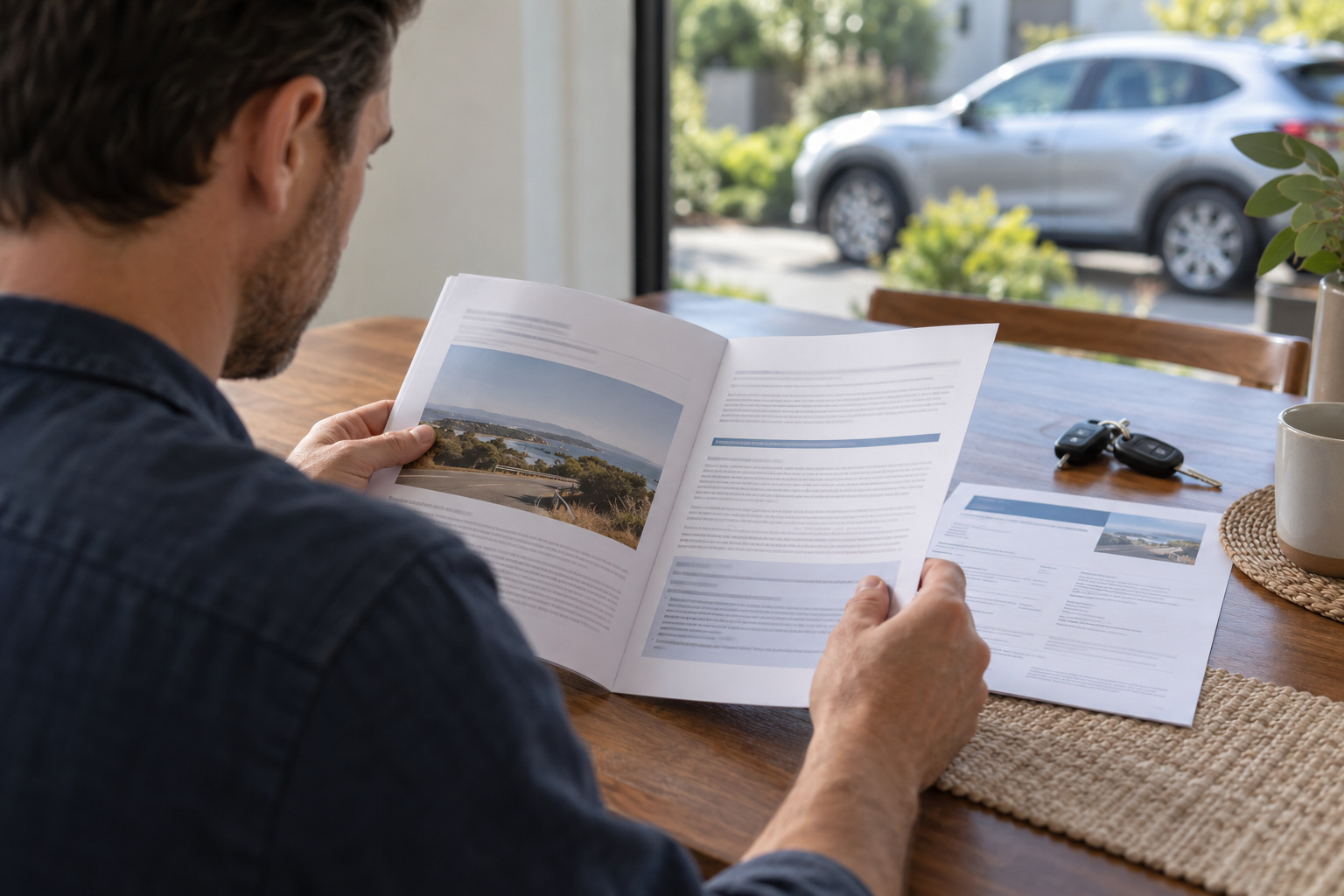
Diminished value means a loss in resale value attributed to the accident after repairs are complete. Cover for that loss cannot be assumed. The policy wording decides it, and one current Australian policy rules it out in terms.
Real Insurance’s current car insurance product disclosure statement, dated 1 July 2026, shows how the wording works. A product disclosure statement, or PDS, is the document that sets out what a policy covers and what it leaves out.
Under what it pays, that PDS says the insurer may repair the car. It may instead pay the reasonable cost for the owner to repair it, depending on what is more reasonably practicable. It says the car is repaired to the condition it was in immediately before the event leading to the claim. Its exclusions are then explicit. The policy does not cover reduction in value or depreciation.
That is one policy, not the whole market. Your own wording decides what you can claim. Read it with your certificate of insurance and any updates your insurer has issued. Version matters as much as brand here. The Real PDS dated 1 July 2026 applies to new policies effective on or after 14 August 2026. It also applies to policies renewing on or after that date.
So treat cover for lost value as something to check in your own policy rather than assume. Money paid to put a car back to its pre-accident condition is one thing. What the car is worth afterwards is another. Whether anything can be recovered from another party is a separate question again, and the policy does not answer it.

Some of what you will read about claiming for lost value was written for drivers in other countries. Those pages describe insurance products and legal remedies from a different system. An Australian policy is a contract read against its own wording. A claim route copied from an overseas site can send you to your insurer asking for something it does not offer. Read the exclusions in your own PDS before you follow any of it.
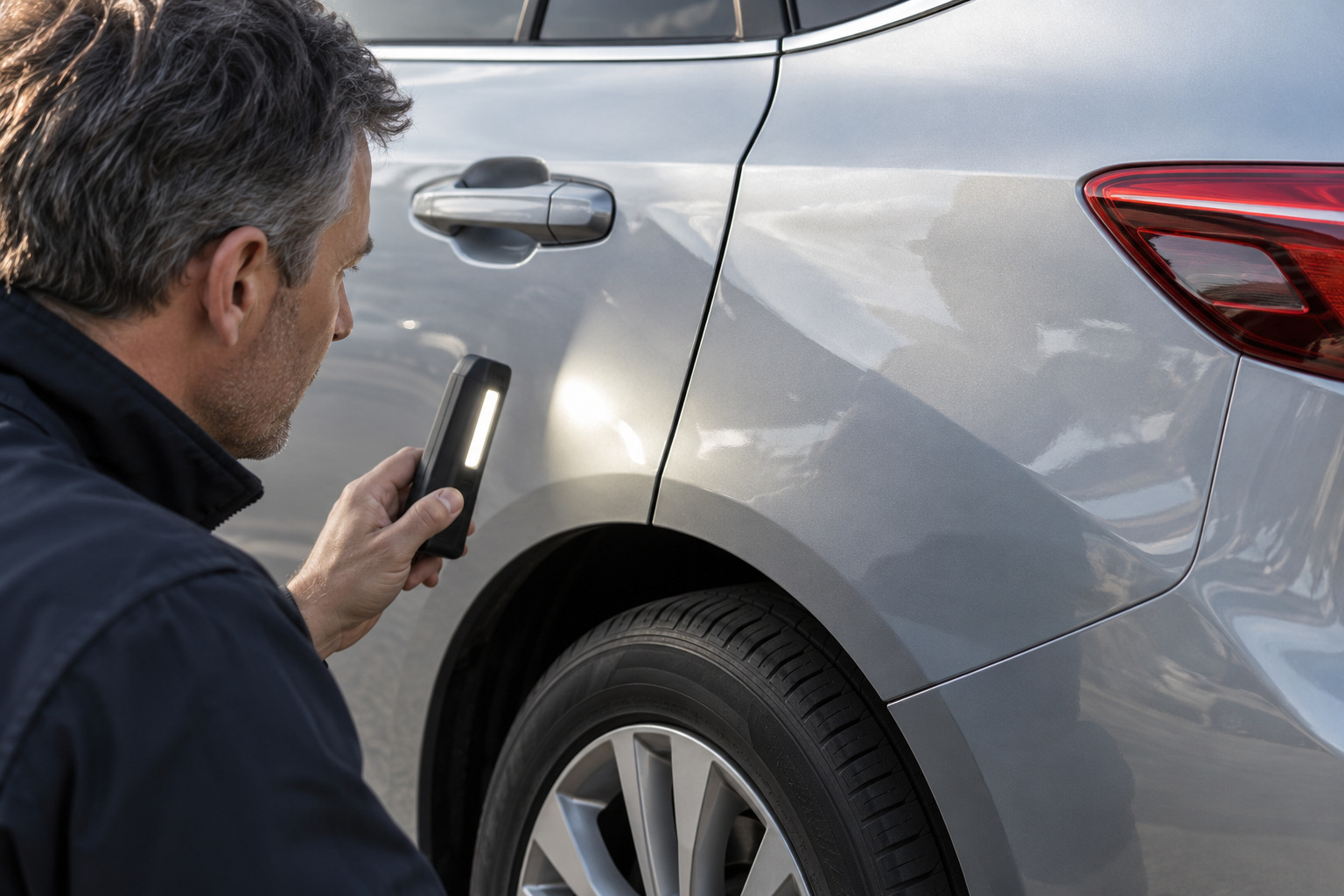
The questions concern both the visible work and the history behind it:
These are reasons to seek an explanation, not findings that a car is unsafe or has lost a particular amount of value.
Consumer Affairs Victoria separately advises used-car buyers to consider an independent mechanical inspection. Repair paperwork and a mechanical inspection answer different questions. Paperwork can describe a completed job without establishing the car’s present condition. It does not replace an assessment of the vehicle.
Keeping the repair record gives an owner something concrete to show. It can identify the damaged area, the authorised scope and the completed work. Where structural work was involved, its description belongs in that history.
There is a separate decision about whether to fix small dents before you list the car, and it is covered on its own.

You cannot control the market or remove the accident from the car’s history. You can understand the work being authorised, keep its records and raise a concern about the finished repair. Those steps do not guarantee a sale price.
Understanding the repair is the first half of it. Which panels were repaired, which were replaced, and what was refinished are the three facts that describe a job. Look over the finished work outside in daylight rather than under workshop lights.
Keeping the paperwork is the second half, and it is worth more than it looks. One policy term shows why. The Real PDS guarantees materials and workmanship for repairs completed by a repairer it appointed or authorised. That guarantee runs for as long as you own the car, and the policy says it is not transferable.
The PDS also says that if the insurer pays the owner the reasonable repair cost, it does not guarantee that repair’s materials and workmanship. Keep that distinction with the example: a buyer does not inherit the stated guarantee, and a repair record is not a substitute warranty.
If you want to see what a smash repair covers before you authorise anything, the service page sets out the work involved.
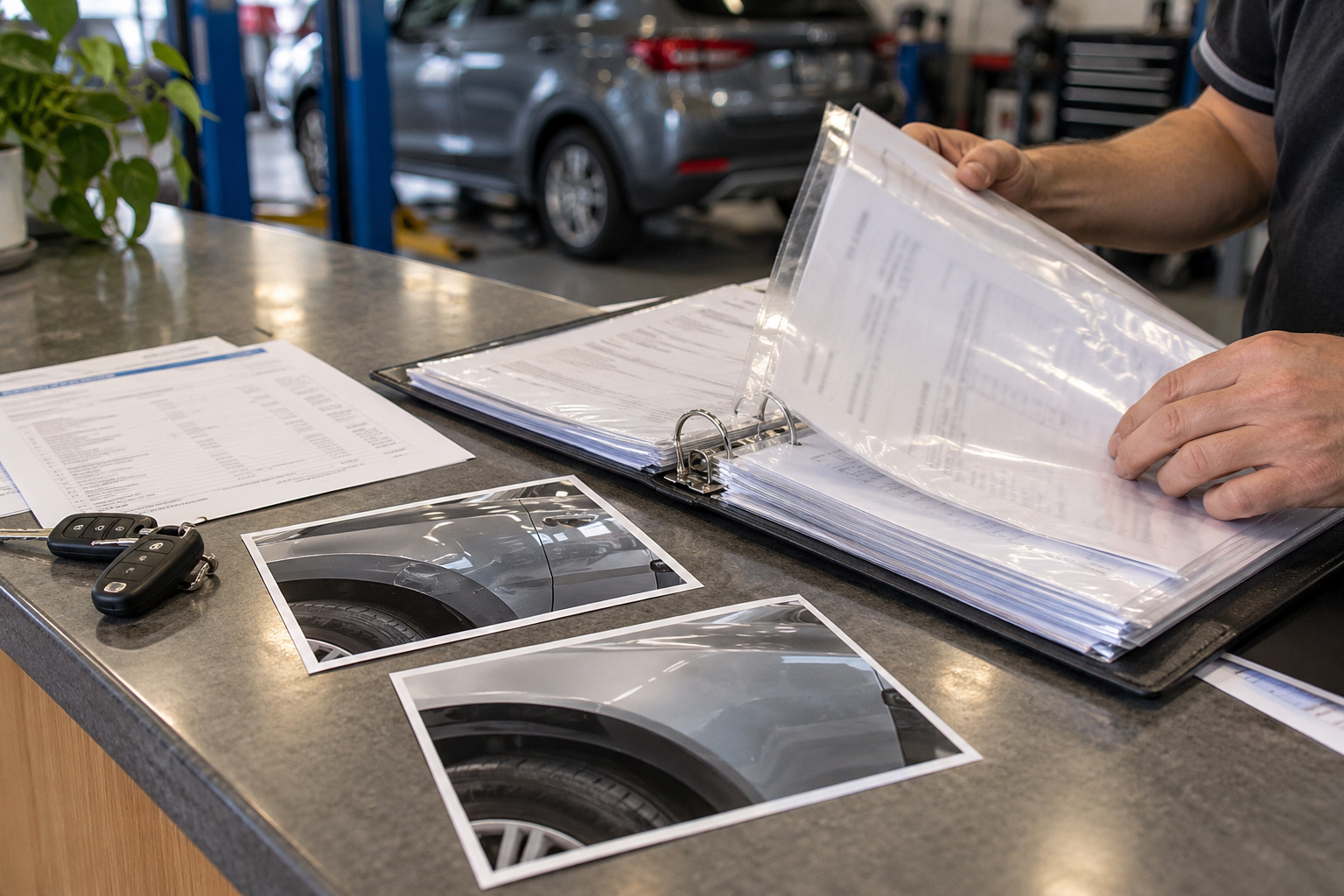
Keep the documents that show what was authorised, what was done, and what went into the car.
Parts deserve a line of their own. The Real PDS says only quality parts consistent with the age and condition of the car are authorised. It says those parts may include new genuine or manufacturer approved parts. They may also be non-genuine, parallel, reconditioned, or recycled. A buyer who asks what went into the car is asking a fair question, and a parts list answers it.
What records cannot do is settle the price. They explain the history instead of leaving a buyer to guess at it, and that part is yours to hold. If you want to talk through what the damage needs, the contact page at Automotive Panel Service is the place to start.