
You back out of a Bridge Road car park, hear that scrape, and feel the bumper kiss a bollard. You get out, walk around to look, and there it is. A scratch, maybe a small dent, nothing serious. You pull out your phone. Insurer or panel beater?
The wrong call costs money either way. Claim when you shouldn't and your premium climbs for years. Pay out of pocket when you should have claimed and you cover a repair the insurer would have funded. The good news is the decision usually comes down to a few specific numbers, not a guess. This is the framework we use when people ring Automotive Panel Service in Richmond with minor damage.
Your insurance excess is what you pay out of pocket every time you make a claim. On most comprehensive policies in Australia it sits somewhere between $600 and $900, though some go higher in exchange for a lower premium. Your Product Disclosure Statement (PDS) lists yours.
The first sanity check is simple. Get the small dent repair cost or scratch repair cost in writing, then compare it to roughly double your excess. If the repair sits under that threshold, paying privately is usually the better call.
Two worked examples:
The doubling rule isn't a hard threshold. It's a starting point. The second piece of the maths is the cost of the claim itself.
A claim doesn't end when the panel beater hands the keys back. It follows you onto your next renewal, and the one after that, and sometimes for years.
Most Australian insurers run a no-claims discount or rating system. Once you claim, that discount typically drops back and rebuilds over several years. The extra premium across that period can easily exceed the few hundred dollars you would have spent fixing a minor scratch yourself.
How much extra is hard to generalise because every insurer's system is different. Some reset the discount entirely after a single fault claim. Others step it back one level. The only way to know what a claim will cost you in future premiums is to read your PDS, or call your insurer and ask: “if I claim for X amount, what happens to my rating?” Most will tell you straight.
Here's how the maths plays out across the kinds of damage we see most often. Cost ranges are for straightforward repairs on standard vehicles. European cars, prestige finishes, and pearl colours sit at the higher end.
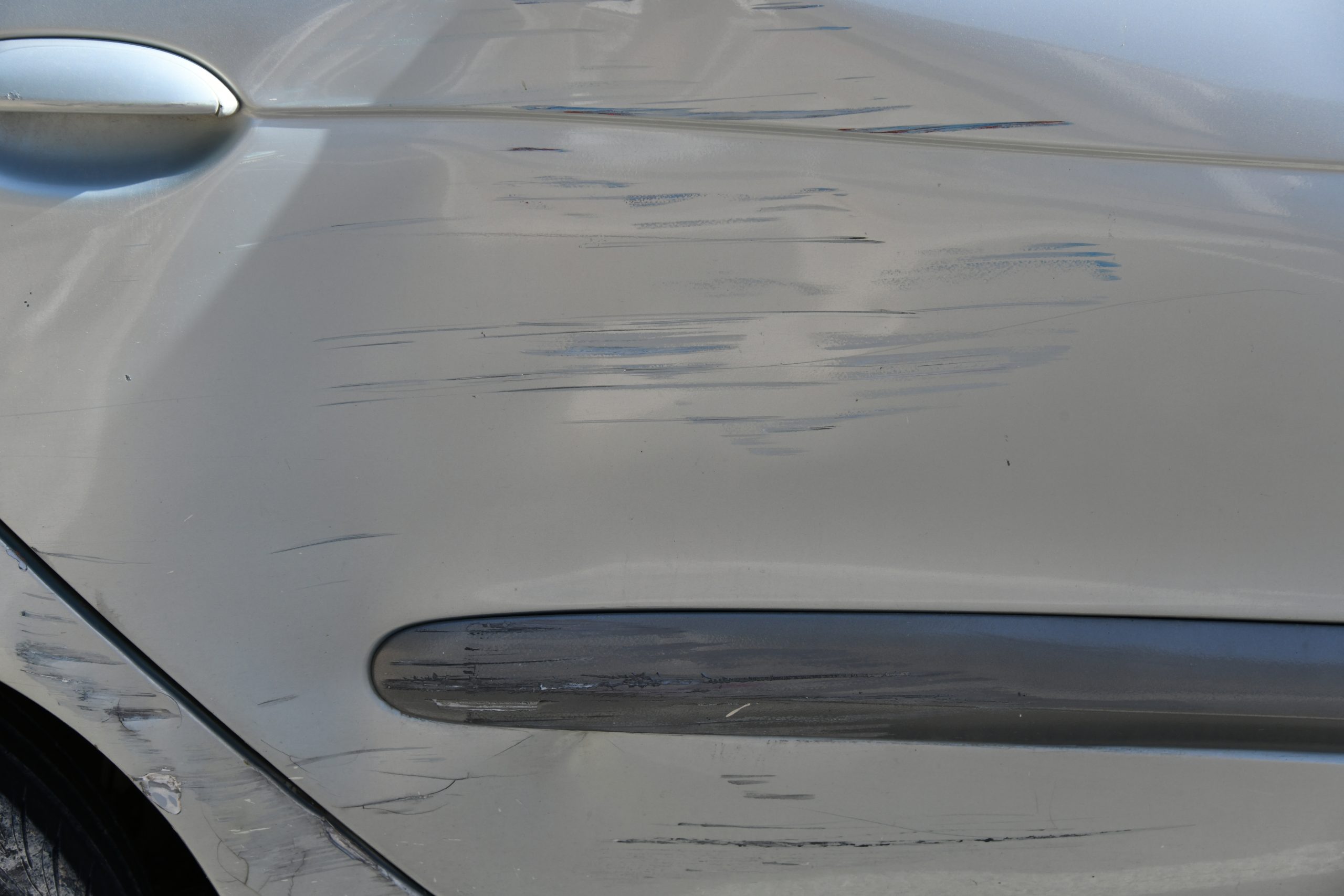
Car park scratch on a door. A surface scratch through the clear coat without a dent generally repairs for $250–$700 with a localised spot repair and blend. Below most excesses. Pay privately.
Shopping trolley dent on a quarter panel. If the paint is unbroken, paintless dent removal handles it for $150–$500 per dent. If the paint has cracked and the panel needs respraying, $300–$1,000. Pay privately in either case.
Kerb rash on a wheel. Cosmetic kerb damage on a painted alloy is $100–$400 per wheel depending on the depth of the gouge and the finish. Diamond-cut and split-rim wheels cost more. Pay privately. Single-wheel repairs almost always sit below excess.
Stone chip on the bonnet. A single chip or two repaired by colour-matched touch-up runs $150–$300 if the metal is still sealed. Multiple chips that have started to rust through can push a panel into respray territory at $500–$1,000. Pay privately for the chip. Claim only if there's structural rust spreading.
Side mirror clip with torn rubber on the wing mirror. Glass-only replacement is $100–$250. A full housing assembly is $200–$450 for a standard mirror, more for one with cameras, indicators, blind-spot sensors, or heating. Pay privately for glass-only and basic housing. Claim if it's a late-model car and the sensor-loaded replacement is over $1,000.
The thread across all five is the same: minor single-panel damage almost always falls below your excess, and claiming for it usually costs you more in premium impact than the repair would have cost out of pocket.
A few situations flip the maths. Even if the visible damage looks minor, claim when:
You don't have to commit to a path before you know the numbers. Bring the car in. We give a free written quote, usually within 15 minutes for minor damage. With that number in hand, the maths writes itself: take the quote, compare it to your excess and the premium impact, and you'll know whether to claim or pay direct.
Back to the Bridge Road scratch. The decision isn't about how the dent looks. It's about how the numbers land. Get the quote first, then make the call.
If you've got minor damage and want a no-obligation written quote from a panel beater in Richmond, give us a ring on 9429 3966 or drop the car past the workshop. We'll tell you what the repair costs, and you'll have what you need to decide.