
Car dent repair is priced per dent, not per car. Where the paint is unbroken, the dent can usually be pushed back out from behind the panel. No filler goes on and nothing is resprayed, so paintless dent removal cost sits in the cheaper of two bands. Once the paint is cracked or scraped away, the panel has to be filled, primed and painted. That puts conventional dent repair in the dearer band. One question sorts a dent into one band or the other: is the paint still intact?
Both bands are per dent. That is why a quote can look nothing like the one a neighbour got on a dent that looks much the same. Size, panel, access and finish all move the number inside a band. For the number on your own dent, ask Automotive Panel Service for a quote.
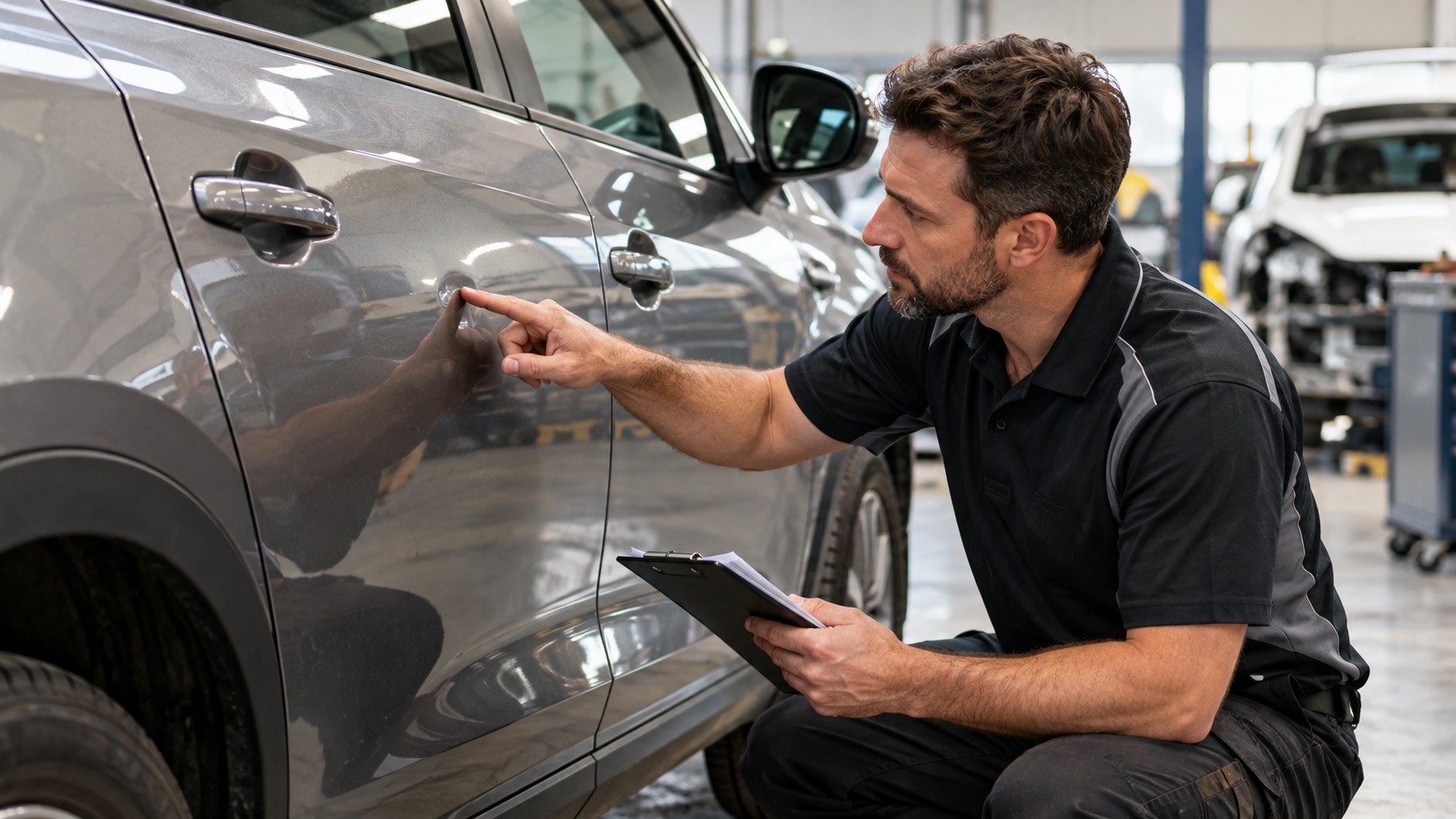
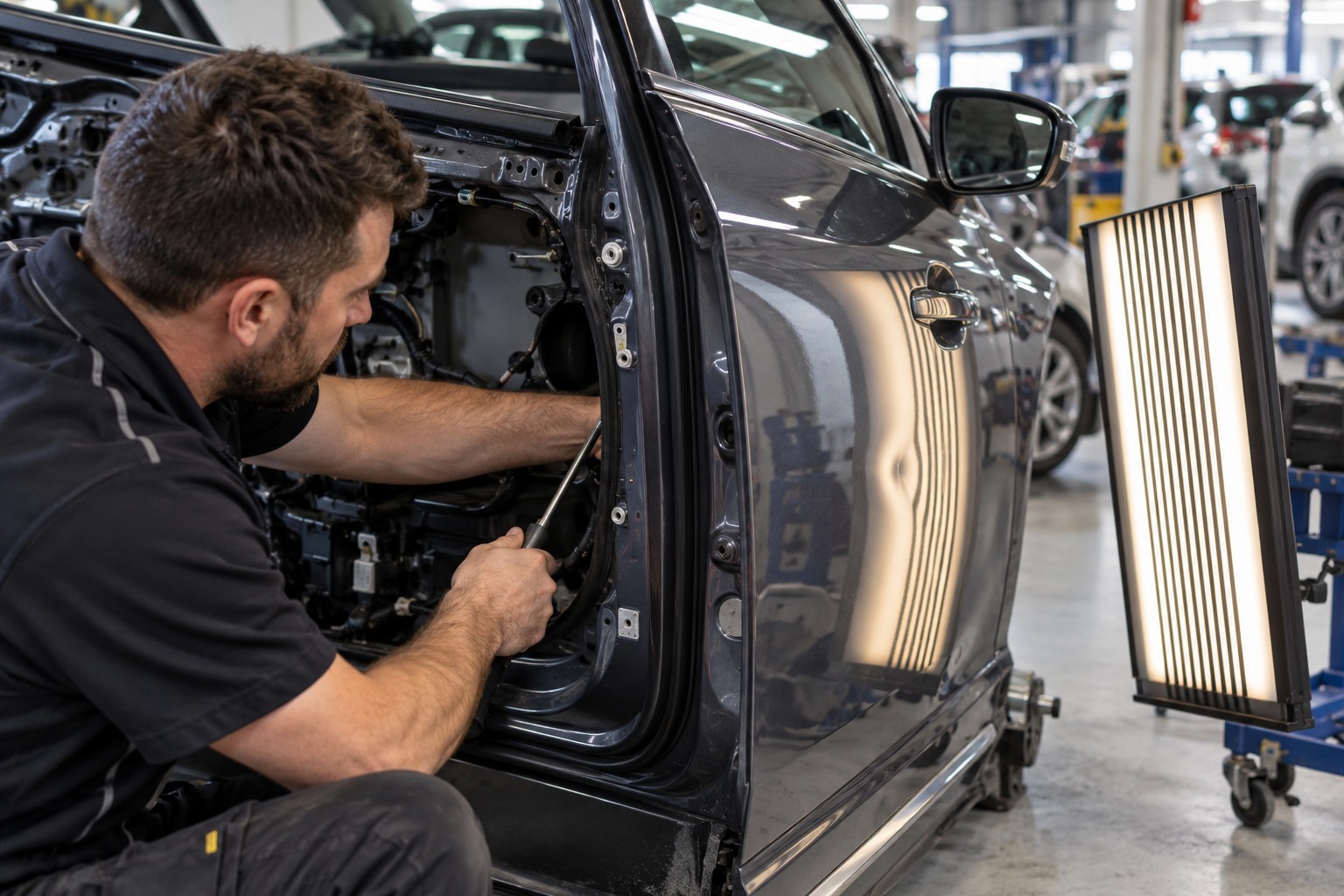
Paintless dent removal, usually shortened to PDR, pushes the dent back out from behind the panel. The factory paint stays on the car, because nothing is filled and nothing is sprayed. That is why it is the cheaper of the two bands.
The bottom of that band is a small, shallow dent in the middle of an open panel. A door skin or a bonnet, away from the edges, is the easy case. The top of the band is a bigger dent, or one sitting on a body line. It is also where a tool cannot easily be worked in behind the panel.
Not every dent suits the method. Sharp creases, stretched metal and broken paint are conventional jobs instead. Paintless dent removal covers the ones that do suit it.
Whether the method fits a dent is a separate question from what it costs. How the two methods differ is set out on the new rules of car dent repair.
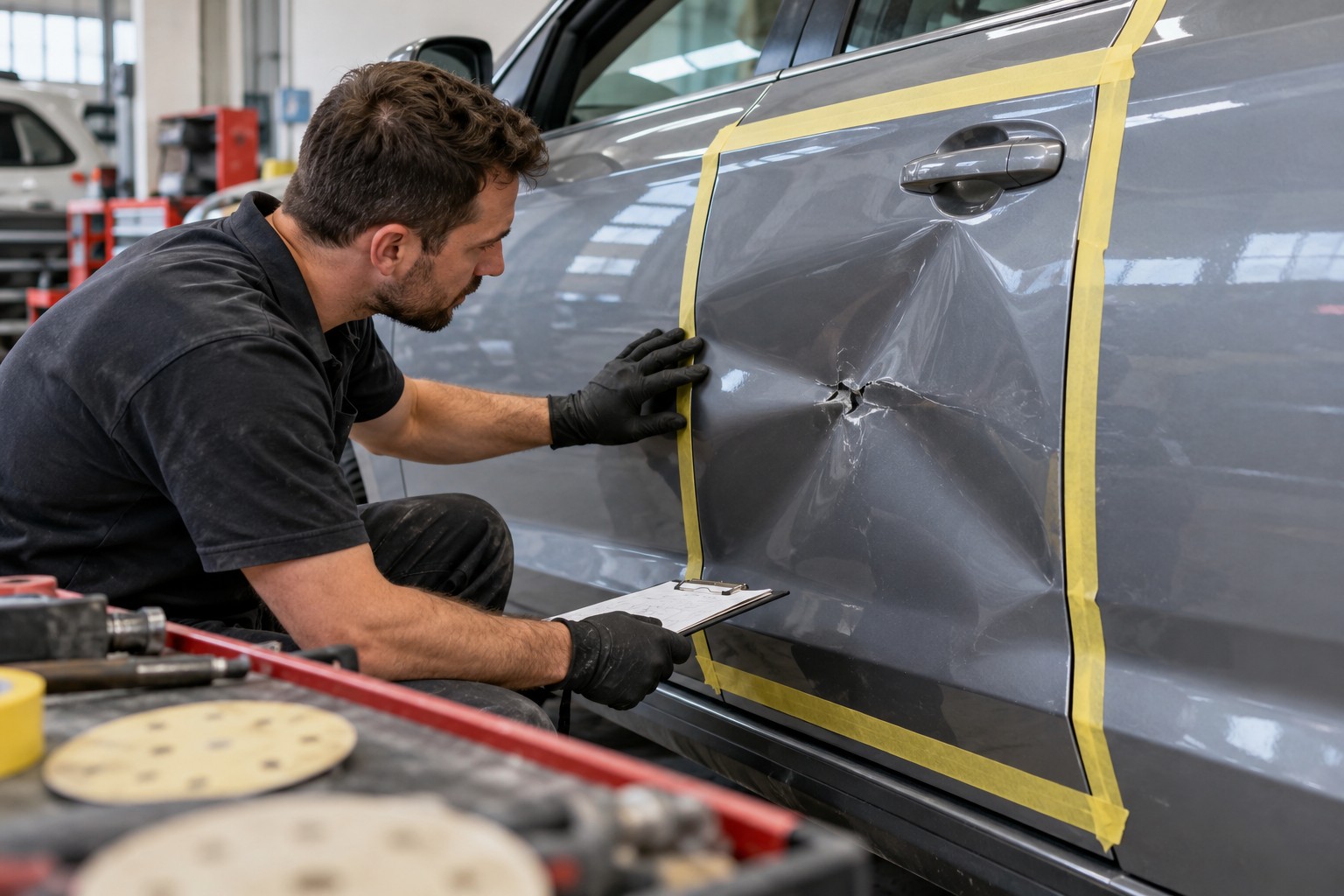
Conventional dent repair is what happens once the paint is damaged. It is panel beating in the traditional sense. The metal is worked back into shape by hand, filled where it will not come fully level, primed, then painted. It is the dearer of the two bands, and it is still priced per dent.
Paint is what moves the number. The colour is mixed to the car’s own paint code and sprayed in a booth. It is then blended a short way into the panels either side, so the eye cannot find the join. That is a second trade, with its own materials and its own drying time.
Paint is not the last step of a dent repair. It is a second job, with its own booth, its own materials and its own price.
Two cars with the same dent can sit at opposite ends of this band. A solid white door is the cheap end. A metallic finish on a curved rear quarter is the dear end. The colour is harder to match, and there is more panel to blend.
Storm damage is a different cost shape again. It is dozens of small dents across several panels at once. Hail damage repair costs are worked out on that basis.
Here is where the common cases usually land.
| Damage | Usual method | Which band |
|---|---|---|
| Shallow dent, paint unbroken | Paintless dent removal | Paintless |
| Door ding from another car’s door | Paintless dent removal | Paintless, lower end |
| Dent on a body line or a panel edge | Paintless, where the metal allows | Paintless, upper end |
| Dent with cracked or chipped paint | Conventional repair | Conventional |
| Sharp crease, or metal that has stretched | Conventional repair | Conventional |
| Dent on an aluminium panel | Conventional repair, usually | Conventional |
| Panel torn or split through | Panel replacement | Neither band applies |
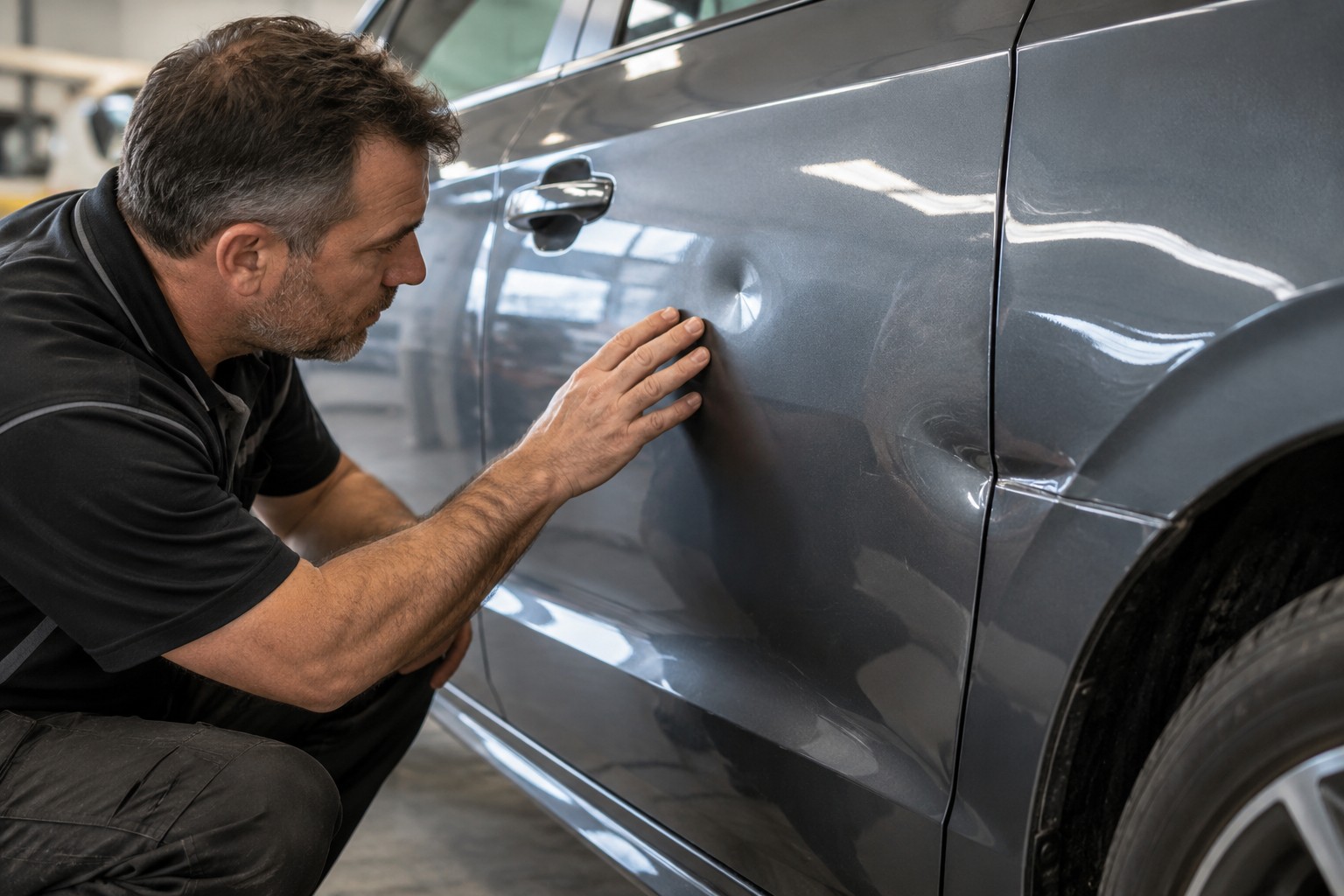
The price moves inside a band for reasons that have little to do with how bad the dent looks from a few steps back.
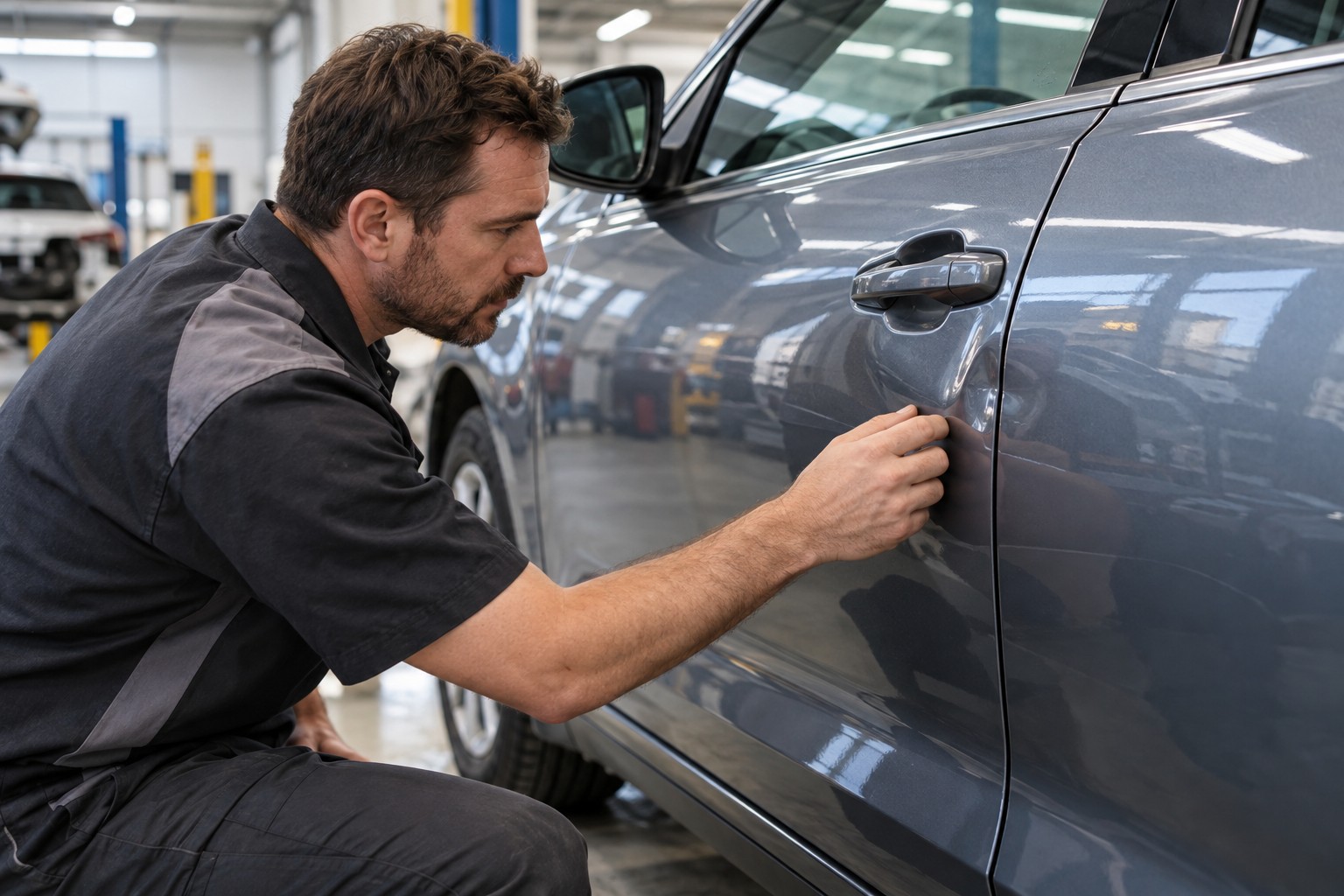
A door dent is priced the same way as any other dent, and the paint decides the band. A ding pushed in by another car’s door, with the paint intact, is a paintless job. It normally sits near the bottom of the paintless band. A dent from a bollard or a trolley that has taken the paint off is a conventional job.
Doors take more of this than any other panel. Inner Melbourne is hard on them. The kerbside bays along Bridge Road and Swan Street in Richmond are narrow, and cars sit close on both sides.
Doors carry their own access problem too. The trim usually has to come off. The glass, the speaker and the wiring all sit in the space a tool needs. Some dents in a door skin can be reached from behind and some cannot. That is settled by looking, not by measuring the dent. Whether a ding can be repaired without paint is worth reading on its own.
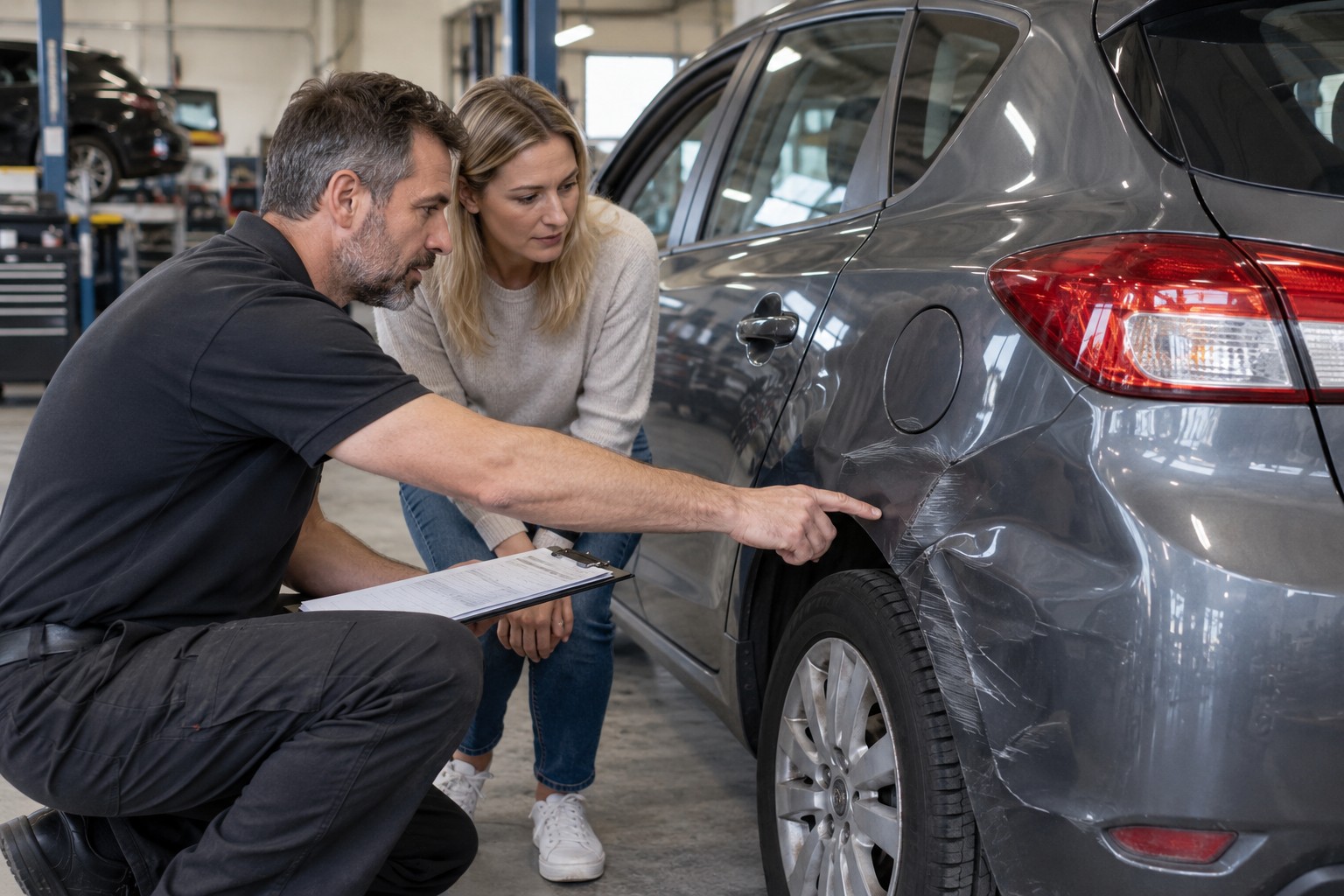
There is a point where paying for the repair stops making sense. Several panels damaged at once will get a car there. So will a dent bad enough that the panel has to be replaced rather than repaired. So will an older car, where the repair cost gets close to what the car is worth. Where the damage runs past one or two dents, how much damage is too much to repair covers how that call is made.
If the quote lands near the excess on a policy, the claim decision is worth working through properly. A product disclosure statement sets out what a policy covers and what it does not. There is more on whether a small repair is worth claiming on.
To find out what your dent will cost, contact Automotive Panel Service to arrange an assessment. Explain where the dent sits and whether the paint is damaged, then ask what the workshop needs to prepare a quote.
A small dent with the paint still intact is priced as a paintless repair, which is the cheaper of the two bands. If the paint has cracked or chipped, it is priced as a conventional repair instead, because the panel then needs filling and painting.
Yes. Nothing is filled and nothing is sprayed, so the paint materials and the booth time drop out of the price altogether.
Size is only one part of what is being priced. The panel a dent sits on, how easily a tool reaches in behind it, and how hard the colour is to match all change the amount of work.
Yes. Broken paint moves the job out of the paintless band and into the conventional one. The panel has to be brought back, filled and resprayed rather than simply pushed out.
Ask the workshop how it assesses damage before quoting. Describe the dent and the condition of the paint, and check whether it needs to see the car before giving a price.