
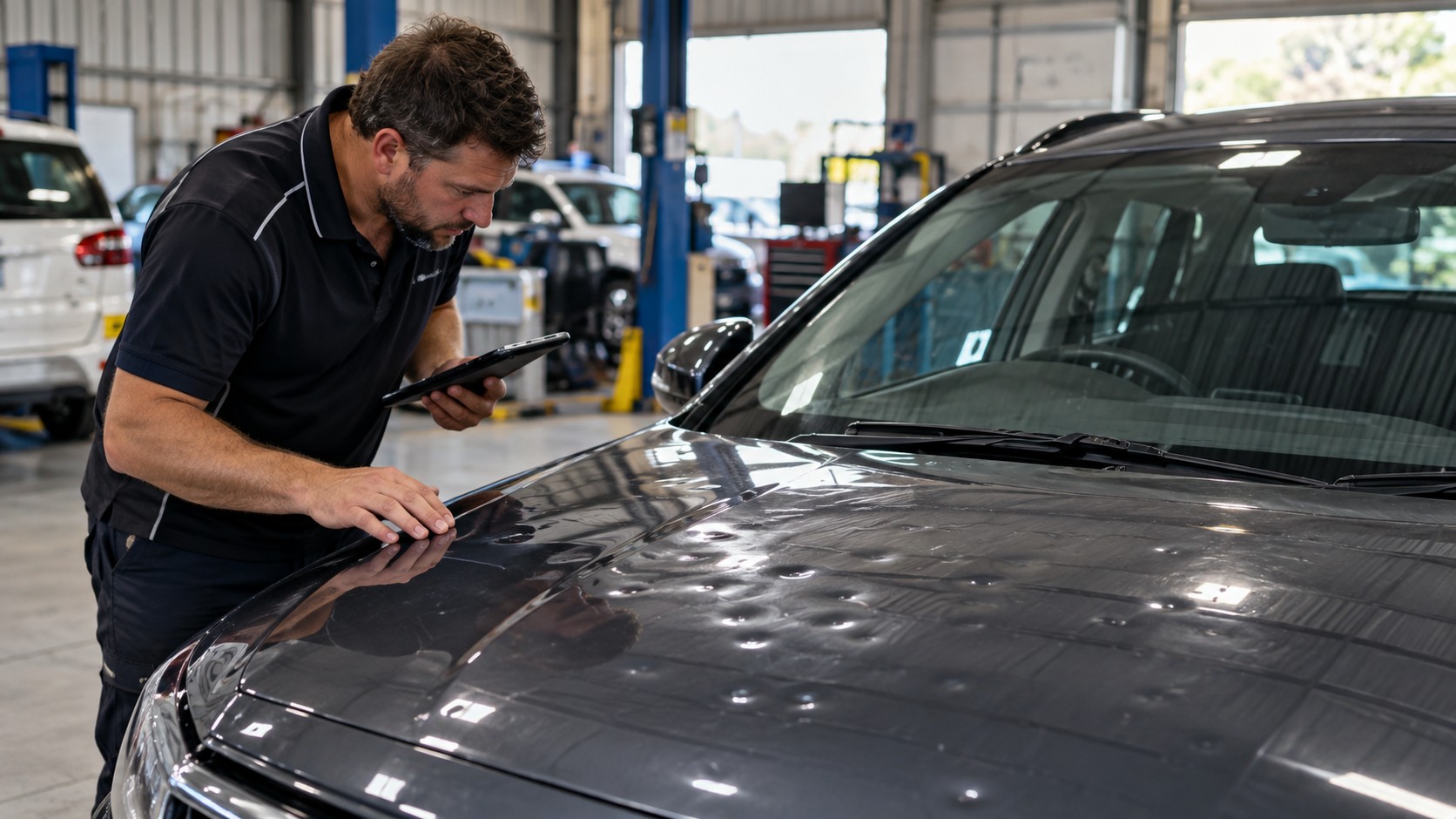
You have walked out to a car with dents across the bonnet and roof. The first question is what this will cost.
The cost to fix hail damage starts with two things you can see. How many dents there are, and which panels they landed on. How big the storm was does not set the price. What moves it most is whether the paint has cracked. Dents with the paint still whole can be pushed back out. No painting is needed, so they sit at the cheap end. Once paint has broken, that panel has to be filled and resprayed. A panel flattened past saving is replaced instead. Either way, the price climbs.
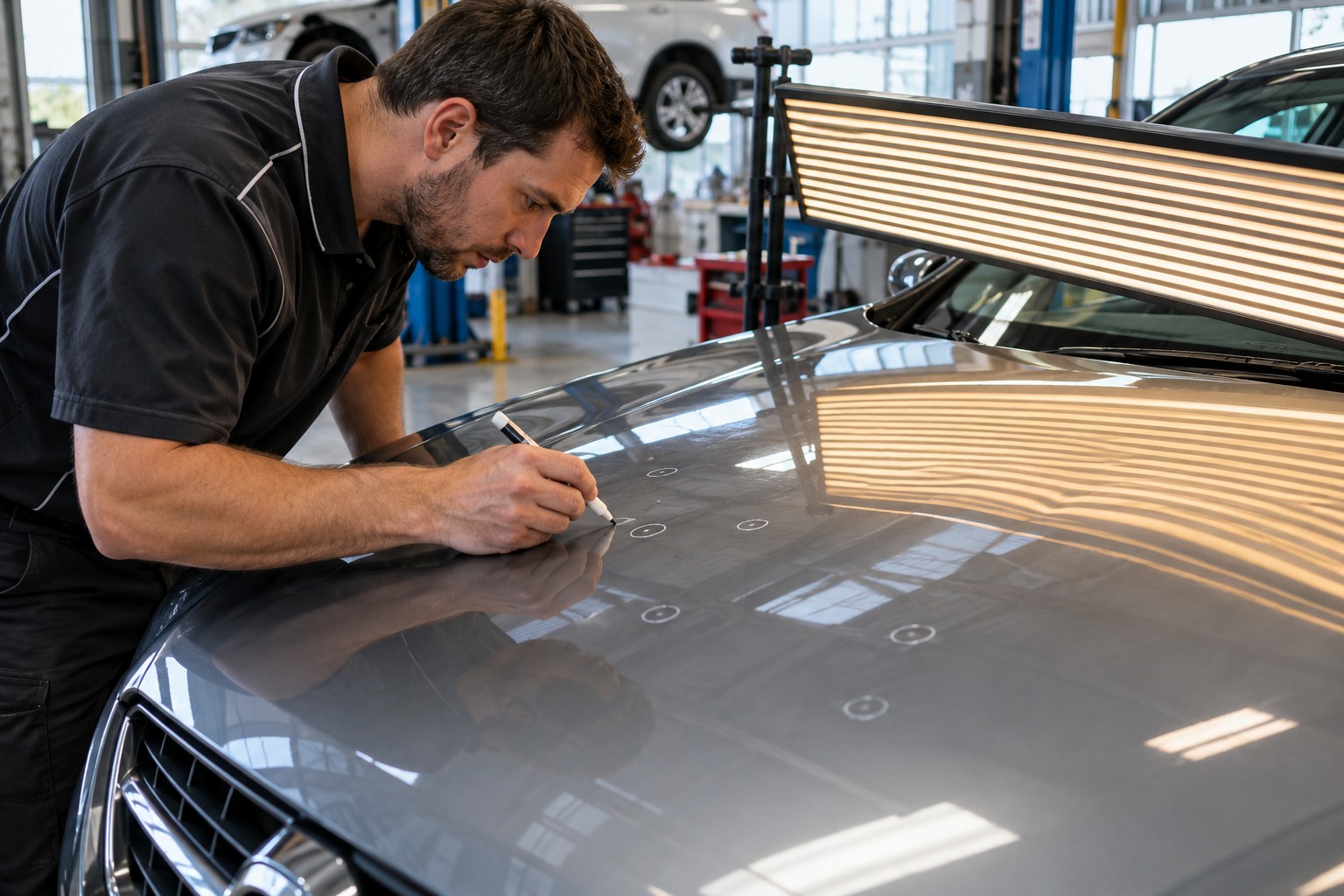
Hail damage is priced by how much of the car it reached. A quoter counts the dents and notes which panels they sit on. Then comes the question of whether the paint survived. That puts a car into one of four levels.
Light hail on one or two panels is the cheapest. The dents are small and round, and the paint is unbroken. A bonnet has taken a handful of them rather than a hundred. Work of this kind needs no filling and no painting, which keeps it at the bottom of the four levels.
Hail spread across the roof, bonnet and boot costs more, because there is more of it. The paint is still intact, so most dents come out the same way. A few creased ones may still need paint. More panels and more dents mean more hours, so the quote rises with them.
Hail that has broken the paint is a different kind of repair. The panel has to be worked back, filled, primed and resprayed. That brings a second trade and its materials into the job, so it costs more than pushing dents out.
Hail heavy enough to take a panel past saving is the dearest. Metal that has stretched will not come back. A deeply dented bonnet is replaced, and the new panel is painted to match. This level costs the most, because the job now takes a new panel as well as paint.
One dent on its own is priced differently again. Its size, its panel and the access behind it set that number. There is a separate guide to what one dent costs.
Where your own car sits is worked out by looking at it. Ask Automotive Panel Service for a quote on your damage.
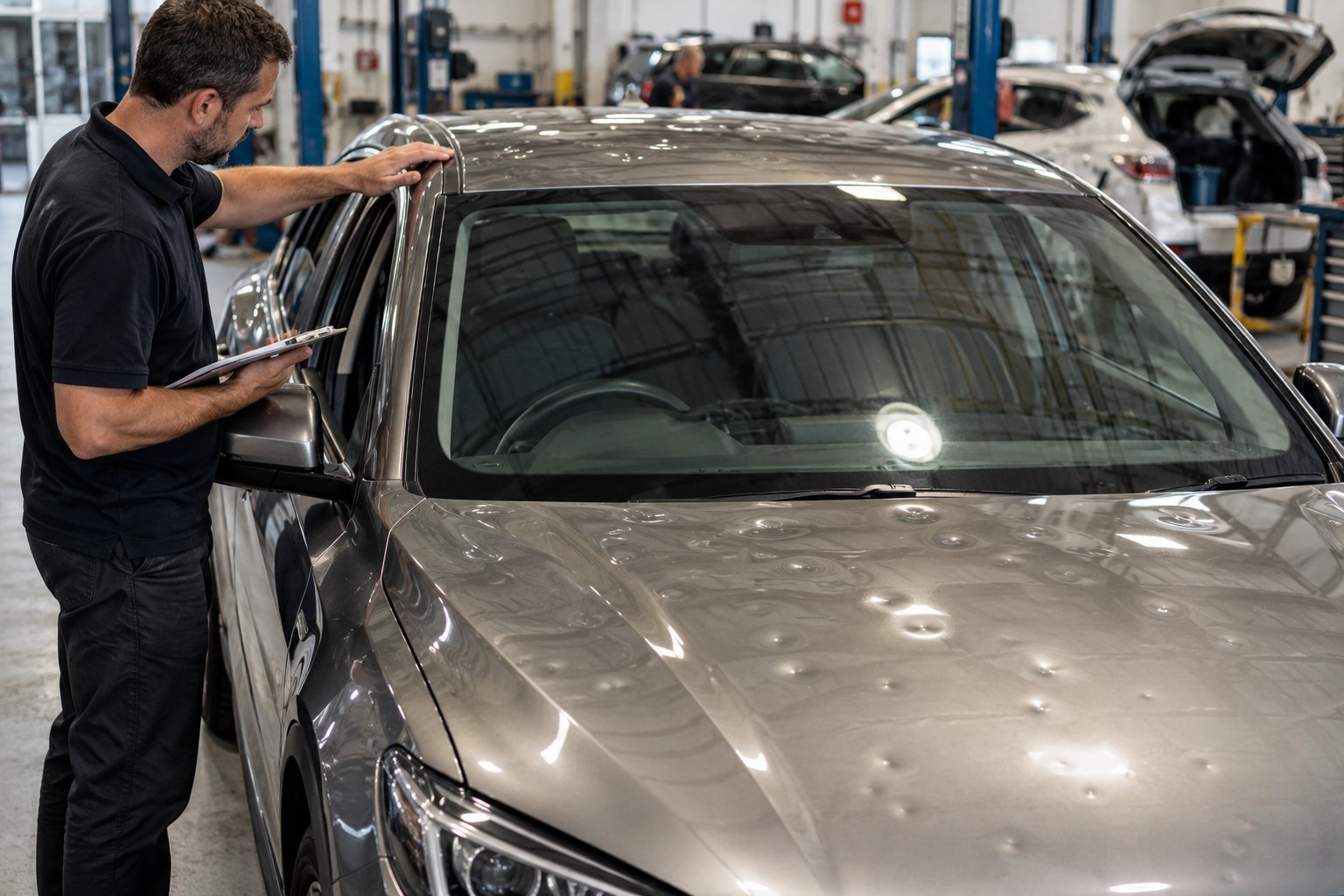
Each level covers a lot of ground. Two cars with the same number of dents can be quoted differently. Here is what moves the number.
Storms in Victoria are not limited to one part of the year. That is worth knowing if your car lives outside. Picture a car parked all day on an inner-Melbourne shopping strip, or in an open staff car park. It sits through a whole storm, not just the first two minutes of it.
Two cars from the same car park can carry the same number of dents and not the same quote. What separates them is whether the paint let go.
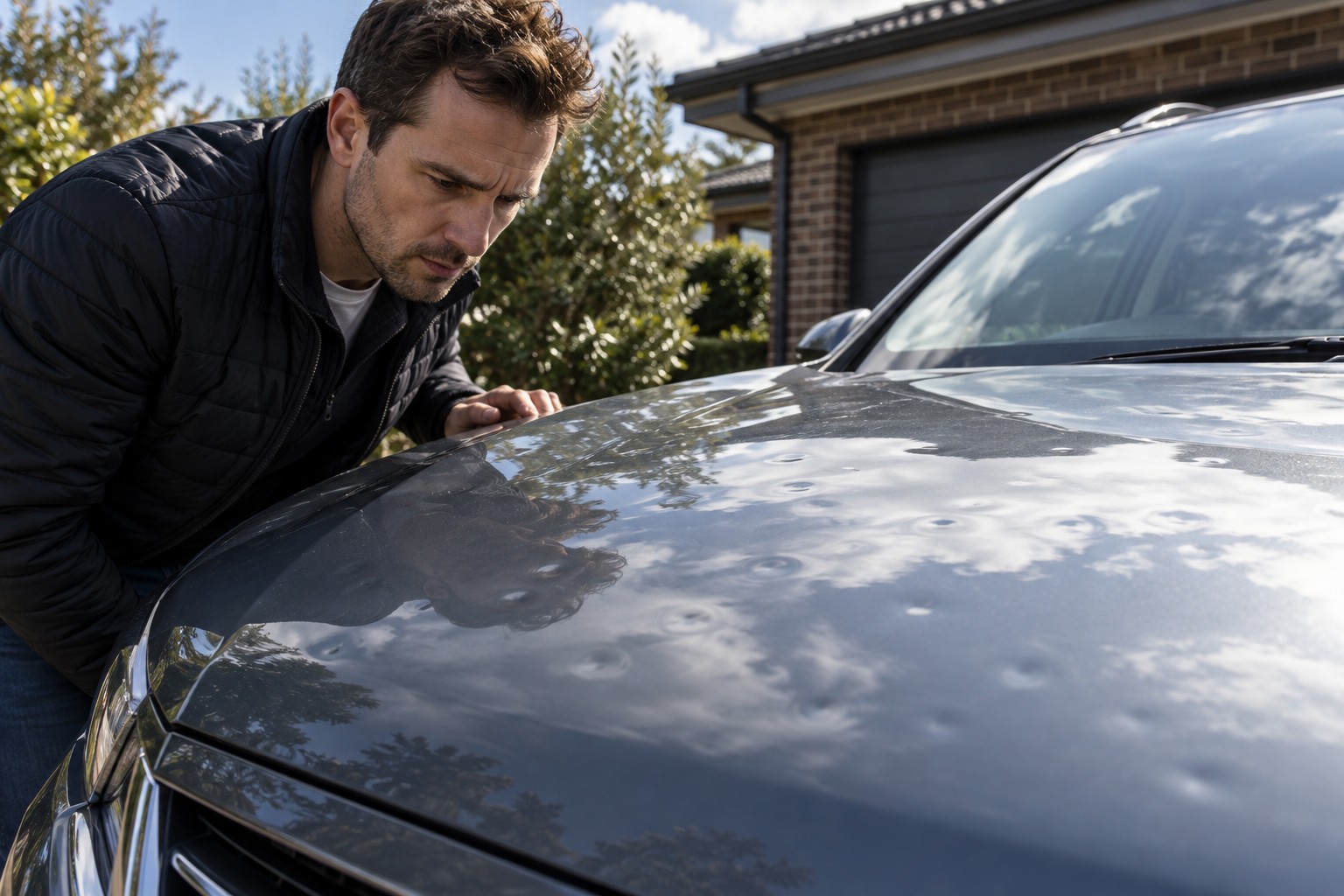
Hail dents hide in ordinary daylight. Bright overhead sun fills them in, and a dusty panel hides them completely. A quick look in the driveway at midday can miss half of them.
Flat, even light is what shows hail. An overcast day, or a shaded spot, lets the dents read as soft shadows. Wash the car first, because dirt hides the shadows.
The torch trick is the one to use at home. Hold a torch low and close to the panel, so the beam runs almost flat along the surface. Then look across the panel from the other side. Each dent throws a small shadow you cannot see from above. Walk the torch along the panel rather than standing still.
Start with the roof, the bonnet, the boot lid and the tops of the guards. Then check the windscreen and the mirrors. Bright specks or chips mean the paint has broken, and that detail decides most of the price.
| What you can see | What the repair involves | Where it sits on price |
|---|---|---|
| Small round dents on one or two panels, paint unbroken | Pushed out from behind, no filling and no painting | The cheap end |
| Dents across the roof, bonnet and boot, paint unbroken | Most pushed out, a few creased ones painted | A step up, because there is more of it |
| Dents with cracked, chipped or flaked paint | Metal worked back, filled, primed and resprayed | Higher again, because paint is involved |
| A panel dented past saving | The panel replaced and painted to match | The dearest of the four |
Get the car under cover if you can, and photograph it while the light is right. The same flat light that shows you the dents shows them to a quoter. A windscreen crack in the driver’s view can fail a roadworthy check. Get it looked at before you drive on.
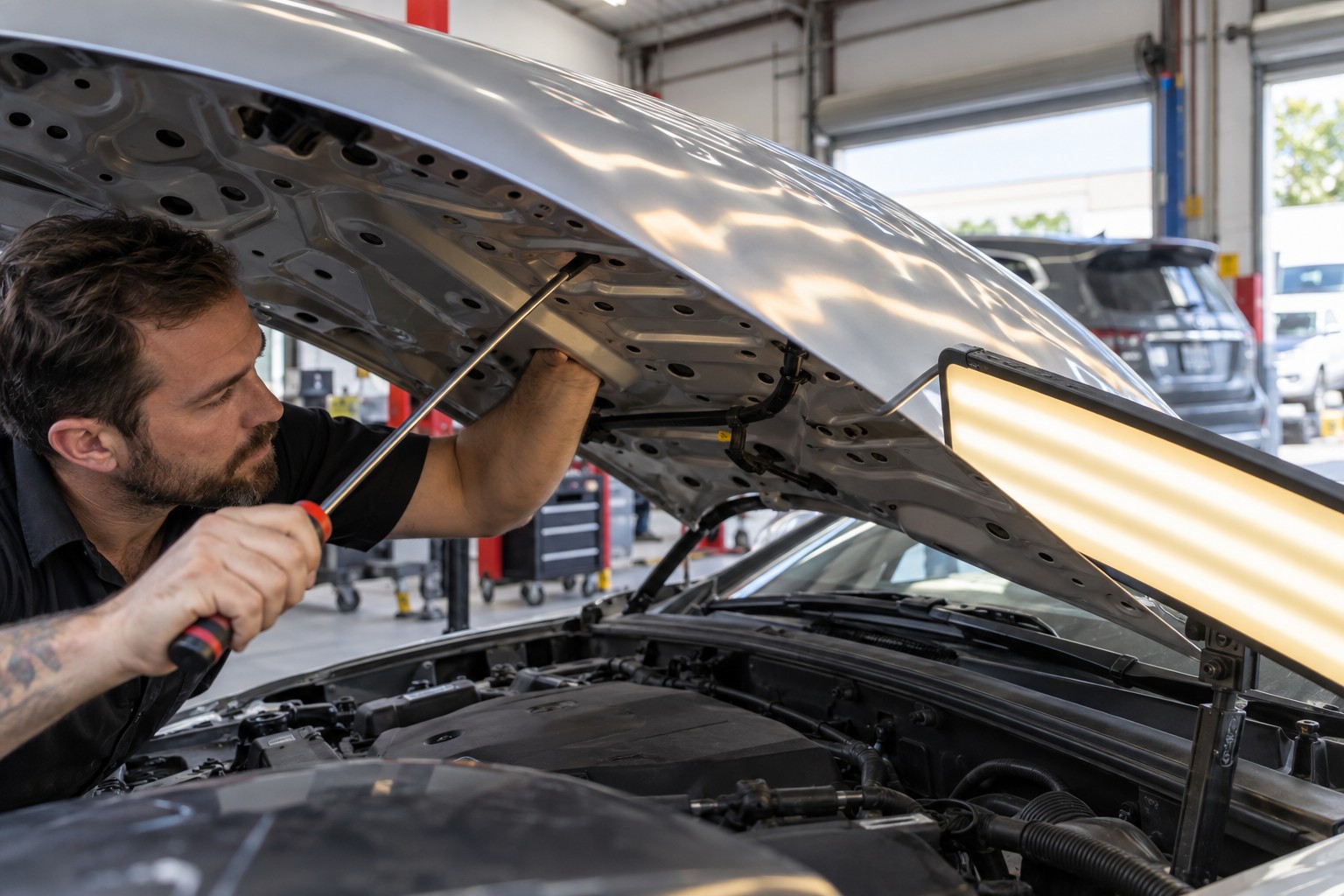
Three methods put hail damage right, and the damage decides which one is used.
Paintless dent removal is the first choice wherever the paint is whole. The dent is worked back out from behind the panel with rods. Nothing is filled and nothing is sprayed, so the factory paint stays on the car.
Conventional repair takes over once the paint has gone. The metal is brought back by hand and filled where it will not come level. It is then primed, sprayed, and blended into the panels either side.
Panel replacement is for metal that will not come back. A bonnet dented deeply across its face is often better replaced than repaired. The new panel is painted to match before it goes on. Which method suits which damage is set out on the new rules of car dent repair.
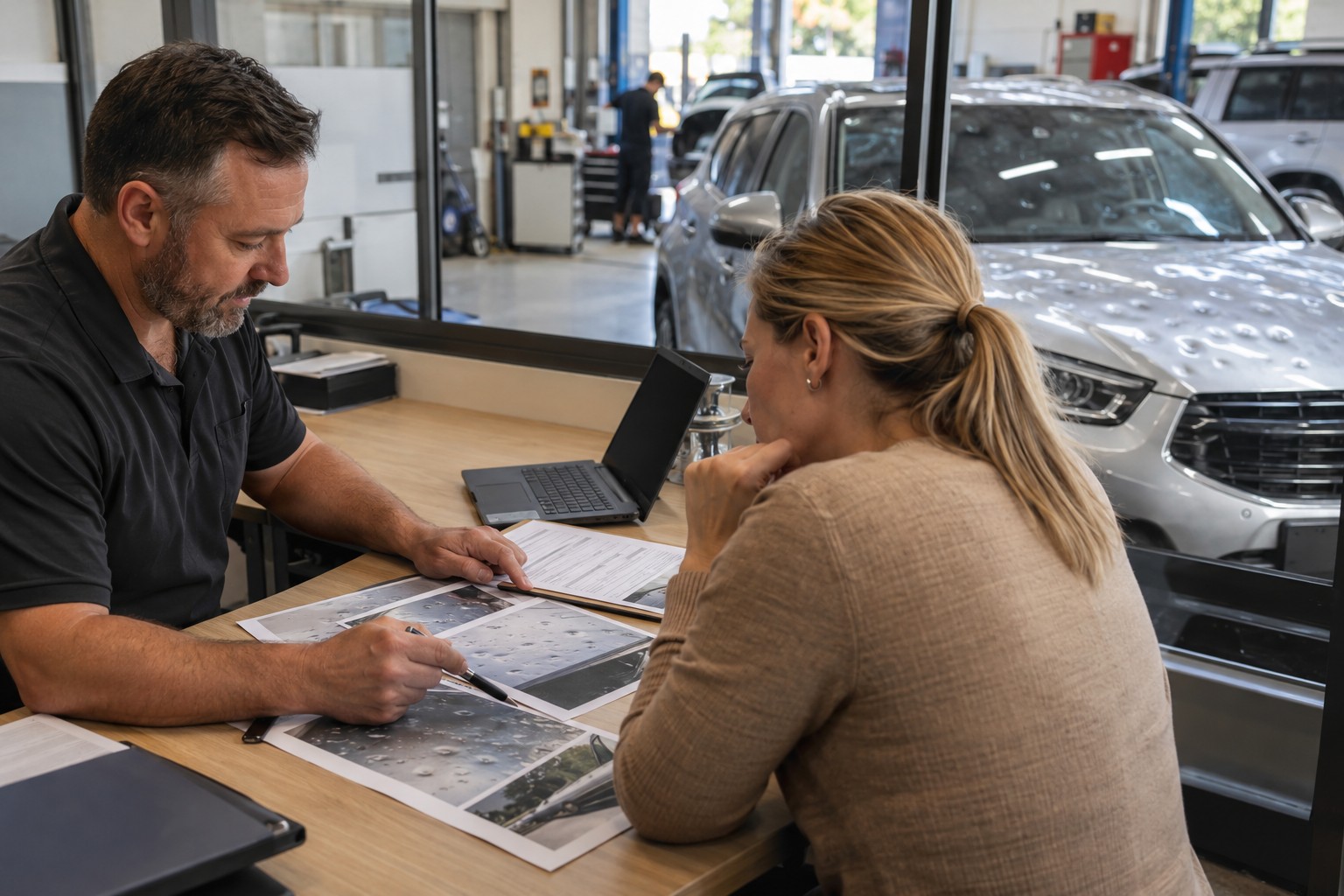
Check the policy before you pay for this yourself. The excess is the first number to look at, because you pay it whether the repair is small or large. Your Product Disclosure Statement sets out what a policy covers, including which excess applies to a storm or hail claim. Whether you can choose your own panel beater sits in the same document. It is a policy term rather than a right in Victoria. A claim also stays on your record and can lift what you pay next year. So whether a small repair is worth claiming on is a judgement to make before you lodge anything.
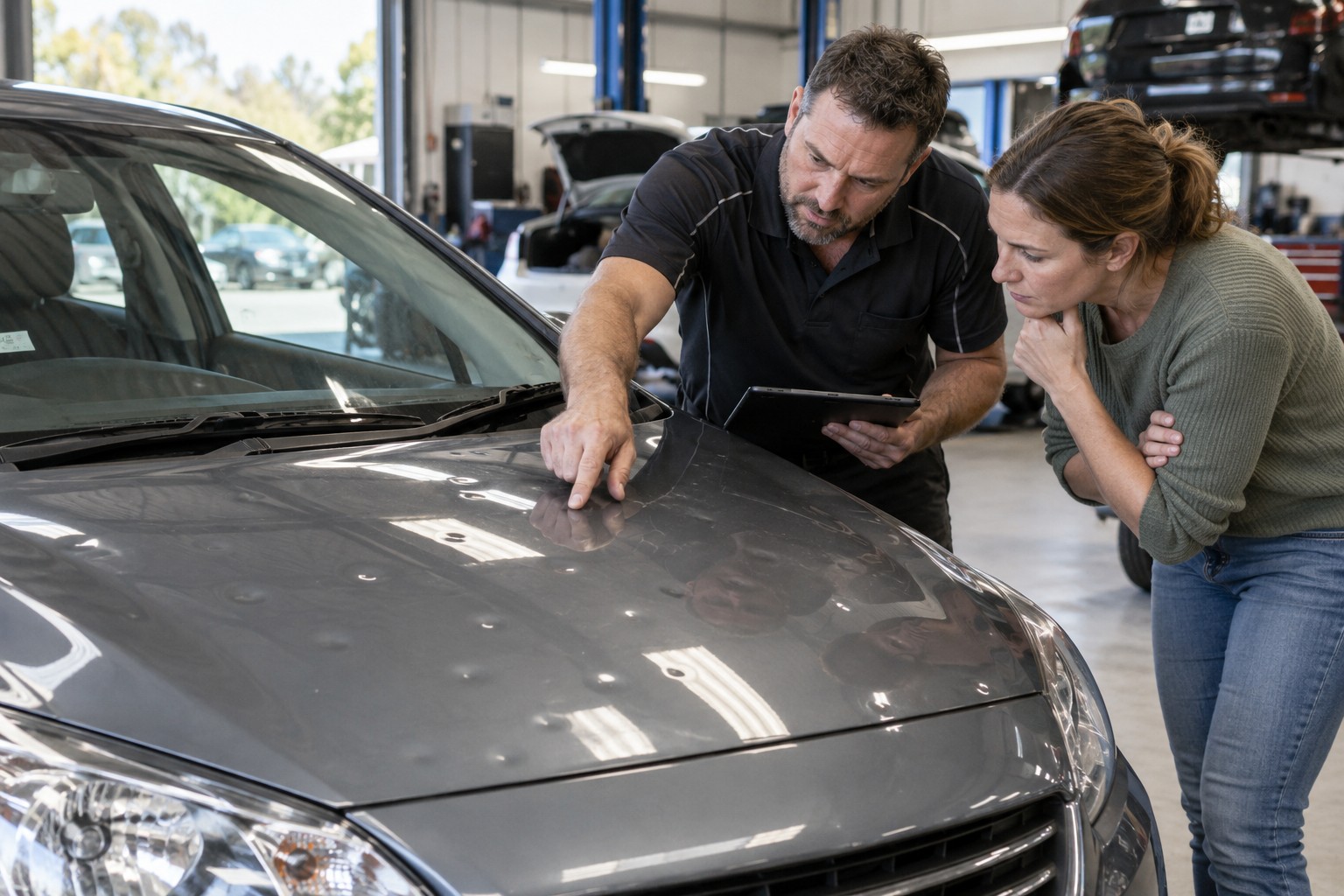
An older car changes the sums rather than the repair. Insurers weigh what a repair costs against what the car is worth. Where a hail repair gets close to that value, they may decide not to repair it. That point is set by the insurer and the policy, not by a fixed figure.
Partial repair is the option that gets overlooked. The worst panels are repaired, and the lighter cosmetic dents are left alone. That keeps the total down and keeps the car looking reasonable. It suits a car that is being kept and driven. Raise it early, because it changes what gets quoted.
Heavier damage raises a different question, which is how much damage is too much to repair. That decision has its own guide.
Photographs taken in flat light record the visible damage, but they may not be enough to price the repair. Contact Automotive Panel Service about the hail damage and ask what is needed for a written quote. Check your policy and claim requirements with your insurer before committing to work.
It depends on how much of the car the hail reached, and whether the paint survived. Light damage on one or two panels sits at the bottom of the four levels above. A car needing panels replaced sits at the top.
Yes, as long as the paint over them is still whole. The metal is worked back from behind the panel instead. The finish that came with the car is never touched.
A roof faces straight at the sky, so it collects more dents than the sides of the car do. Getting a tool in behind it also takes longer than on a bonnet.
Wash the car first, then look at each panel in soft light. A torch laid low against the paint will throw a shadow off every dent. Count them, and look for any spot where the paint itself is chipped or split.
Dents with the paint still whole can wait without getting worse. Where the paint has broken, water reaches the metal underneath and the job grows. That case is worth moving on.