
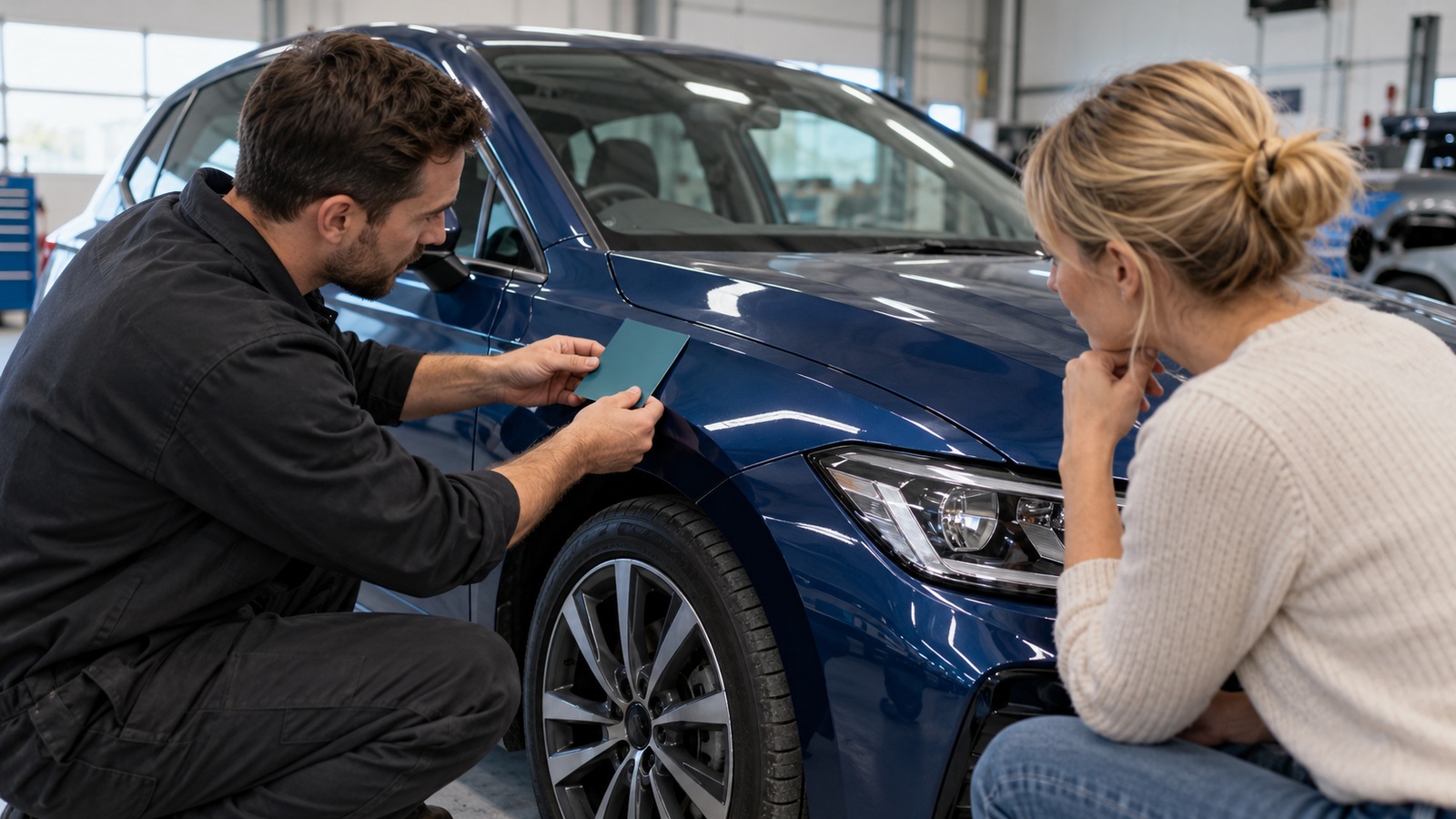
You want the car to look different, and you have found two trades that both say they can do it.
A car wrap and a respray answer two different problems. A wrap is a vinyl film laid over the paint already on the car. It needs that paint to be sound, and it is made to come off again. A respray replaces the finish instead of covering it. It is the only one of the two that deals with paint that is cracked, peeling, or damaged. So the state of the paint decides this more than taste does. Sound paint and a change of mind point to a wrap. Failing paint points to the paint shop.
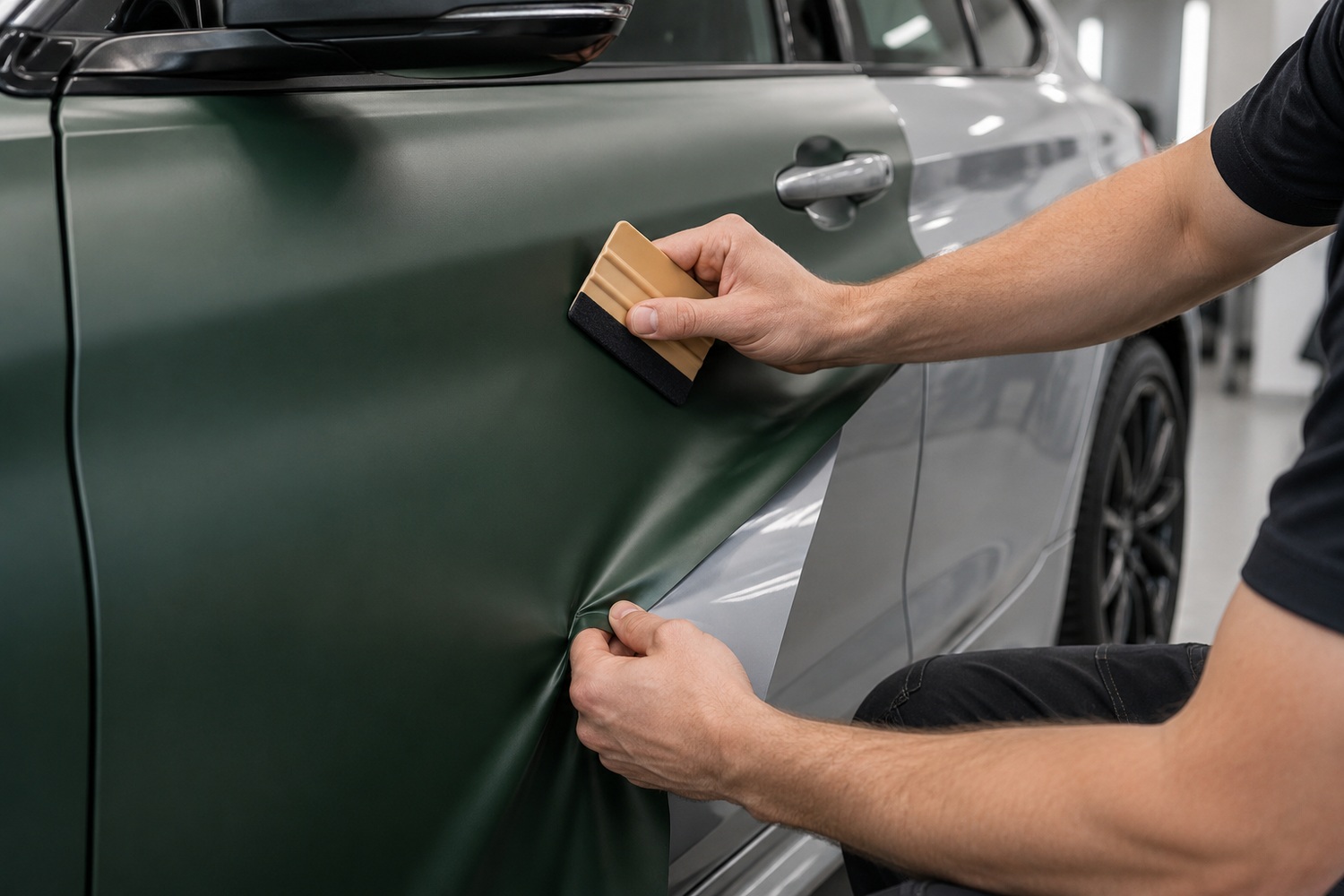
A vehicle wrap is a self-adhesive film cut and heated onto the panels. 3M describes its 2080 wrap film as a multi-layer cast adhesive-backed film for full-colour vehicle wraps, accents, or partial decoration.
A respray is refinishing. The panel is prepared, then new colour and clear coat are sprayed on, so the old finish is gone rather than hidden. Full resprays, touch-ups, colour matching, and paint correction are all refinishing work.
The difference that matters is what each one treats: a wrap treats how the car looks, a respray treats the surface itself.
| What you are comparing | A wrap | A respray |
|---|---|---|
| What it is | Film laid over the paint | New colour and clear coat sprayed on |
| What the surface must be | Sound paint, free of defects | Prepared, including where paint has failed |
| Can it be undone | Made to be removed, from most surfaces | No, the old finish has been replaced |
| What it fixes | Appearance | The paint itself |
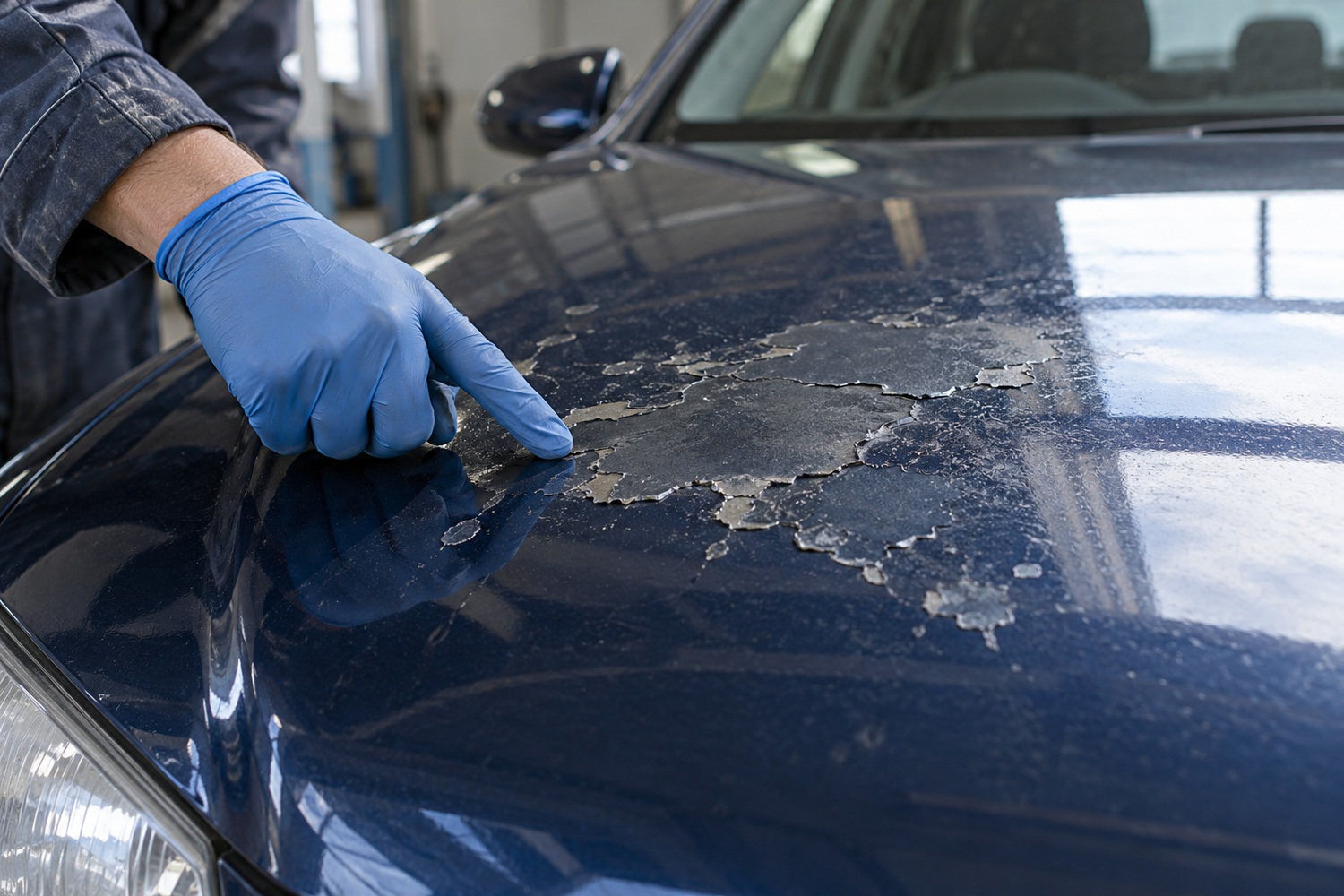
Not where the paint has failed, and that answer comes from the film maker rather than from a paint shop.
3M’s instruction bulletin for vehicle colour change work tells the installer to make sure the paint is sound. It defines sound paint as paint that is free of defects, and it lists what counts as one:
A wrap covers a paint problem. It does not repair one.
Two things follow from that inspection list. Film may not hold on a surface like that. And when the wrap comes off, it can lift weak paint with it. 3M says it gives no warranty for paint damage during removal, or for staining that shows afterwards.
There is a middle option for bad paint spots, and it is weaker than it sounds. The same bulletin says primer may be put on those spots to prepare them. It then says that does not guarantee success, carries no warranty, and leaves the spot recorded as a problem area.
A panel that has been repaired before is a different case. Filler used for damage is on that inspection list. So a repaired panel is something the installer has to look at and write down. It is not ruled out in advance. That call belongs to the person who can put their hands on the surface. If you are still working out what the paint damage needs, that decision is set out separately.
There is no single number, and the one figure the maker publishes is not the answer either.
3M gives an expected performance life of eight years for the 2080 films. The bulletin attaches three conditions in the same breath. The figure is unwarranted. It is for film with no extra graphic protection. And it is measured on a flat, vertical, outdoor surface in Northern European conditions. A bonnet in Melbourne is none of those things. Read eight years as a benchmark for the material, not a promise about a car.
The bulletin also lists what moves the real result. It names the mix of materials used, the choice, condition, and preparation of the surface, surface texture, and how the film was applied. It also names the angle and direction of sun exposure, the conditions the car lives in, and how the film is cleaned and looked after.
Paint on a roof or a bonnet takes far more sun than paint on a door. A car parked on the street in Richmond collects it on the horizontal panels first. Those are the panels a wrap is most often asked to cover.
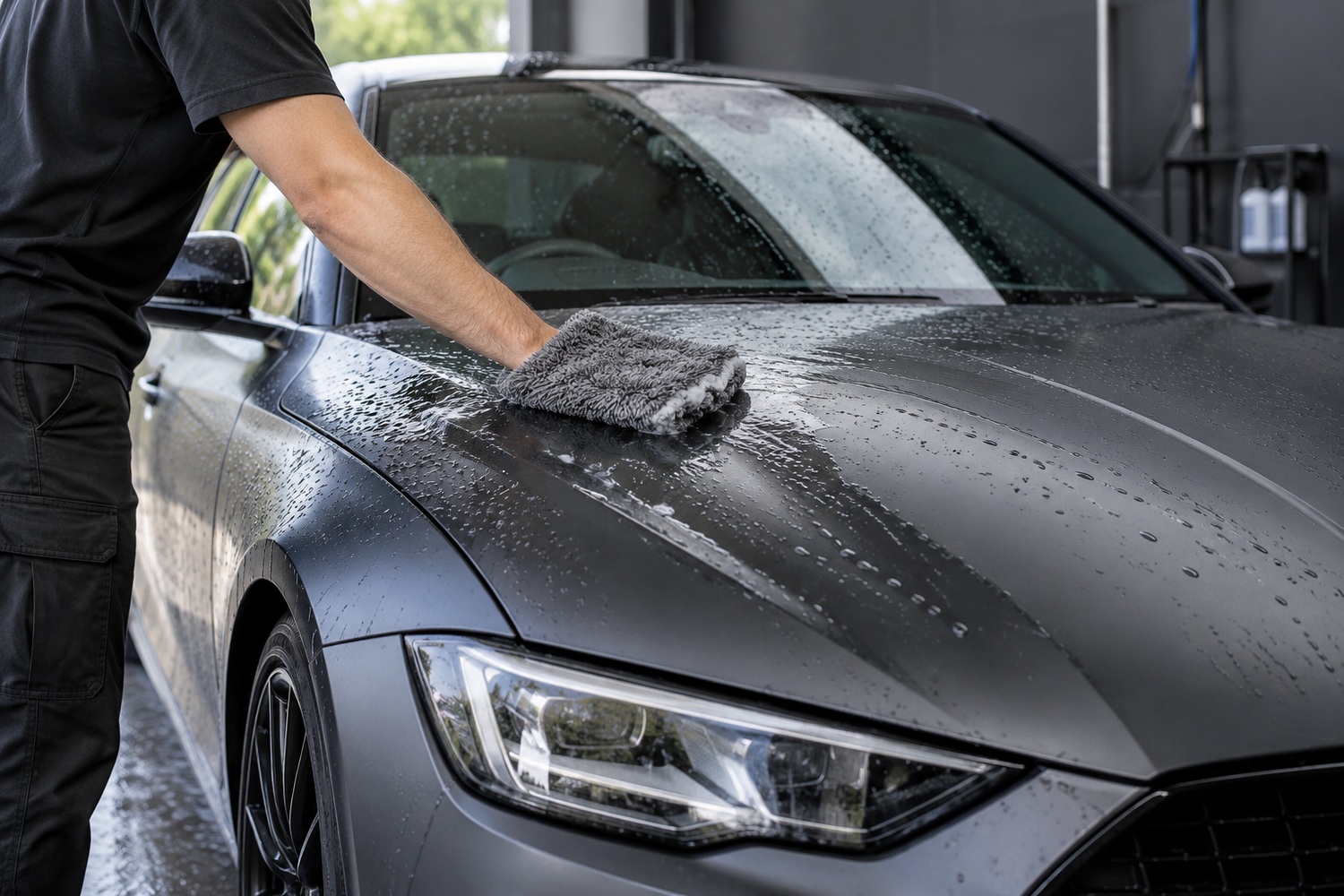
3M says to clean the film with a wet cleaner that is not abrasive and has no solvents. It should be neither strongly acidic nor strongly alkaline, which the bulletin puts at a pH between 3 and 11. The film should never be scrubbed, and it should be kept out of automatic car washes with brushes. Scratches and abrasion marks may not come out of the film’s finish.
Three different things get mixed together when somebody quotes a lifespan. There is what the material is expected to do. There is what the maker will stand behind. And there is what happens on one particular car. Paint carries no universal lifespan promise either.
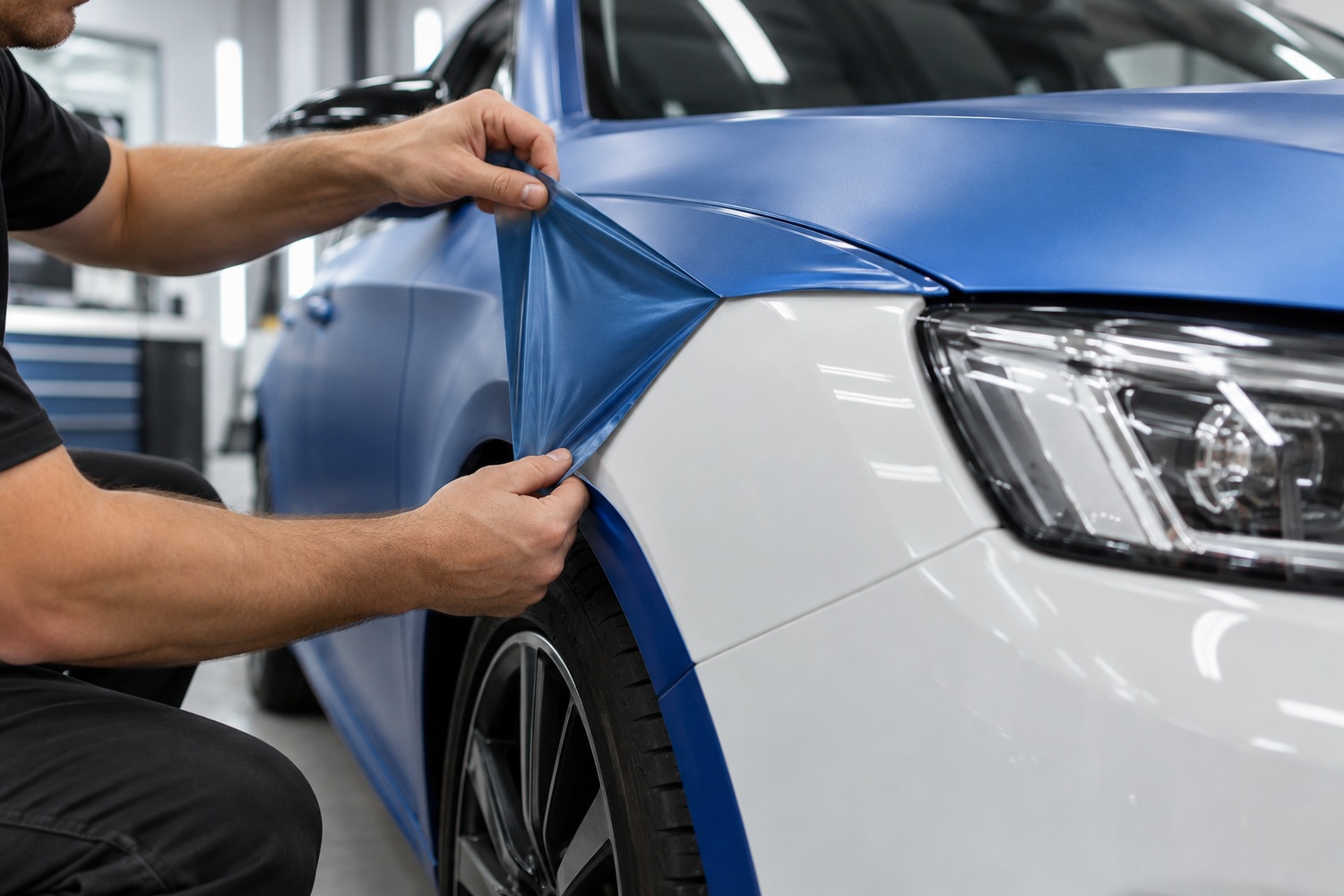
The wrap does, and only where the paint under it is sound. That is the strongest point on the wrap side.
Film is made to be removed. 3M says the 2080 film can be taken off with heat or chemicals from most surfaces inside the warranty period. Most surfaces is not all surfaces. The inspection page in the colour change bulletin exists because removal can damage paint that was weak to start with.
A respray is the other way round. The finish on the panel is replaced, so there is nothing underneath to go back to. On a car whose paint has already failed, that is the point rather than a drawback.
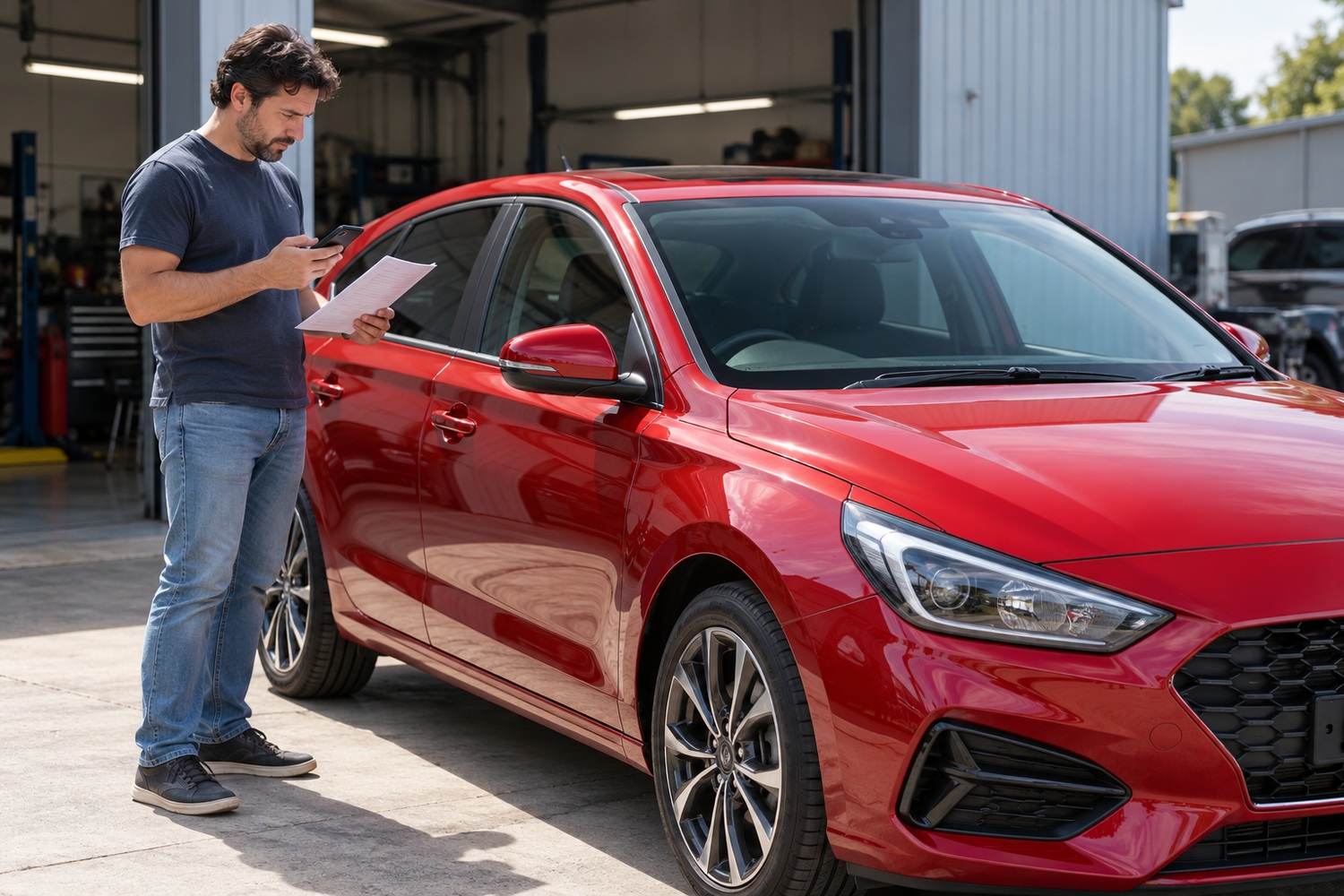
If the work changes what the register says about the car, yes, and there is a deadline. Regulation 70(2) of Victoria’s Road Safety (Vehicles) Regulations 2021 sets it out. If a change is made to a vehicle that affects its details as recorded in the register, the registered operator must notify the Secretary of the change within 14 days. The regulation attaches a penalty to that, so it is not a formality.
The Australian Business Licence and Information Service lists a change of body, colour, or engine among the changes to be notified in Victoria. It names the agency as the Department of Transport and Planning, VicRoads. It cites the Road Safety Act 1986 and those same regulations.
Two things are easy to get wrong. The duty sits with the registered operator, not with the shop doing the work. And not every job changes a registered colour. A panel repaired in the car’s own colour does not. Covering part of a car in film is not automatically a change either. Where it is not clear cut, ask the road authority before the work starts. It holds the register and it sets how to tell it.
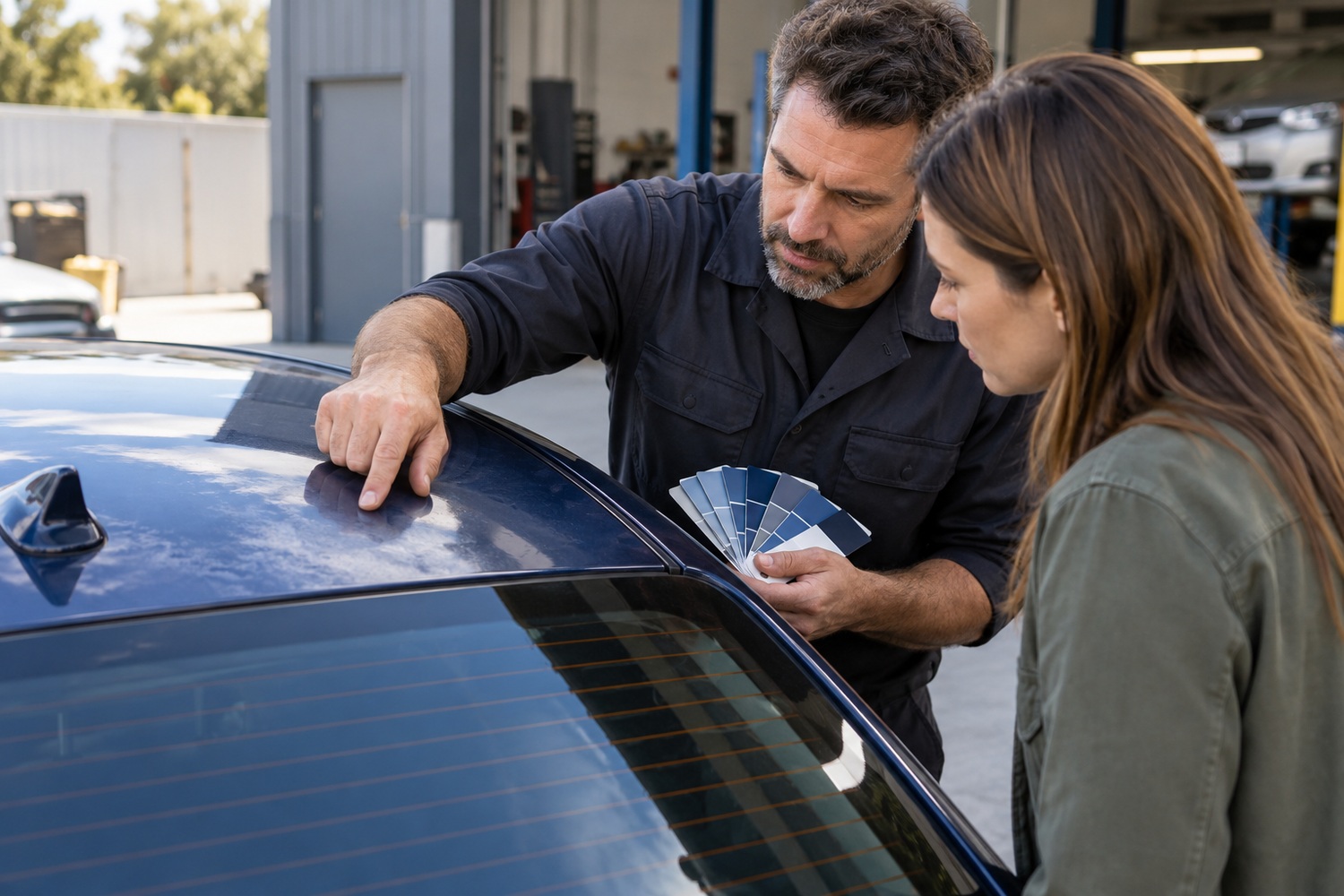
Start with the paint, then the goal. The paint rules options out and the goal picks between what is left.
Cost comes into it. The two trades quote different work on different cars. The only figure that means anything is the one on your own quote.
Spray painting at Automotive Panel Service covers full resprays, touch-ups, colour matching, and paint correction. A wrap is a wrap specialist’s job rather than a panel shop’s. If the paint is the problem rather than the colour, the contact page is where to start. A panel is easier to judge in daylight than in a description.