
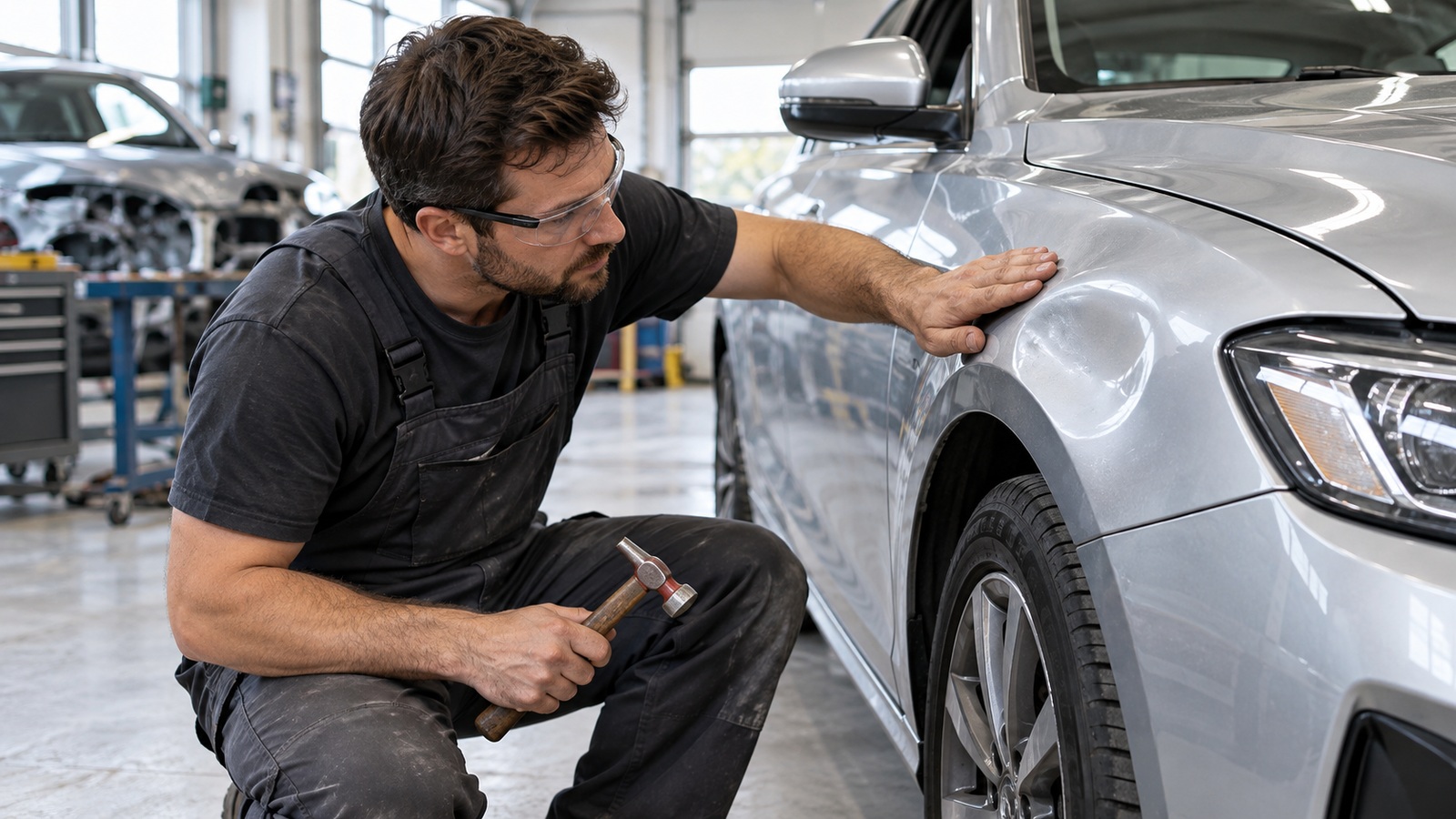
There is a dent in a door or a guard, and the question is what panel beaters do to it.
Panel beating is reshaping the car’s own sheet metal back to its original form, instead of fitting a new panel. The damage is worked out from behind with a hammer and a dolly held against the far side. Where there is no access behind it, it is pulled out from the front. Then it is finished flat. The method works while the metal can still be persuaded back. It stops once the metal has been stretched, creased, or hardened past that point.
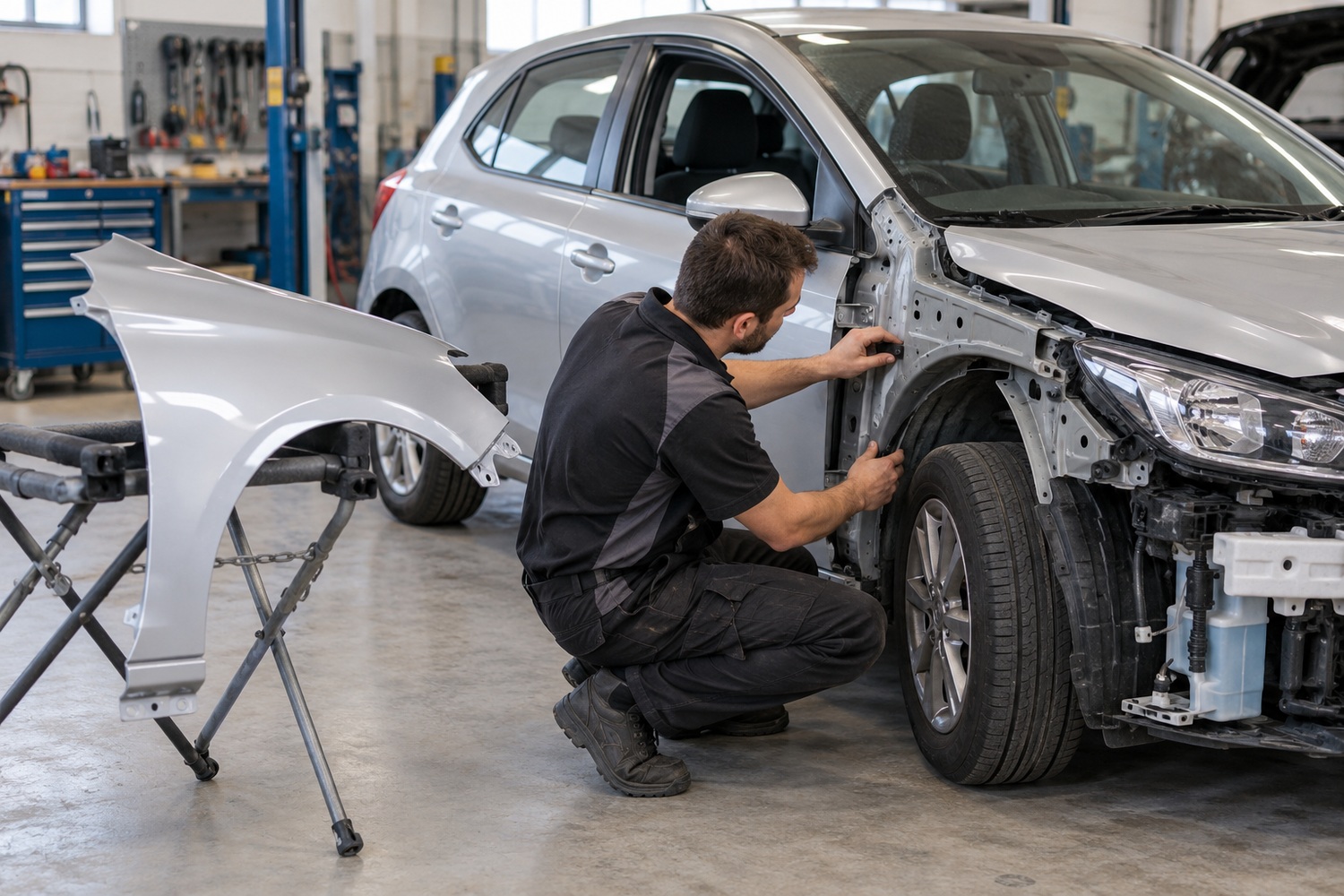
A panel beater works on the body of the car, not on anything under the bonnet. The trade covers three jobs: reshaping damaged metal, replacing a panel that will not come back, and painting what has been repaired.
Reshaping is tried first, because the panel already on the car was made to fit it.
Where a panel is past reshaping it comes off, and a new one is welded, bonded, or bolted in its place. Whether a panel is repaired or replaced is a call with rules of its own.
Metalwork is one stage inside a larger job. The stages either side of it belong to the wider repair, and what happens during a smash repair covers the whole sequence.
Structural work, where the frame under the panels has moved, is a different job again.
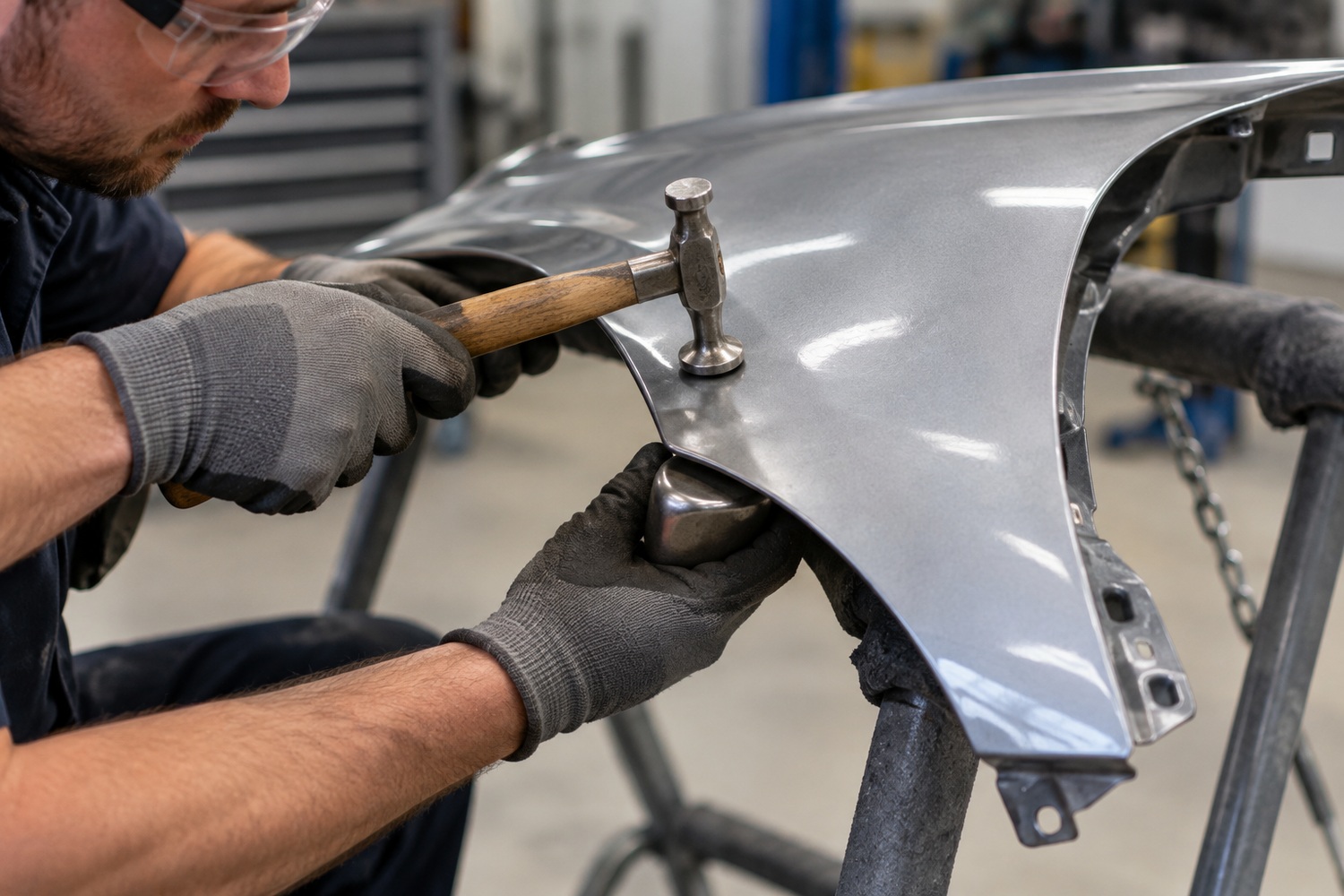
Panel beating is the work of moving damaged sheet metal back to the shape it left the factory in. The two main tools are a hammer and a dolly. A dolly is a shaped steel block, held against the back of the panel while the hammer works the front. The metal is moved between the two, rather than knocked in one direction.
Hitting a dent from one side alone drives it the other way and stretches it. Worked between hammer and dolly, the metal is held while it is shaped.
Doing this without heat has a name in the trade: cold straightening. Hammer and dolly work is one example of it. Glue pulling and paintless work are others.
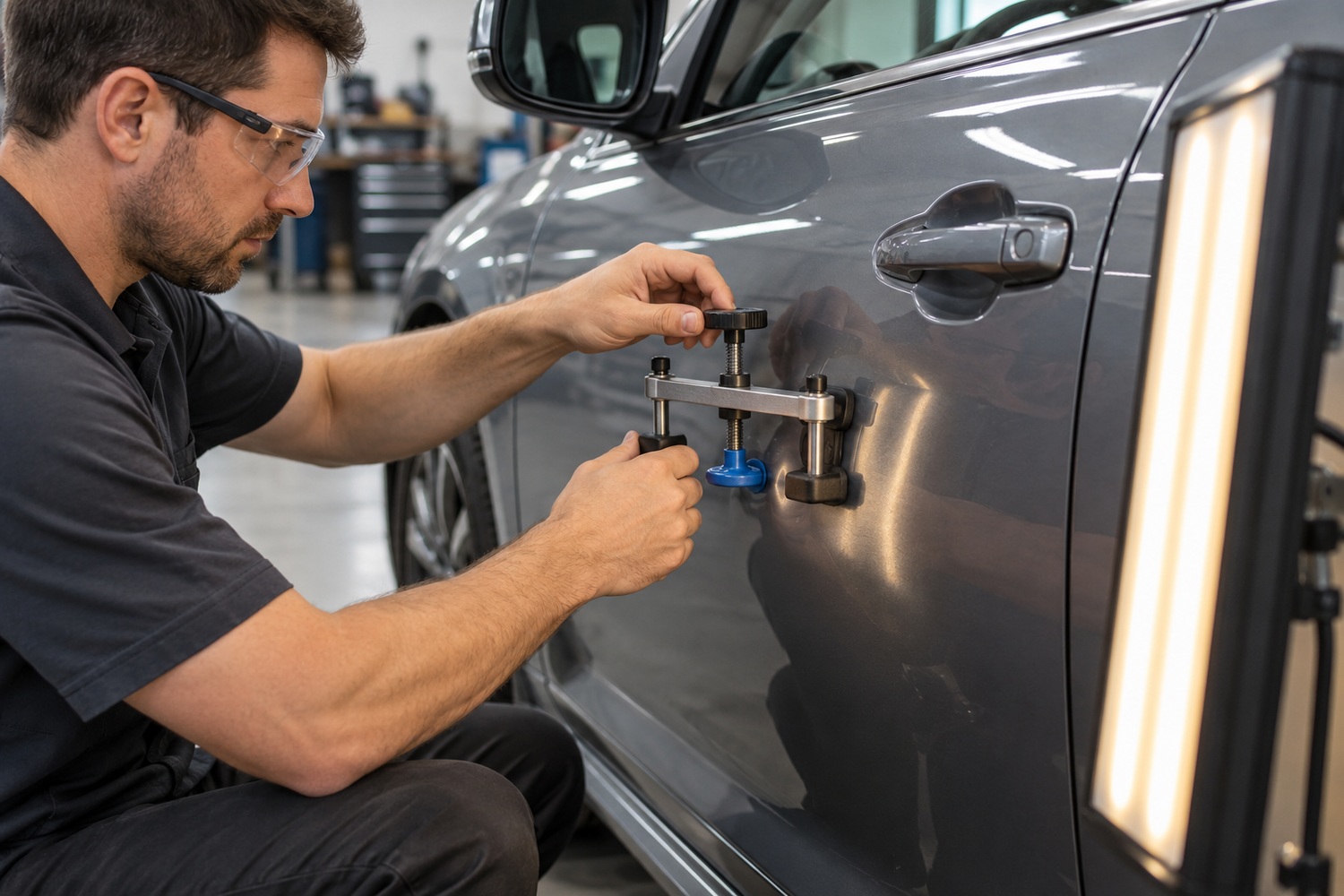
A dent comes out one of three ways, and the panel decides which. Many dents take more than one.
Park in the lane beside the tram tracks on Victoria Street in Richmond, and the damage that turns up is a flank or a door skin rather than a corner. That is the kind of dent with room behind it.
A panel beater checks the work by hand as much as by eye.
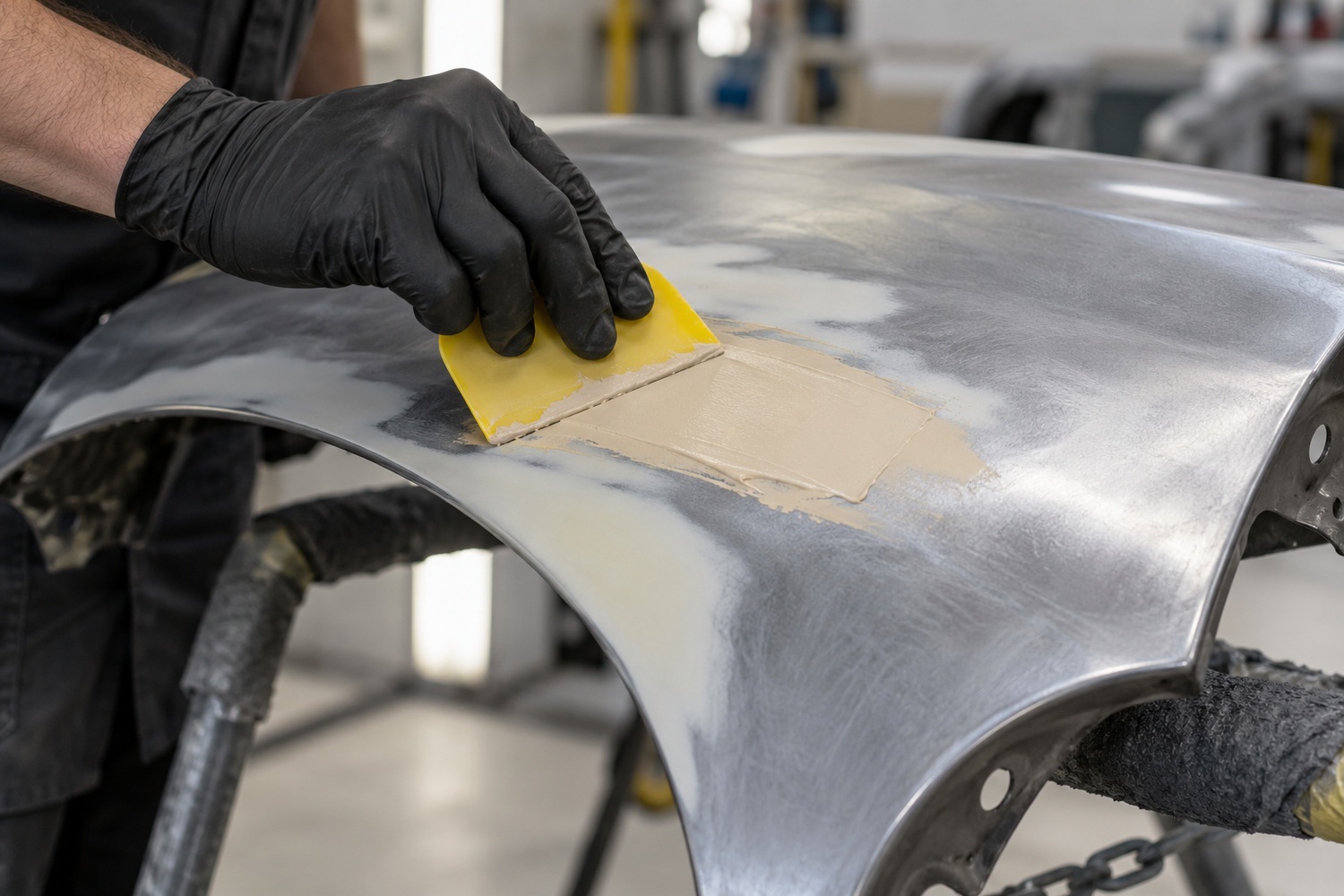
Filler is a paste. It is spread over repaired metal, left to harden, then sanded back to the shape of the panel. Its job is the last fraction of a millimetre that metalwork cannot take out.
I-CAR, the training body for the smash repair trade, puts the order plainly. Body fillers fill small surface imperfections and refine the shape of repaired panels. Panel shape itself should be restored with proper metal working tools and techniques, so that filler use stays minimal.
So the metal comes back first, and filler finishes the surface. Filler spread over metal that was never brought back to shape is doing the metal’s job instead of its own.
Filler finishes a repair. It does not make one.
There is a maximum thickness, and the product sets it rather than the eye. I-CAR’s guidance is several thin layers rather than one thick coat. It also says not to go past the filler’s maximum thickness once it has been sanded back. The figure for that comes from the product’s own data sheet. It is just as plain about poor filler work: badly applied filler can mean the job is done again later.
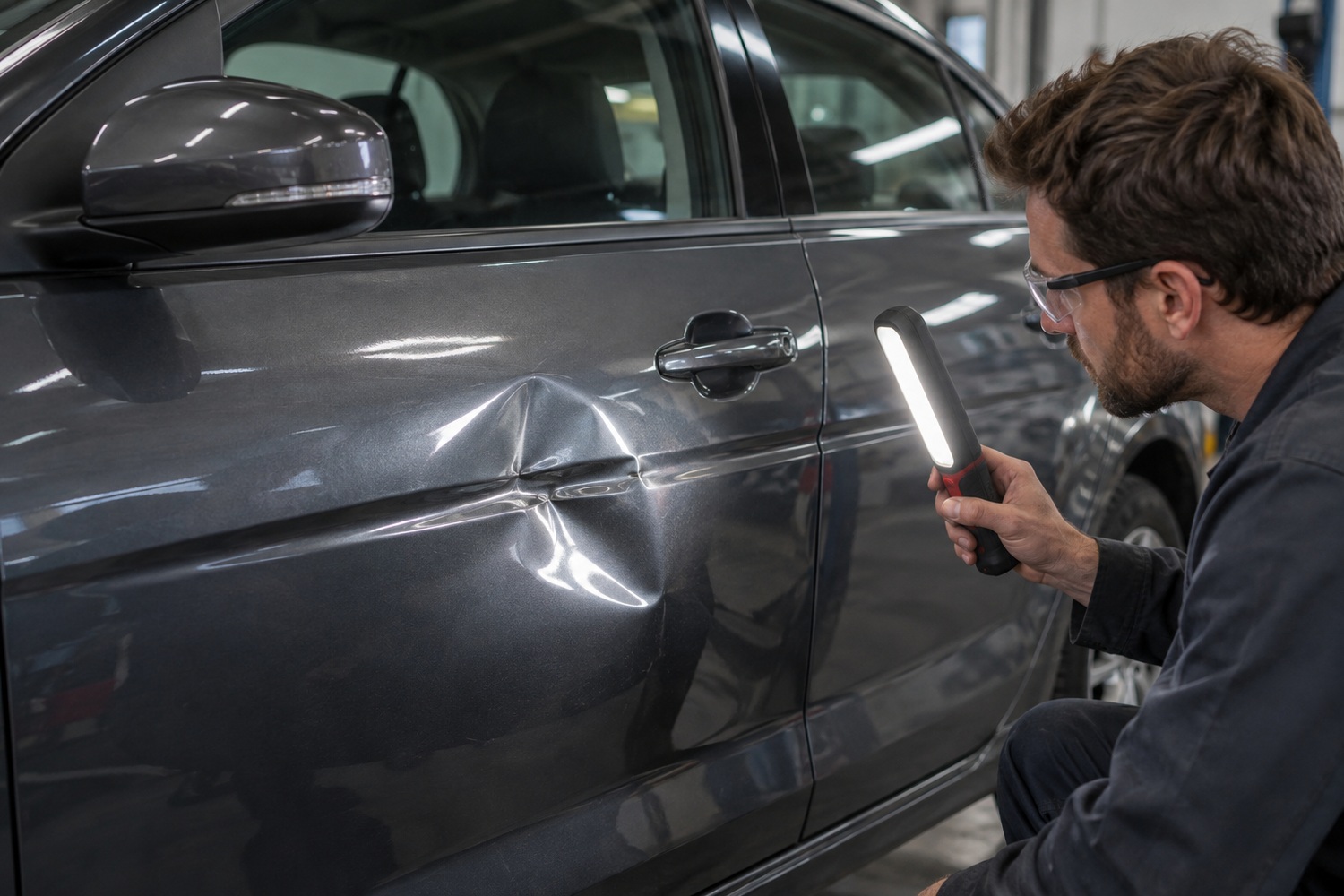
Some damage does not come back, and the shape of it says more than the size.
A smooth dent spreads its damage across a wide area. A sharp crease gathers it into a line. The metal along that line has been stretched much further than the metal either side.
Steel also gets stronger as it is shaped. I-CAR calls that work hardening: strengthening through shaping. The more damage there is, the more of it happens. So steel bent hard once, or straightened once already, moves less willingly the next time. Stronger steel is harder to straighten again at all.
Body lines and crowns are the hardest ground on a steel panel. A body line is the pressed crease that runs along it, and a crown is its curve. Both stiffen the panel as well as shape it. That means they were work hardened once at the factory, and again by the damage.
Aluminium does not behave like steel under a hammer. Steel has shape memory and aluminium does not. A dented aluminium panel takes on its new shape and forgets the old one. It also stretches more readily than steel, and shrinking it calls for lower heat and closer watching. Aluminium panels can be repaired, and there are tools and training made for the job. It is harder work, more limited, and not something every workshop takes on.
| Damage | Does the metal come back? | What happens instead |
|---|---|---|
| Metal stretched by the impact | Yes, once it is shrunk | The spot is heated, then cooled fast to draw it in |
| A sharp crease | Often not all the way | Replacement where the crease will not come out |
| Steel straightened once before | Less willingly each time | More pulling, or replacement |
| A body line or a panel edge | Resists straightening hardest | Replacement is likelier than on a flat area |
| An aluminium panel | Sometimes, with more care | Lower heat and specialist tools, or a new panel |
Which of these a panel beater is looking at is also what dent repair costs turns on.
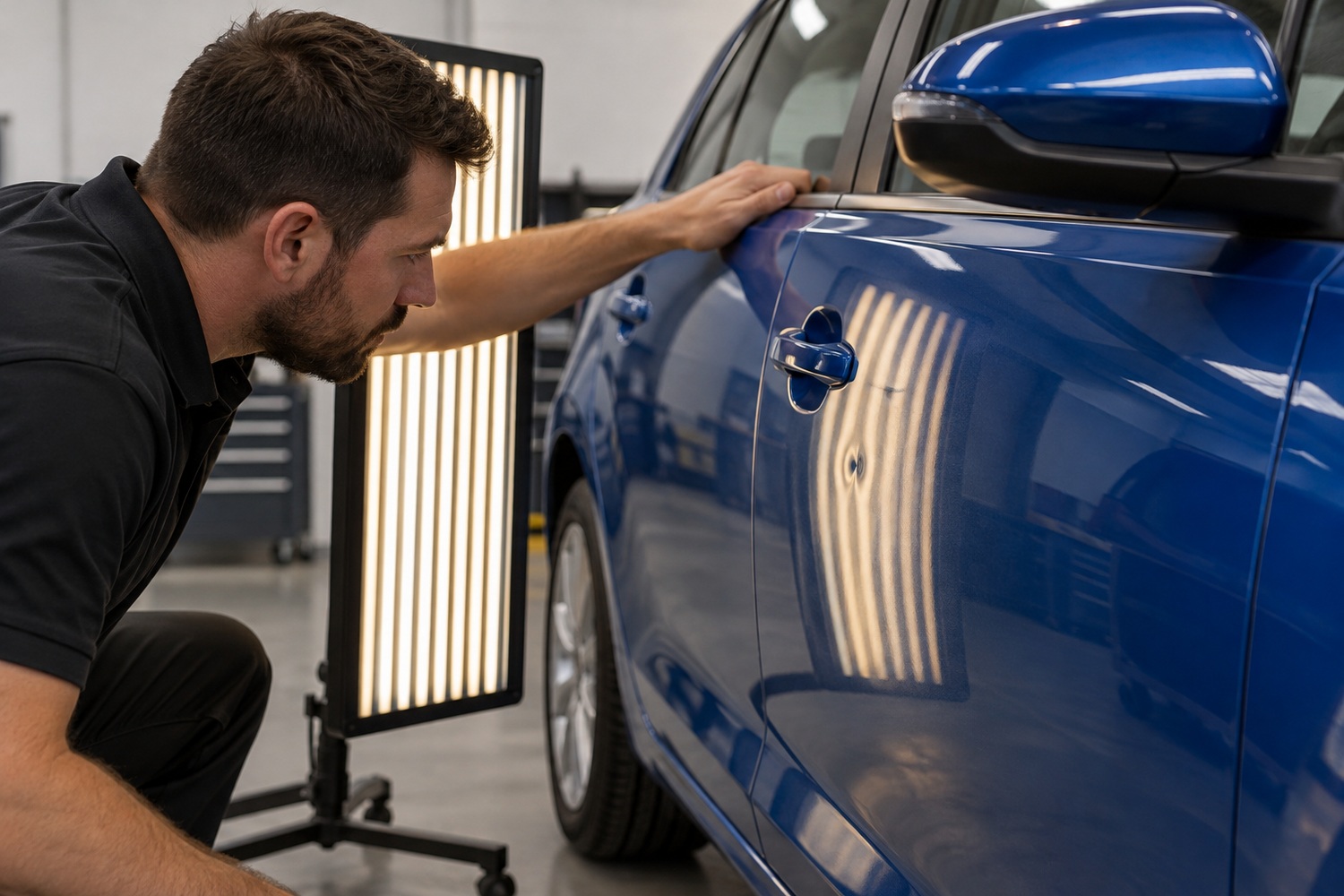
Paintless dent repair moves the metal without breaking the paint. It is for damage where the paint is still sound, and the comparison of paintless and panel repair sets out which a dent suits. Panel beating is the answer where the paint is coming off anyway.
The panel beating page at Automotive Panel Service sets out what the work covers. If you want a dent looked at, bring the car in or use the quote form, because a panel tells a panel beater more than a description does.