
Your bonnet has gone flat. In the right light there are fine circular marks across it, and the colour looks tired next to the doors.
A cut and polish is two jobs, not one. The cut is the abrasive half. It shaves off an extremely thin layer of clear coat, taking the surface down to the bottom of the marks sitting in it. The polish then refines what the cut left behind, until the paint reflects cleanly again. Together they bring the gloss back on paint that has gone dull, swirled or lightly marked. They do nothing at all for damage that has gone through the clear coat.
Which of those two you are looking at decides whether this is worth your money.
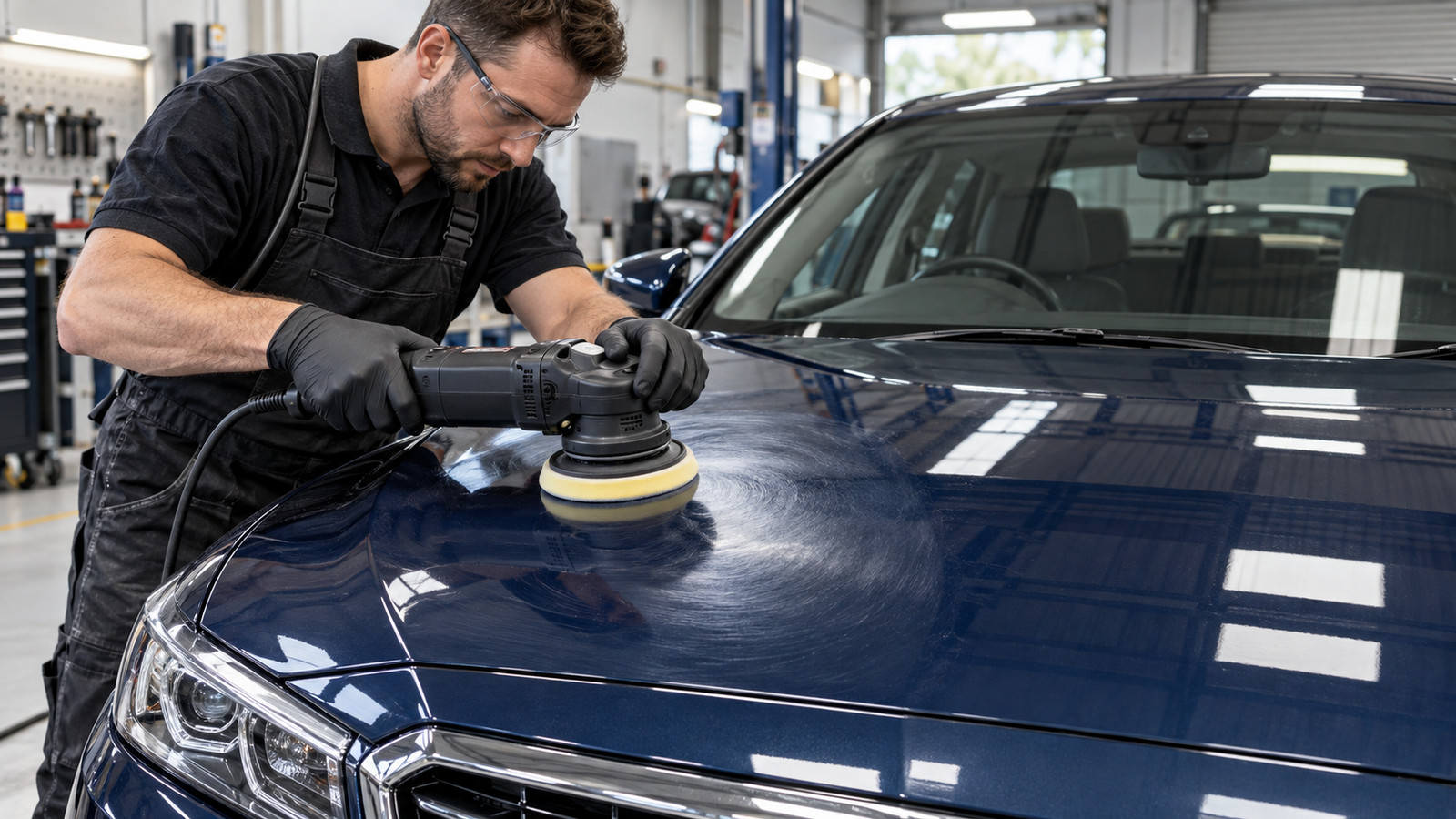
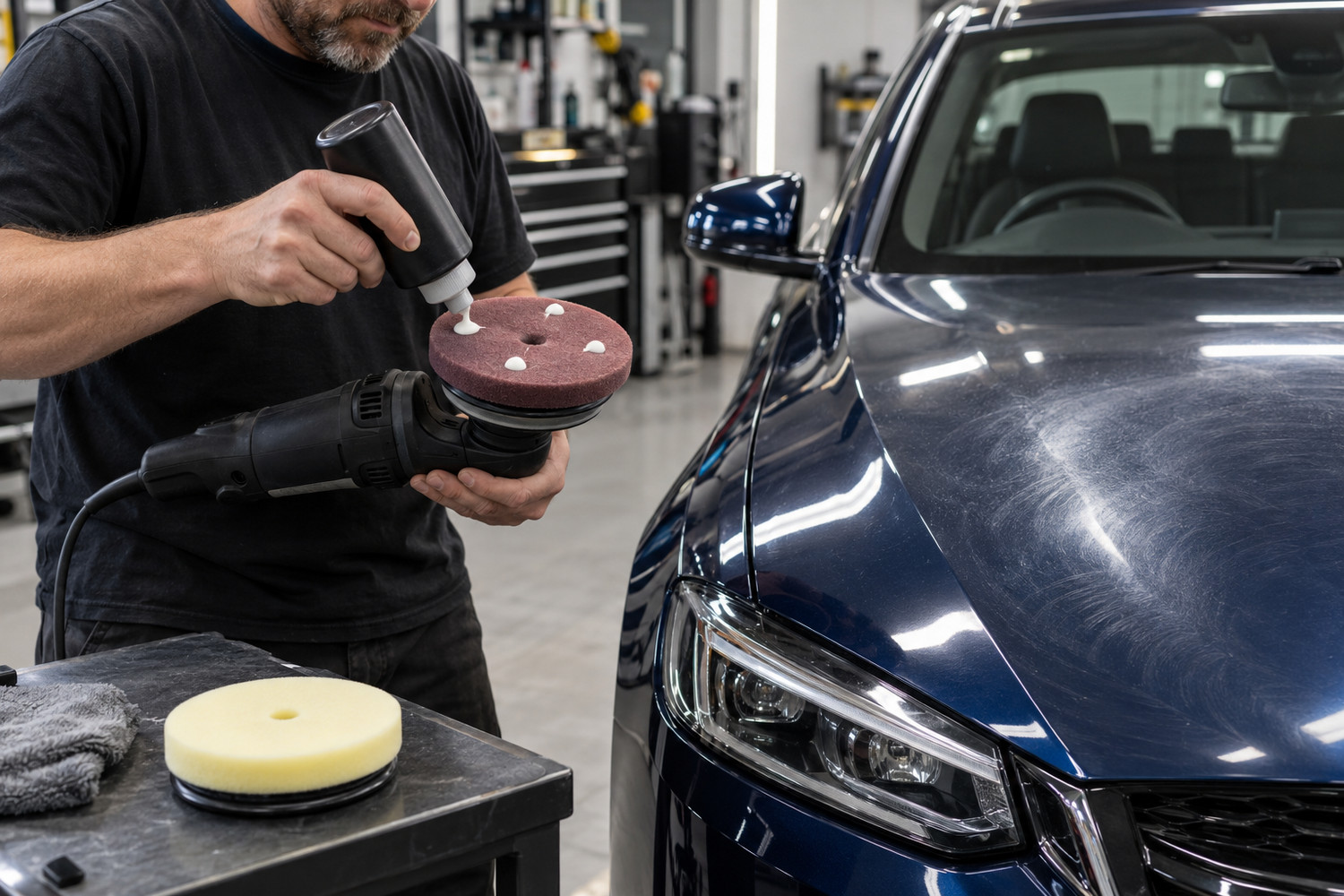
A cut and polish is a two-stage paint treatment. It takes fine marks out of the top layer of a car’s paint, then brings the shine back.
Modern car paint is built in layers. The colour goes on first. Over it sits the clear coat, a hard transparent layer that carries the gloss and takes the sun. Almost every mark a car picks up in normal use sits in that clear coat, not in the colour underneath it.
A cutting compound on a machine pad levels the clear coat down to the base of the marks. There is then no edge left for light to catch on. The polish that follows uses a finer compound to clear the light haze the cut leaves and sharpen the reflection.
Cutting and polishing is sold as one service because the two words describe two different jobs. A machine polish on its own is the gentler version, with no cutting stage, so less is taken off and less comes out.
Note what is not in that description. A cut and polish takes marks away and adds nothing, so any protection is a separate product applied afterwards.
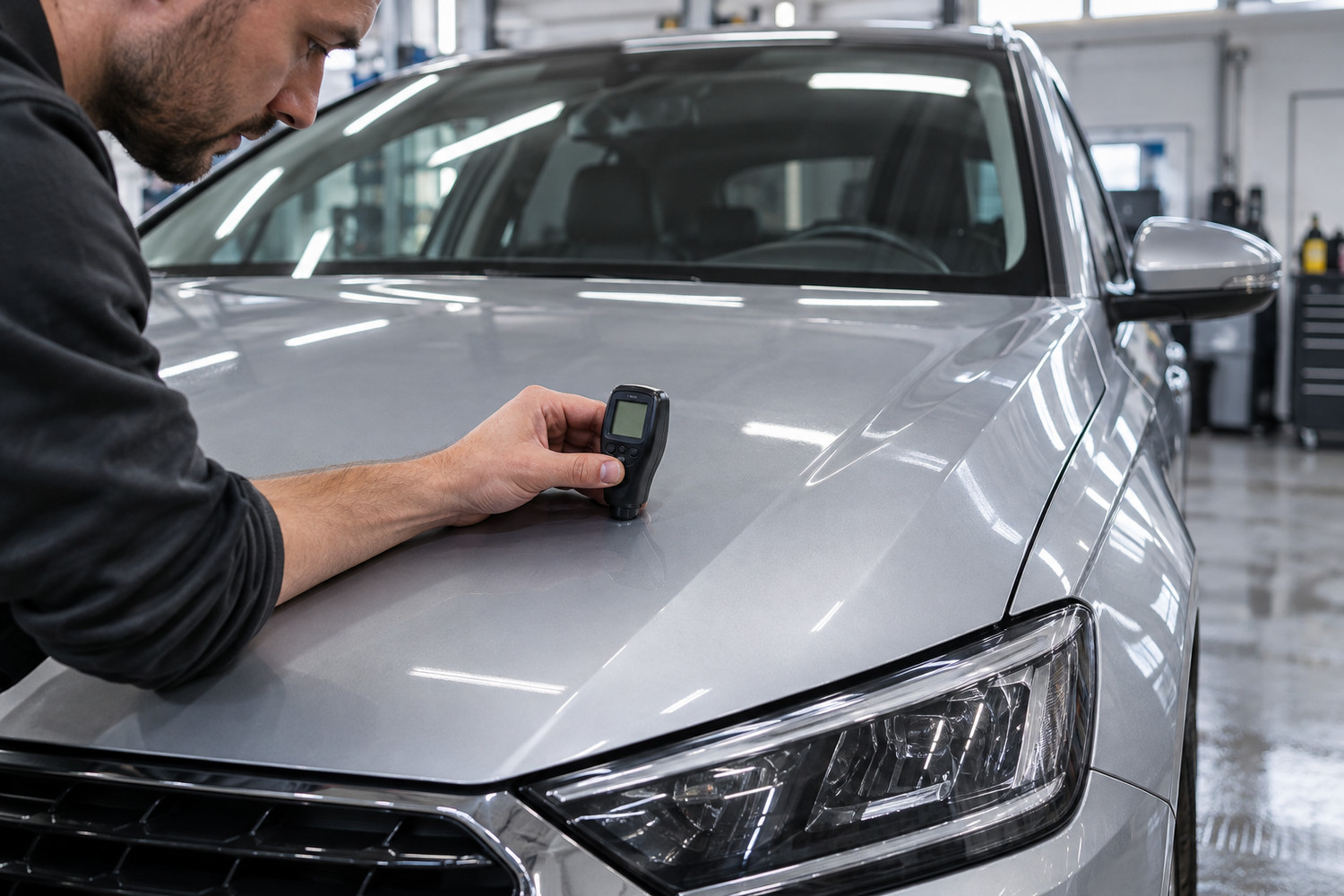
When you cut and polish a car, most of the day goes on preparation rather than on the abrasive work.
Panels are worked one at a time, and the paint is checked as the job goes. That is why a full car is a day’s work rather than an hour’s.
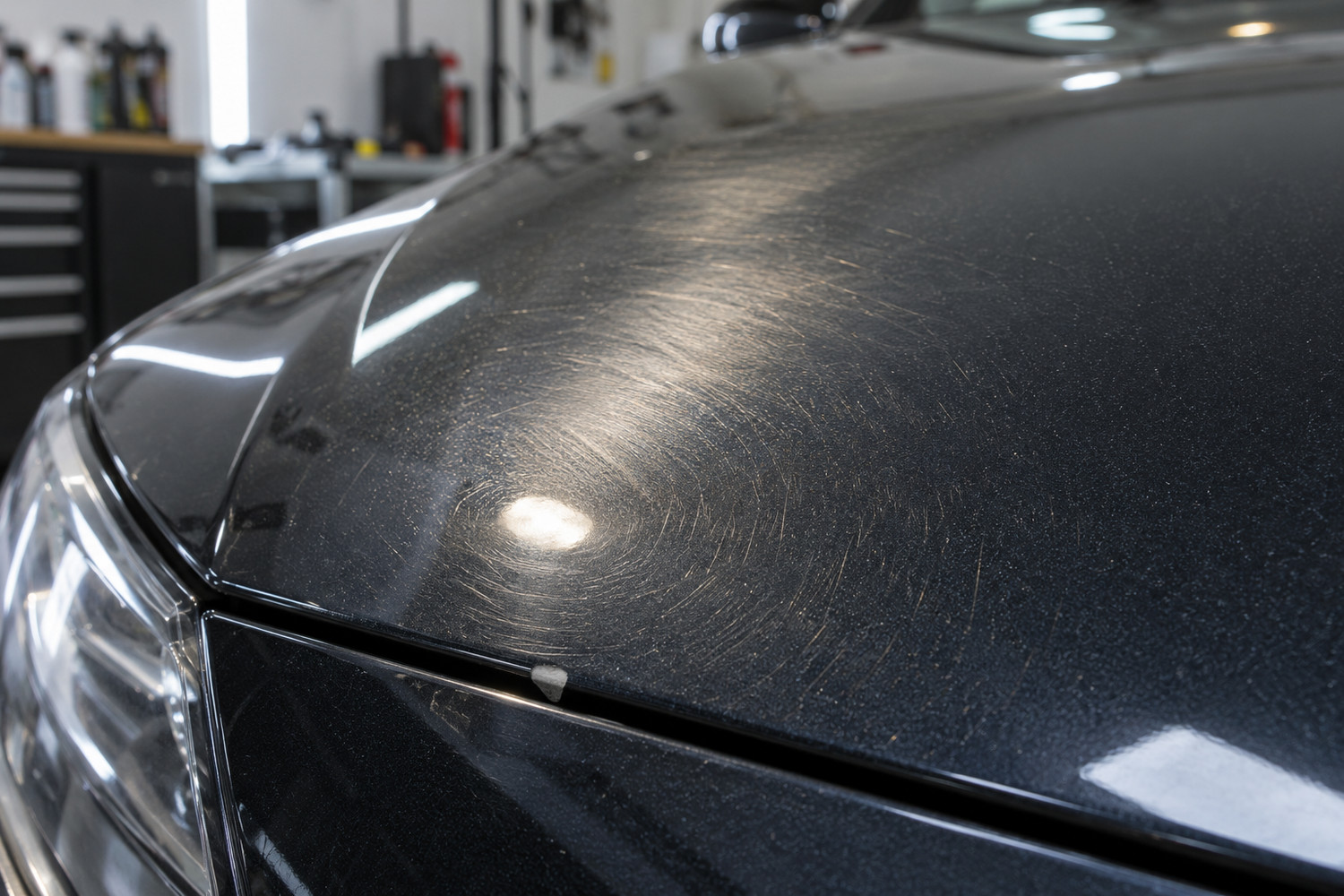
A cut and polish fixes marks that sit inside the clear coat. It cannot fix damage that has gone through it, because there is nothing left to level.
Whether one particular mark on your car is shallow enough to come out is its own question. There is a longer answer on whether a car scratch can be polished out.
| Comes out with a cut and polish | Does not come out |
|---|---|
| Swirl marks from washing and drying | Scratches that have gone through the clear coat |
| Light scuffs and paint transfer from another car | Stone chips down to primer or bare metal |
| Oxidised, chalky paint faded by the sun | Clear coat that is peeling, flaking or gone milky white |
| Water spots lightly etched into the clear coat | Rust, whether it is bubbling under the paint or through it |
| Light overspray sitting on the surface | Dents and creases, which are a change in the panel’s shape |
Where the answer turns out to be no, the next step up is touch-up or paint work. That is a different job at a different price. Knowing where the line sits between polishing, touch-up and spray painting saves paying for a cut that was never going to work.
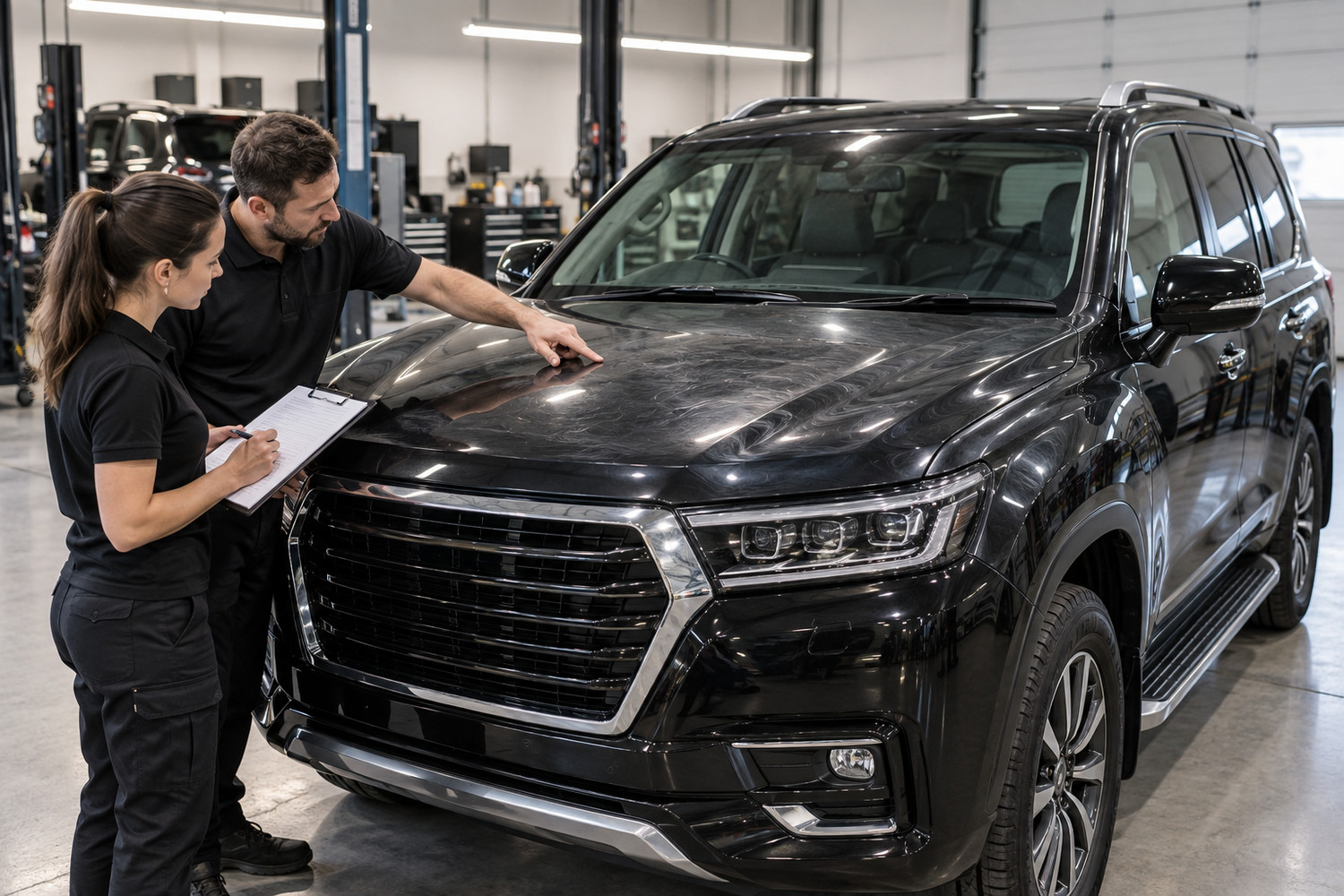
Across Australian price lists, a professional cut and polish on a full car generally runs $200 to $500. That is a general market guide, not a quote from any one workshop. Three things move a quote inside it: the size of the vehicle, the condition of the paint, and how much correction is being asked for.
A small hatch with light swirl marks sits near the bottom of that band. A large four wheel drive with sun-faded paint sits near the top, because there is more panel to work.
Multi-stage paint correction is the tier above. The paint is worked through more than one grade of compound, sometimes three, to take out deeper marks that a single pass leaves behind. As a general market guide, that starts around $500 and runs to $800 or more.
If the car is being tidied up for sale, the paint is only half the sum. Whether dent repairs are worth doing before selling is a separate call.
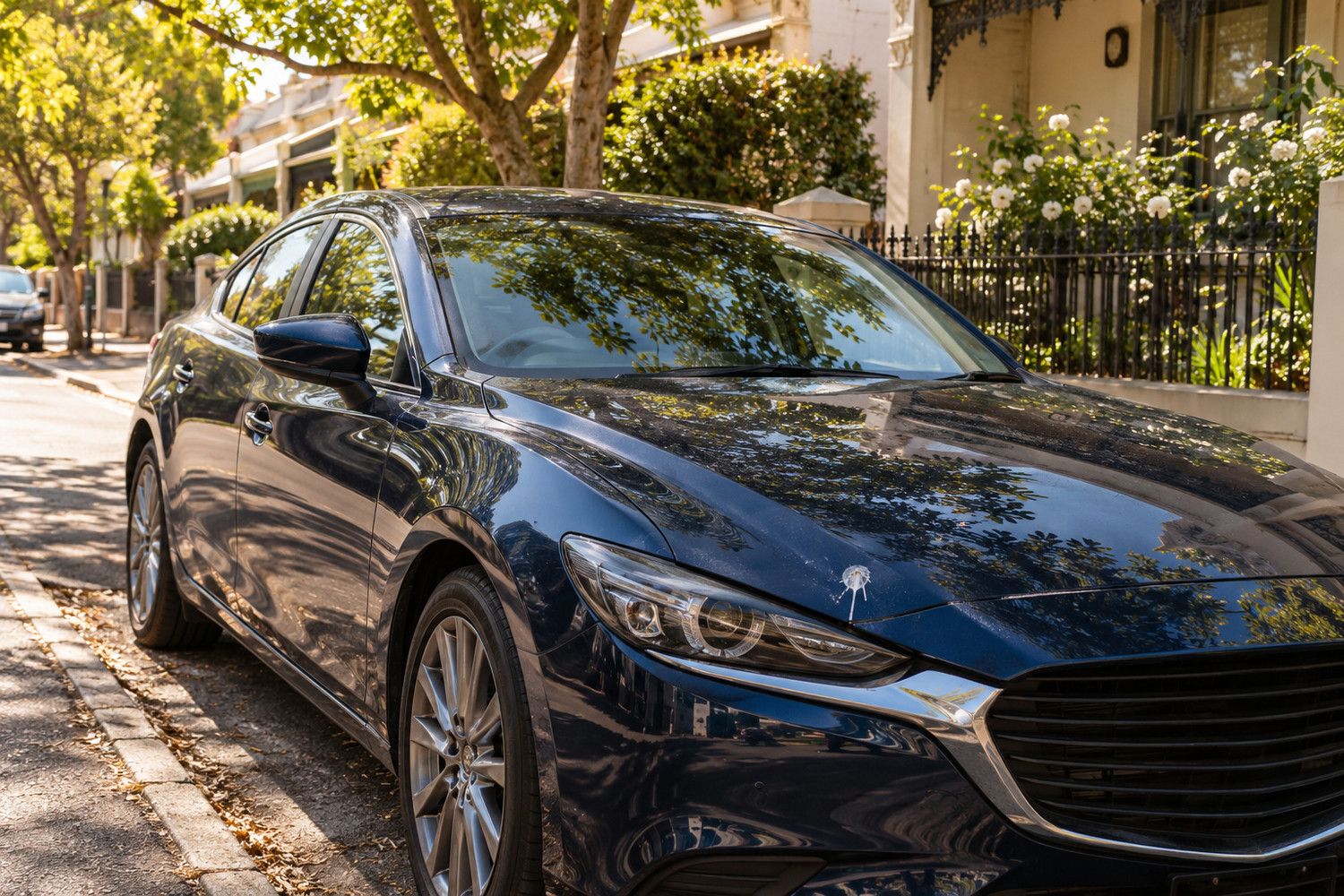
The correction itself does not wear off. The marks that came out are gone for good. What comes back is everything new. How soon new marks appear depends on how the car is used, washed, parked and protected.
The reason is that a cut and polish adds no protective layer of its own. Nothing then sits between the bare clear coat and the next wash, the next car park and the next summer. Protection has to be applied afterwards and kept up. A wax needs redoing every few months. A sealant holds longer.
Where the car lives makes more difference than anything else. In Richmond most cars sleep on the street rather than in a garage. Kerbside parking in the backstreets off Bridge Road and Swan Street means the same panels take full summer sun every day. Bird lime lands on them and sits there until the next wash. Over a few seasons the sun flattens the gloss and the droppings etch small rings into the clear coat.
How the car is washed matters too. Automatic car washes with spinning brushes put swirl marks straight back into fresh paint.
Yes, but not endlessly, and the limit is not a number of times. It is how much clear coat is left on that particular car.
Clear coat is applied once, at the factory or in a spray booth after a repair. Nothing else puts more on. Every cut takes a small amount of it. So the question a workshop has to answer is not how often the car has been done before, but how much of the layer remains.
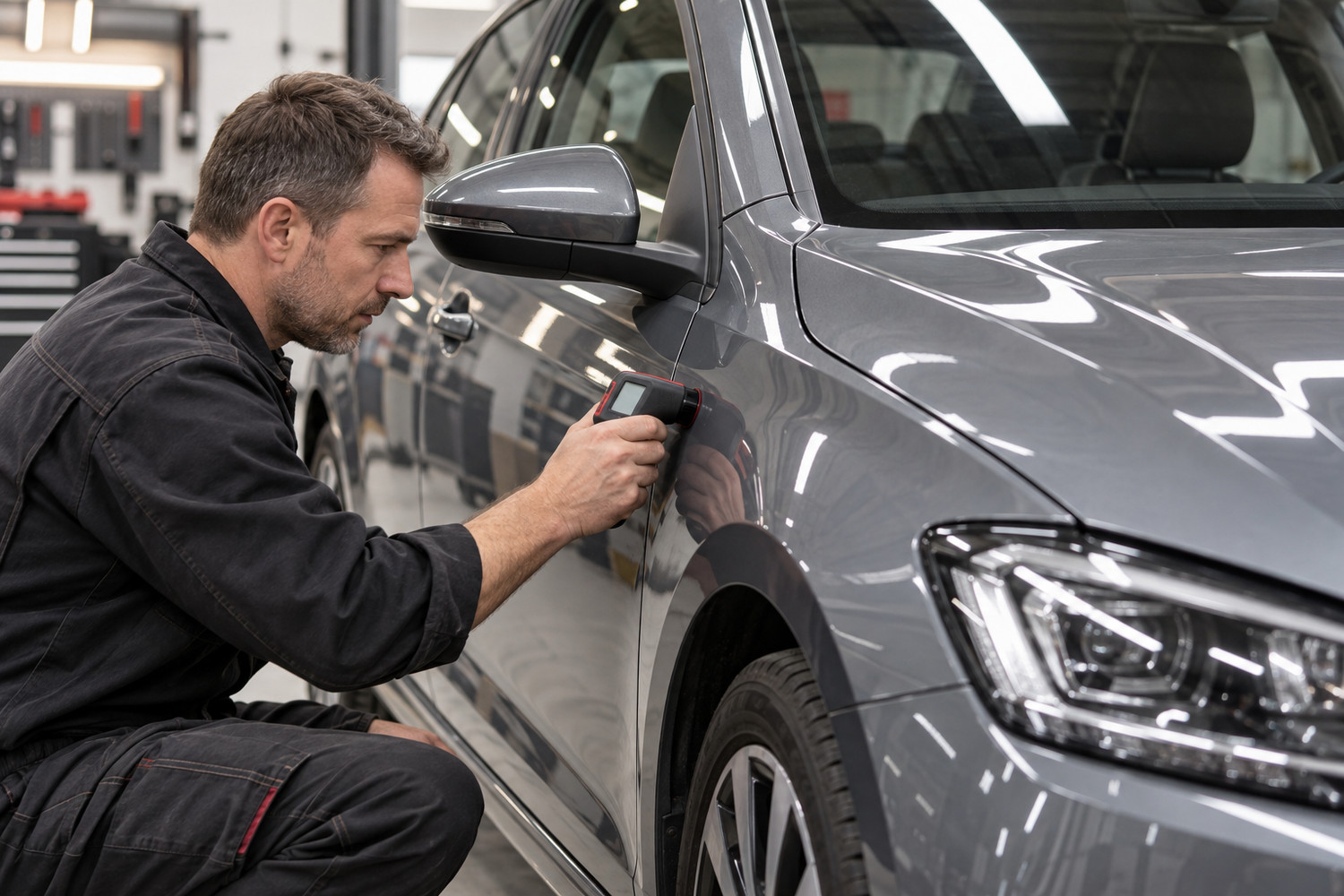
That is what the paint depth gauge is for. It reads the coating thickness off a panel in a couple of seconds, and the readings usually differ around one car. A resprayed panel reads differently from the factory ones beside it, and a bonnet that has had years of sun reads lower than a door.
Polishing removes some clear coat. It does not add a new coat of paint.
When a reading comes back low, the honest answer is a lighter grade of correction, a polish with no cutting stage, or nothing abrasive at all. Being told the paint will not take another cut is a useful answer, not a wasted trip. It is what stops a cut going through to the colour, which turns a few hundred dollars of polishing into a paint job.
So the flat bonnet you started with is one of two things: marks in the clear coat, which come out, or damage through it, which does not. Neither is settled from a photograph, and nobody can tell you how much clear coat is left without putting a gauge on the panel. Before you book a cut and polish, ask Automotive Panel Service how it checks whether the paint can take the work. Discuss the condition of the finish before agreeing to a treatment.