
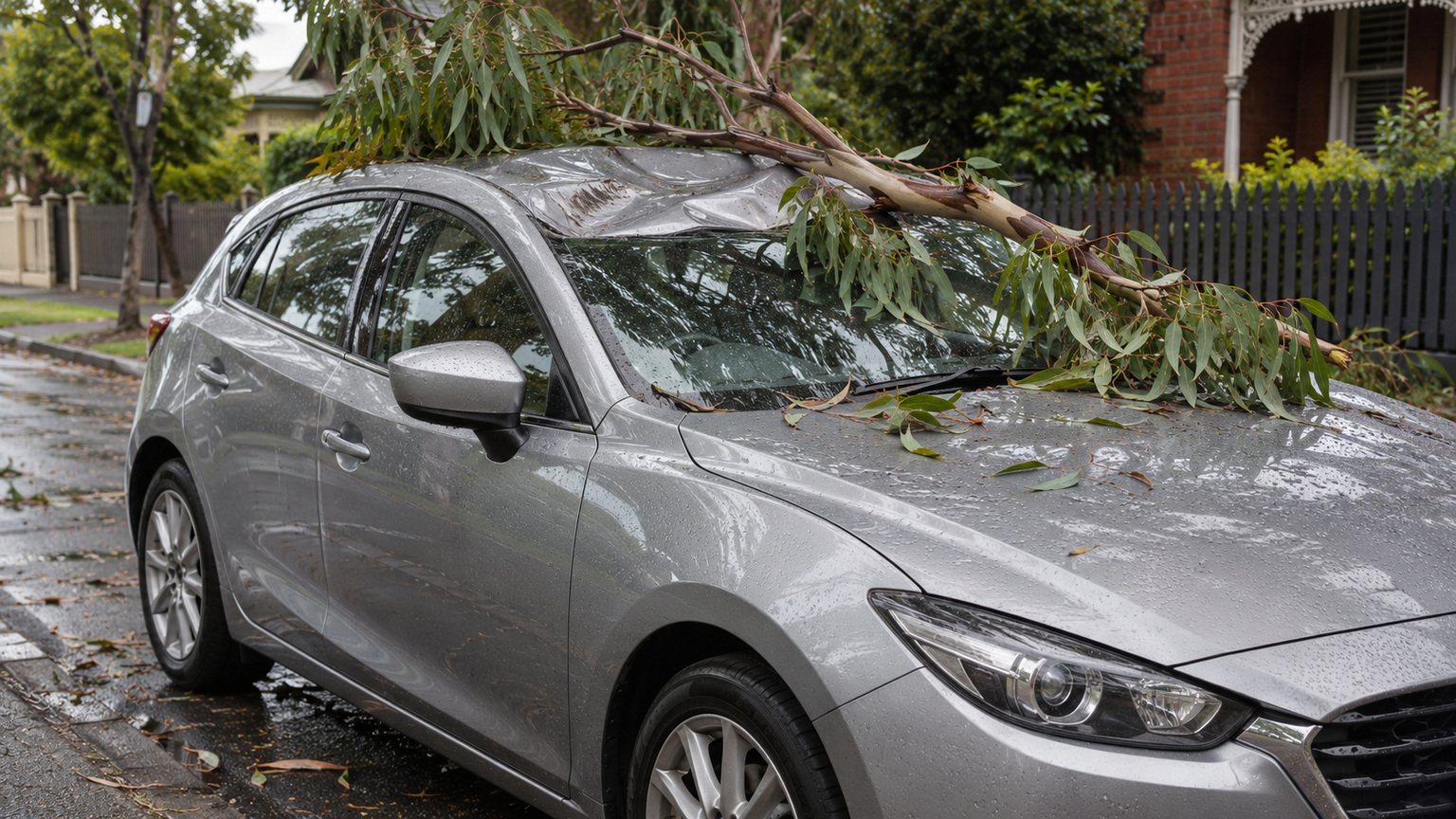
With storm damage to a car, safety comes first: stay away from it until the area around it is safe, then photograph the damage from where you can stand safely. Next, check your policy and call your insurer before any repair is booked. Then have the car assessed, because a branch, flying debris or water can damage a car differently from hail.
Picture a car parked overnight on an inner-Melbourne street under an overhanging tree. A storm comes through, and in the morning there is a branch across the roof and leaves packed against the windscreen.
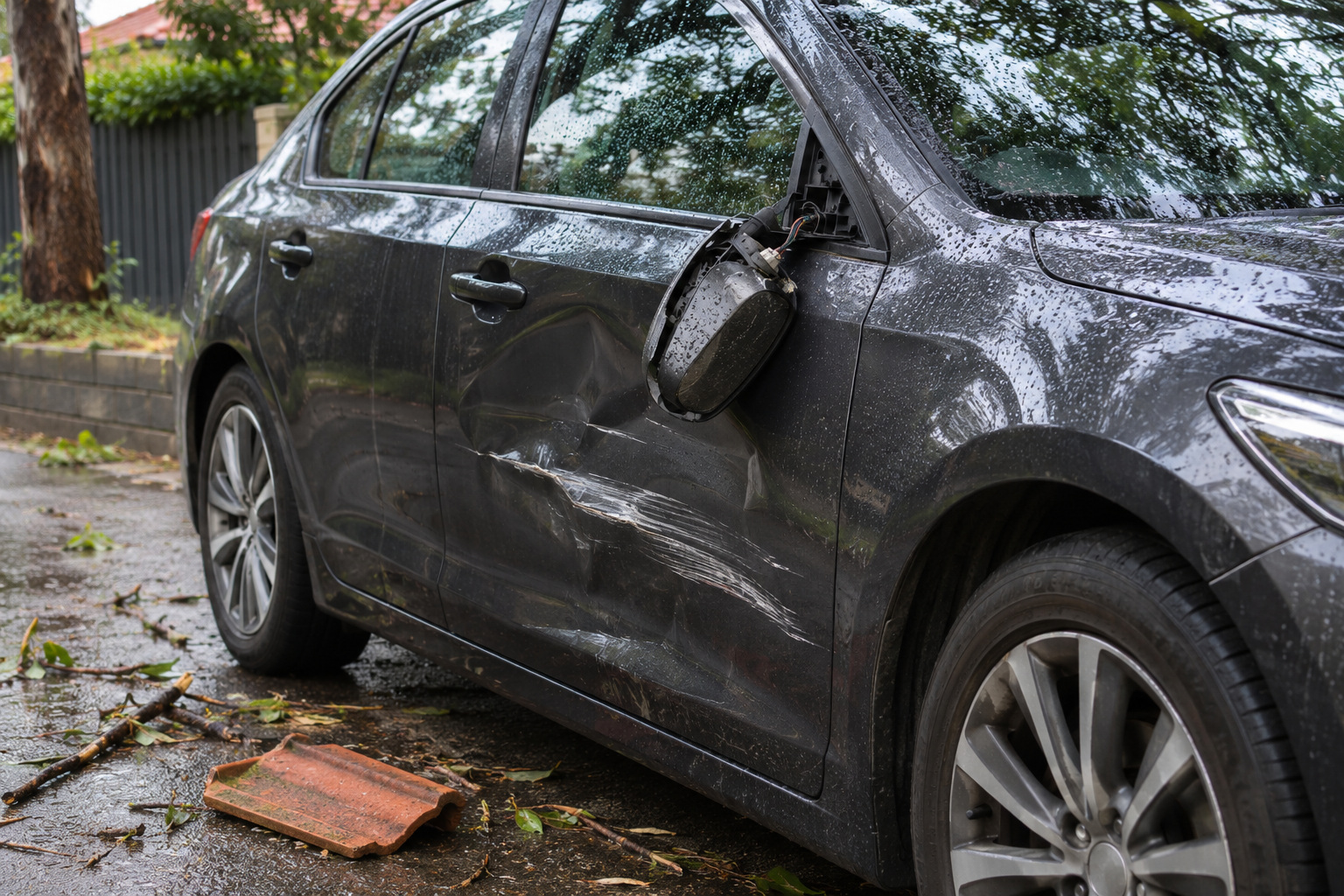
Storm damage that isn’t hail comes from something the wind moved, or from water. The Victoria State Emergency Service (VICSES) names tree branches, loose items such as roof tiles thrown by strong winds, flooding from blocked drains and branches falling on parked cars among the causes of storm damage.
Each one leaves a different kind of damage. A falling branch can come down on the panels that face the sky, such as the roof, bonnet or boot lid. Wind-blown debris, like outdoor furniture or a roof tile, can strike the side of the car, a mirror or a window. Water can get into the cabin through a broken window, or rise into it when a car sits in floodwater.
Hail is a separate job with its own repair pattern. If your car was hit by hail, our guide to hail damage repair covers that on its own.
Your safety comes before the car and before any insurance paperwork. After a storm, VICSES advises staying clear of fallen or damaged trees, debris, floodwater and fallen powerlines.
Before you approach the car:
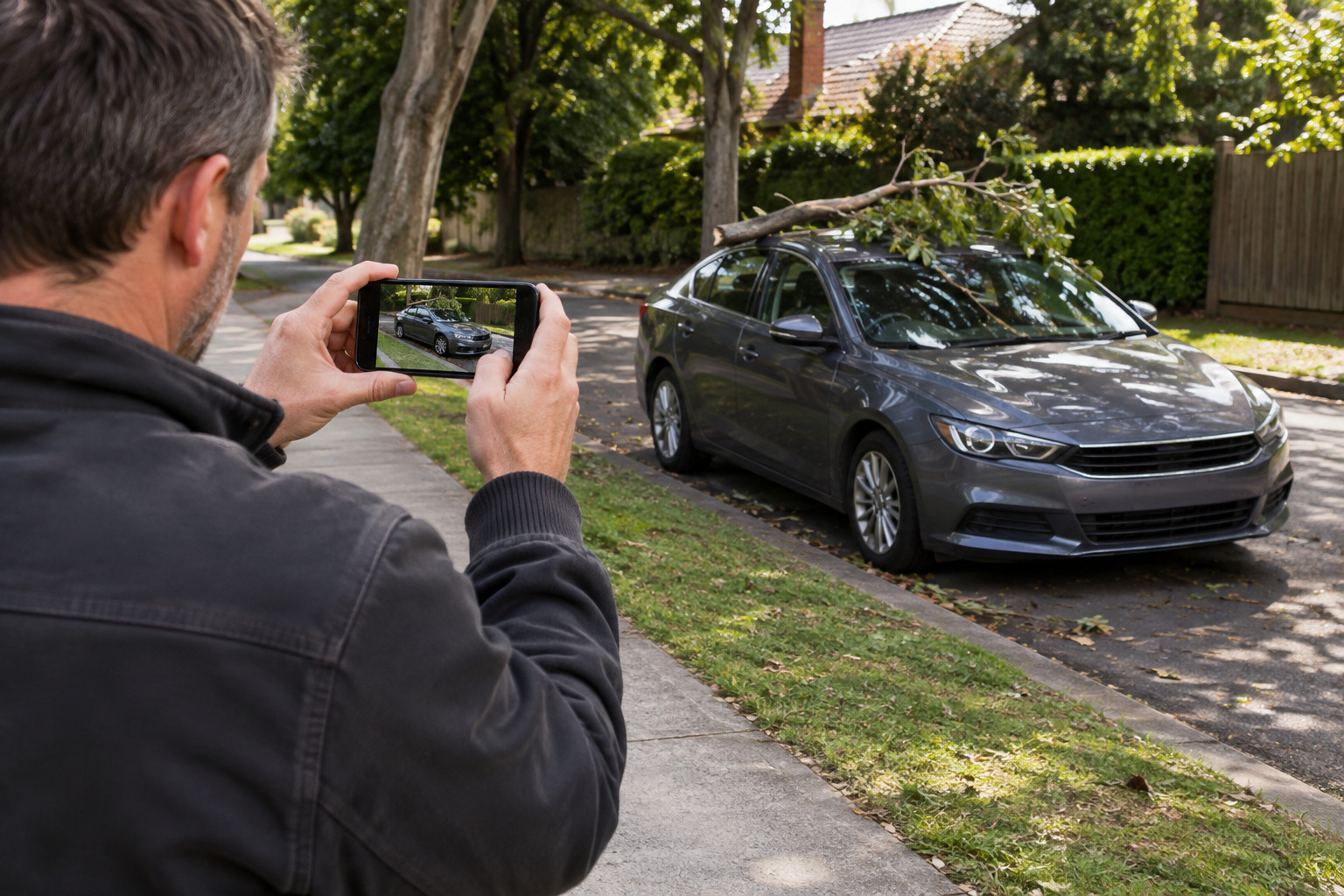
Once the area is safe, take photos. VICSES also tells people to photograph storm damage for their insurance. Take them from a safe position:
Leave a branch where it is if moving it would put you at risk. Policies can expect you to take reasonable steps to stop the car being damaged further, such as having the car moved somewhere secure. Larger clean-ups and repairs are worth checking with your insurer first.
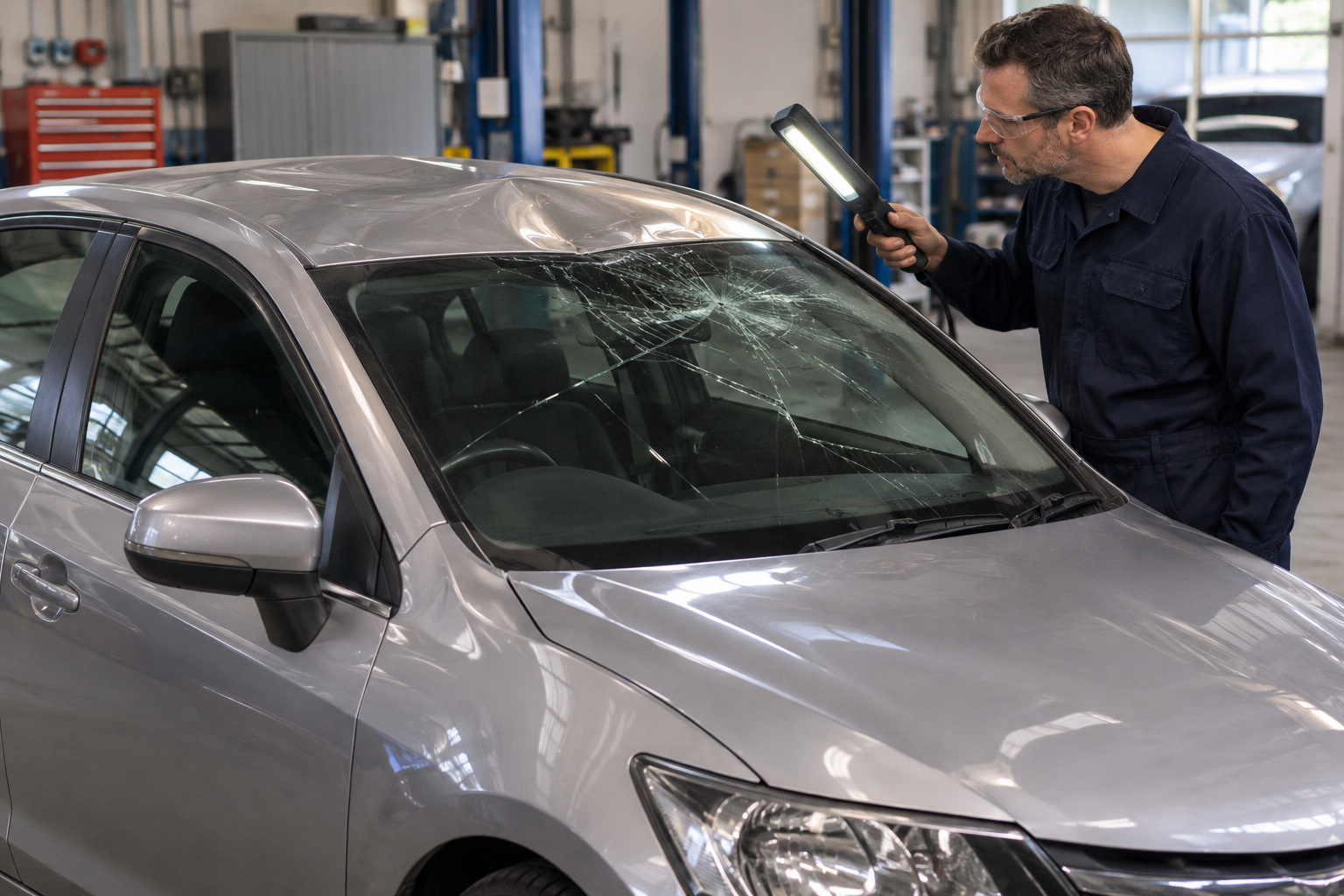
Whether the car starts and moves tells you little about what a heavy impact or water has done to it. A dented roof, a cracked windscreen or water in the cabin can each matter, and turning the key settles none of them. There is more on why a car that still drives after a crash may not be safe.
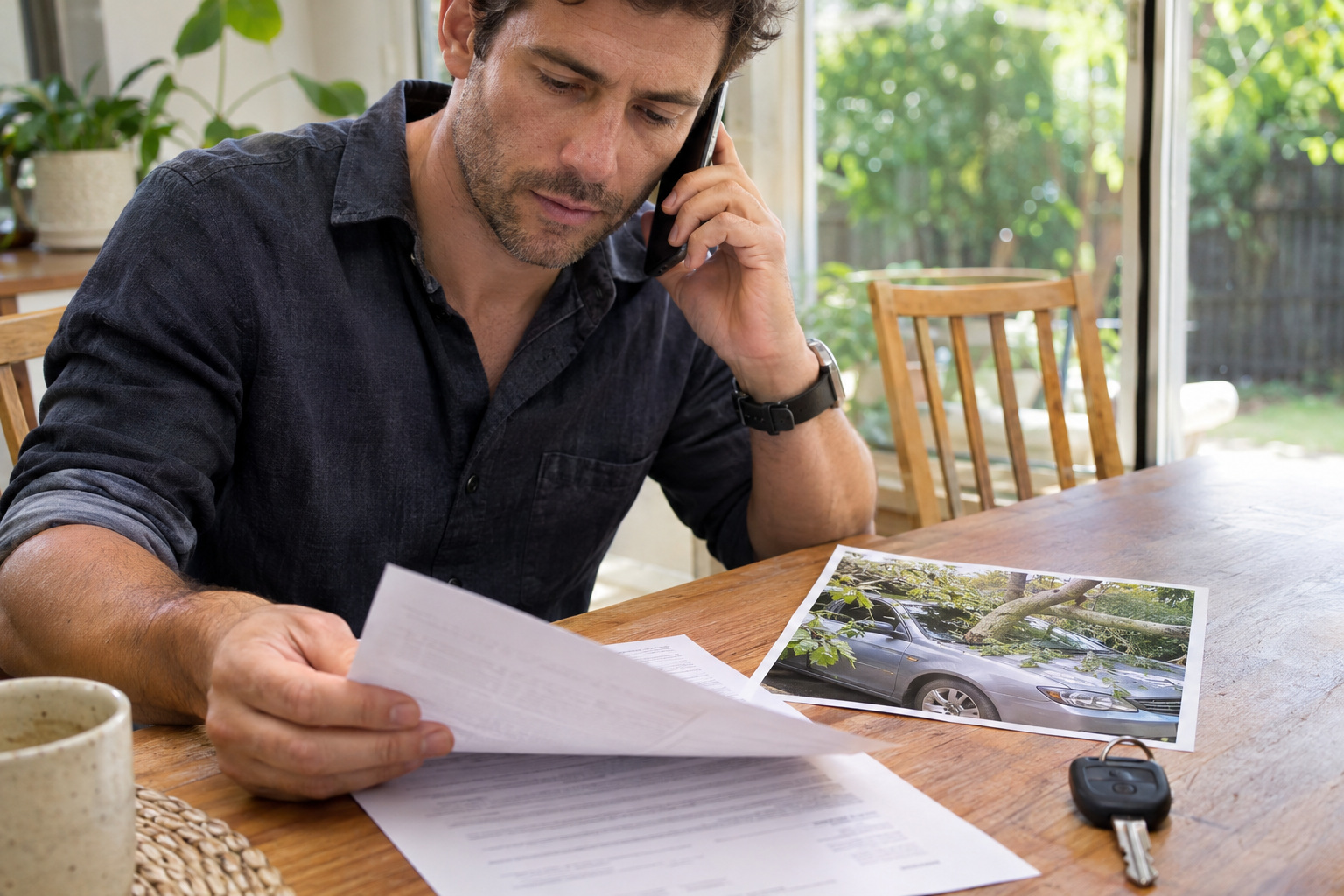
Whether storm damage is covered depends on the policy you hold and how it describes the events it covers. One current Australian car insurance product disclosure statement (PDS), for example, lists natural events under its comprehensive cover, while its third party property, fire and theft cover does not cover damage to your own car from a natural event. Read your own PDS, your certificate of insurance and any updates, then call your insurer to lodge the claim. That same PDS asks policyholders not to approve repairs other than essential ones that stop further damage, so ask your insurer before the repair itself is booked.
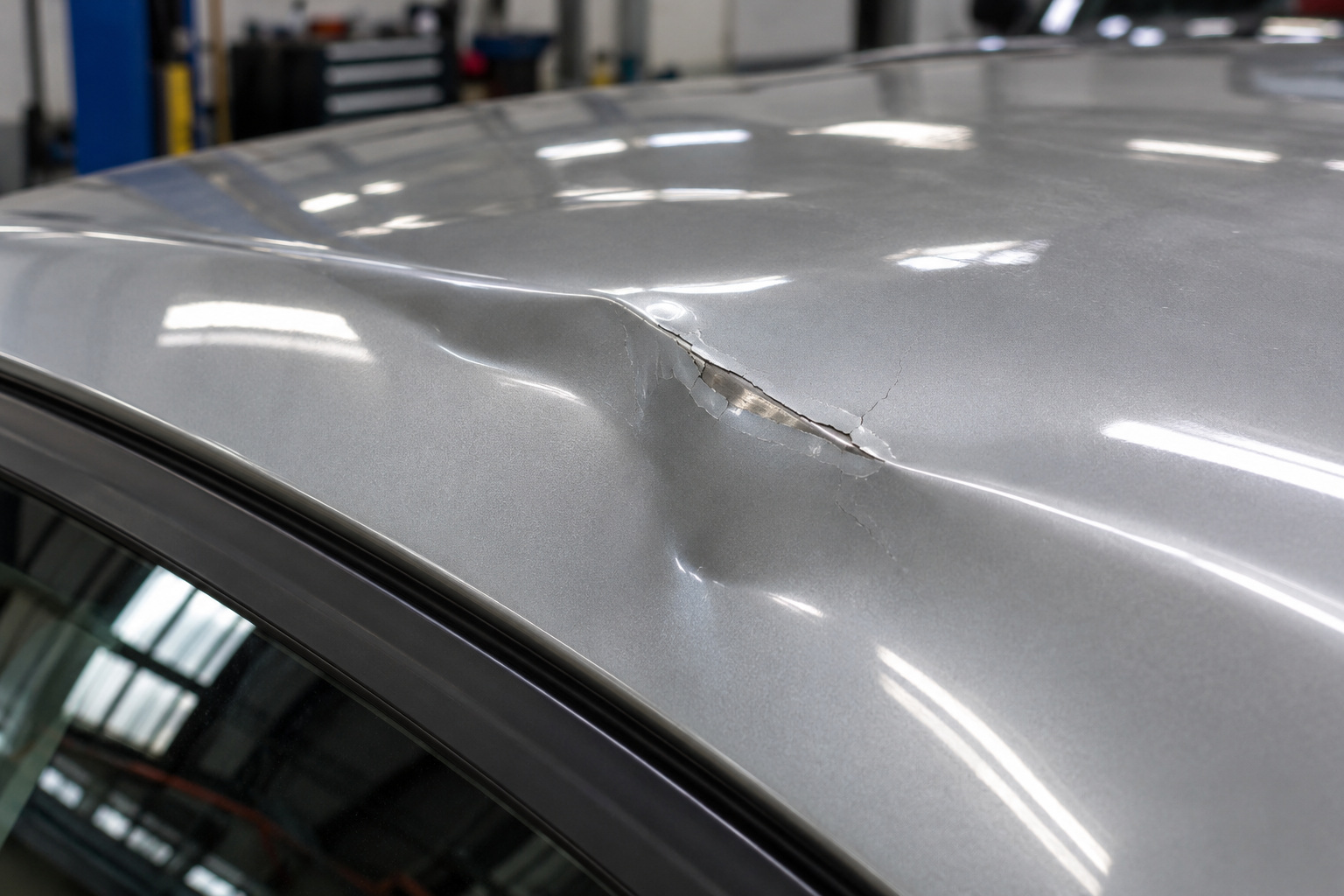
Hail tends to leave many small, round dents across the upward-facing panels, often with the paint still whole, which is why it usually suits a repair without painting. A branch is one heavier impact, and what it leaves depends on how big it was and how it landed.
So the cause alone doesn’t decide the repair. Paintless dent repair only works while the paint over the dent is unbroken and the metal has been bent rather than stretched. Once the paint is cracked or scraped through, the panel needs filling and painting. You can read more about when paintless dent repair works and when it doesn’t.
| What hit the car | What it can leave | What decides the repair |
|---|---|---|
| Hail | Many small, round dents across the roof, bonnet and boot lid, often with the paint unbroken | How many dents, which panels, and whether the paint has cracked |
| A fallen branch | One broad dent, a sharp crease, scraped or cracked paint, or damage to glass, a mirror or a light | Whether the paint is broken and whether the metal has been stretched |
| Wind-blown debris | A dent or scrape where it struck, sometimes with a broken mirror or window | The same paint and metal checks, plus any glass |
A branch can leave a dent with perfect paint, and that dent may suit a paintless repair. Broken paint is worth having assessed reasonably soon, because it can let water reach the bare metal underneath, where rust can start.
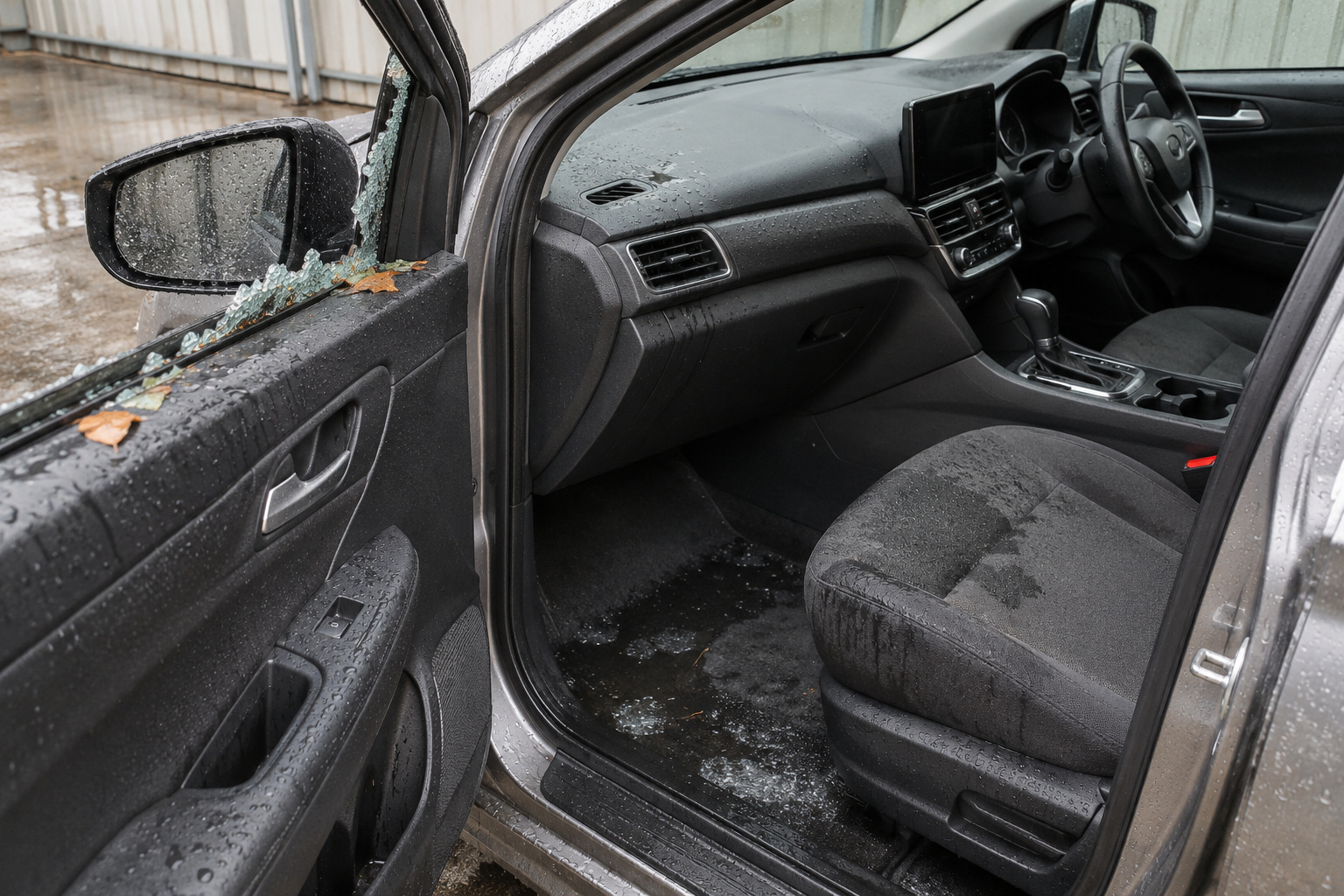
Water inside the car is a different problem from a dented panel. If rain came in through a broken window, or the car sat in floodwater, tell your insurer and have the car assessed before it is driven. VICSES warns that floodwater can carry sewage and debris. How the cabin smells, or how long ago it got wet, won’t tell you what the water reached. Drying out an interior and checking electrical parts are separate jobs from panel and paint work.
Glass is also judged on its own terms. Under Victoria’s Vehicle Standards Information 26 on roadworthiness requirements (March 2023), a windscreen with minor damage should not be rejected. Damage in the area the wipers clear that impairs the driver’s view enough to make driving unsafe, or a crack through more than one layer of laminated glass, is a reason for rejection, and a properly repaired windscreen can pass. Have any glass damage in your line of sight checked before you drive.
If the car shouldn’t be driven, a tow is the way to move it, and our 24 hour towing page explains how to arrange one. Whether or not you’re claiming, the panel and paint work that storm damage can need is part of our smash repair service. An assessment of the car itself is what shows how far the damage goes. When you’re ready to have the damage looked at, contact Automotive Panel Service.