
A car respray gets blended because the join between two panels is a hard edge, and a hard edge catches the light. No colour code removes that. So the painter does not stop the new colour at the join. The colour is faded out across the next panel, until there is no line left for your eye to find.
That is why a quote to repair one door can list two doors under paint. The second door is not damaged. It is where the colour lands.
Paint matching and blending are two different jobs. Matching gets the colour right in the cup. Blending decides where that colour stops being visible on the car. That is where most of the difference between a good respray and an average one sits. This piece picks up after the decision to spray has been made. If you are still weighing up whether a mark needs polishing, touching up or spraying, that call comes first.
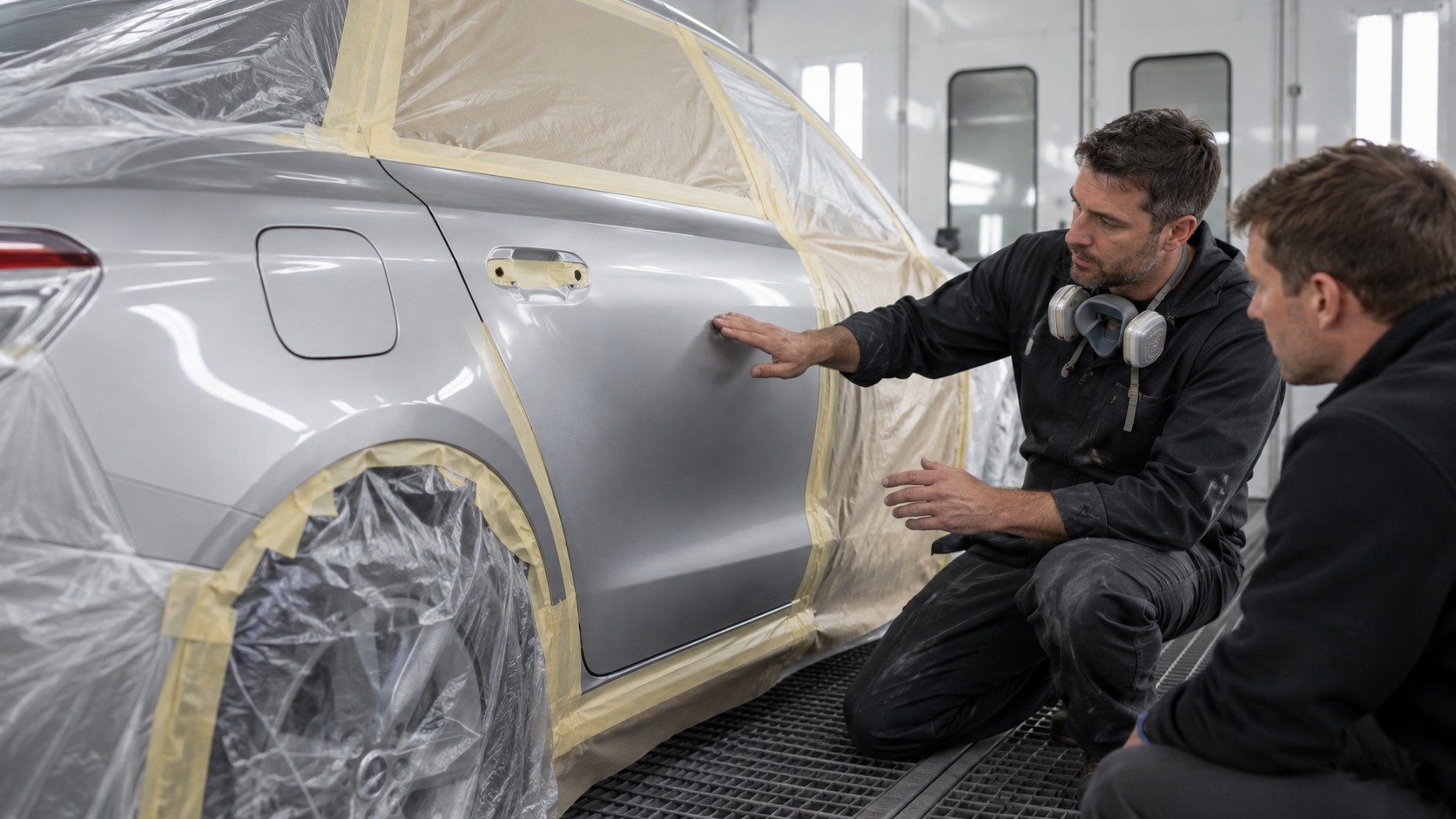
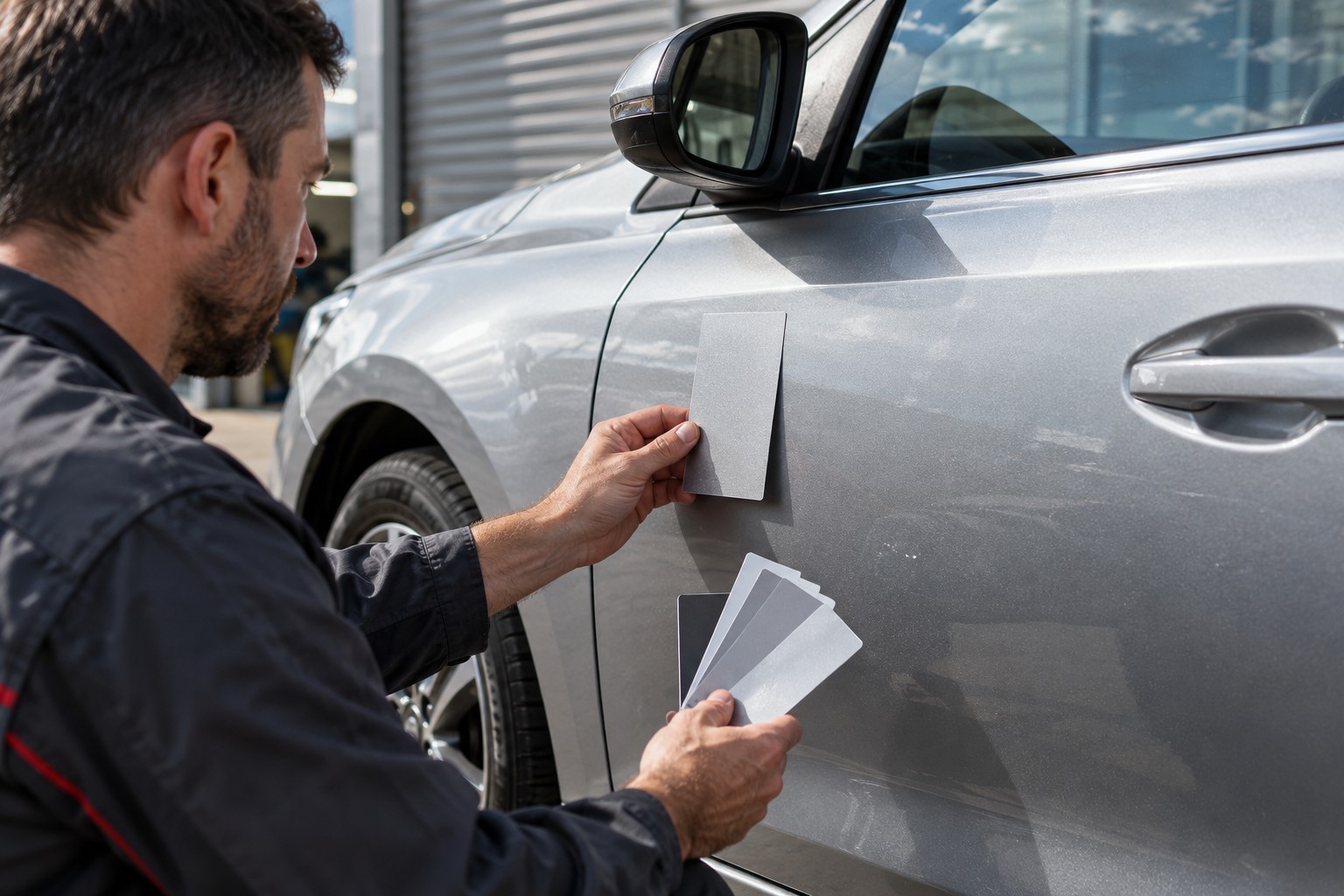
The paint code on your car gives the painter a family of colours, not a single answer. A code covers a run of variants, which are versions of the same colour that left the factory looking slightly different. Your car has aged on top of that.
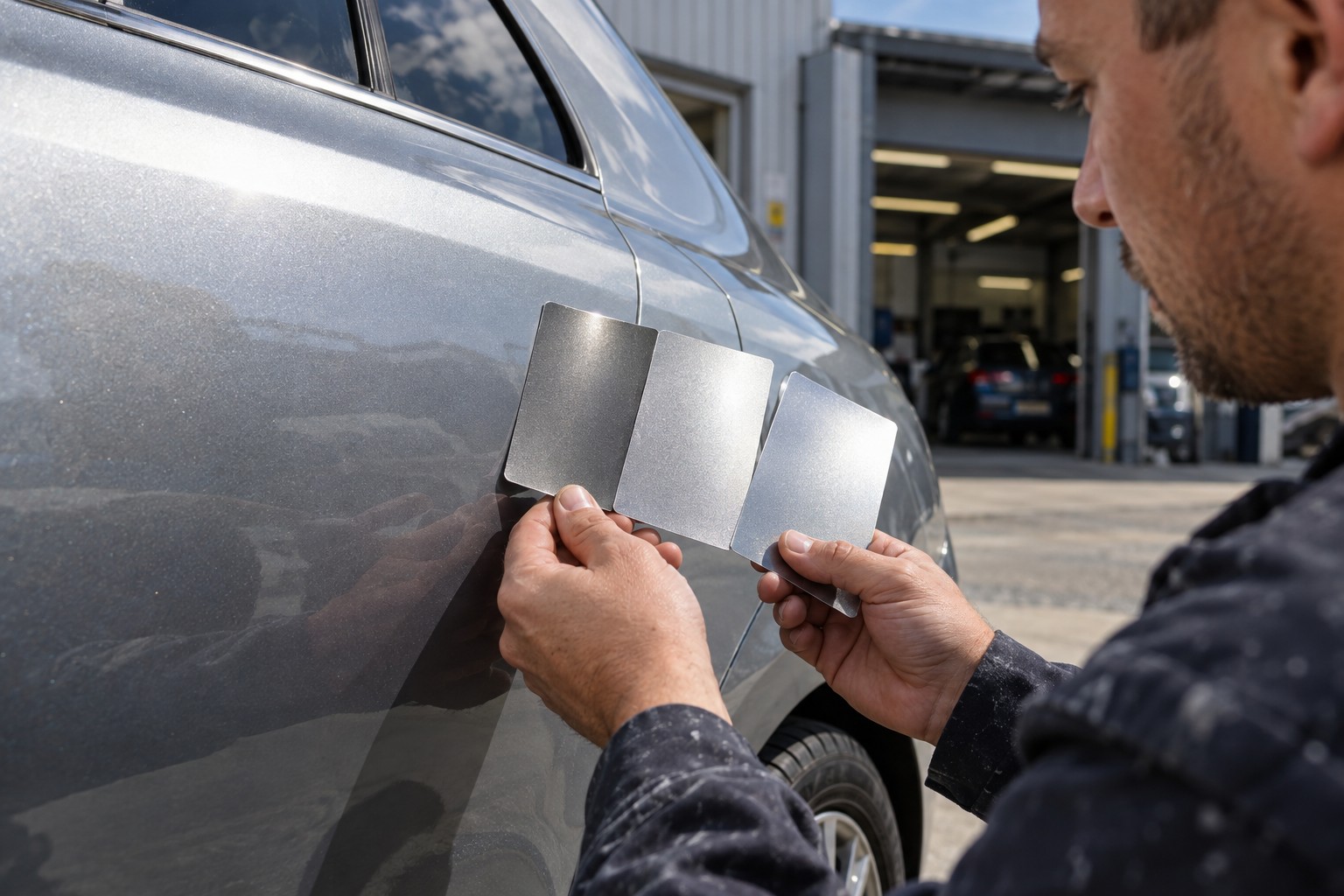
So the painter narrows the field, and proves the result, before any paint goes near the panel.
Nothing goes on the panel until a card matches. That single habit separates a colour that lands from a colour that was hoped for.
Daylight is doing real work there. Most workshop lights give off an uneven mix of colours, and sunlight does not. Two mixes made from different pigments can look identical inside and clearly different in the sun. Painters call that metamerism, and it is why the card goes out the roller door before the gun goes near the car. If you want the instrument side of it, the science behind professional colour matching is covered on its own.
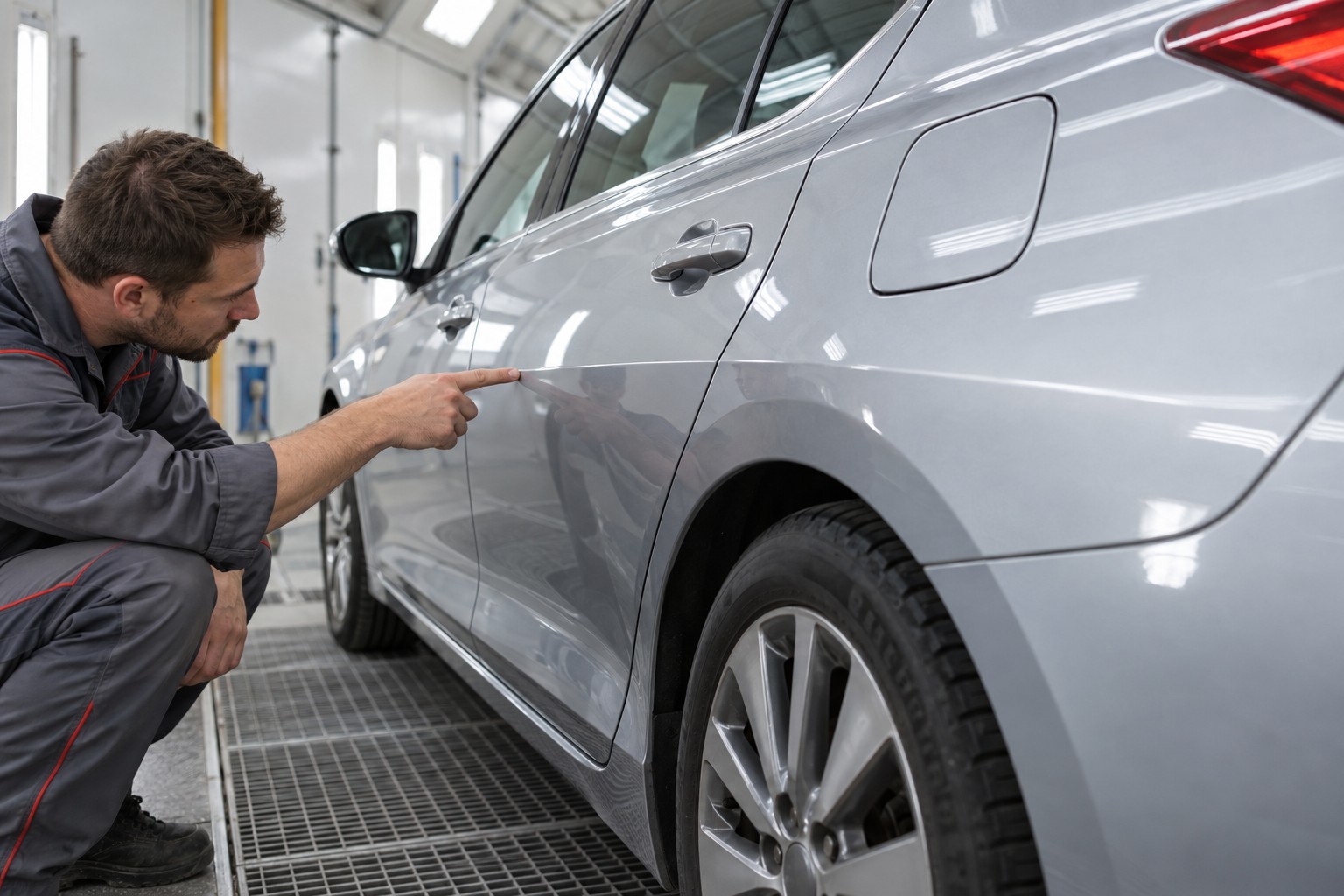
The panel a blend runs into is a choice, and it is made by eye before it is made with a gun. The blend goes where you cannot pick a transition, not where the damage stops.
Body lines do most of the hiding. A swage line is the crease pressed into a panel to stiffen it and catch the light. Your eye already reads it as a break. Running the colour out to one puts the transition somewhere a change is expected. Stopping in open metal does the opposite.
So a door is usually blended into the door beside it. A rear quarter panel is faded up into the roof or down into the sill. The bonnet is the hard one. It is large, flat, and the panel you look straight down at in full sun. A bonnet blend needs more room than the damage suggests.
Sometimes the blend runs so far that one panel was never the right scope. Whether a single panel respray makes sense, and what that scope covers, is worth reading before you sign a quote.
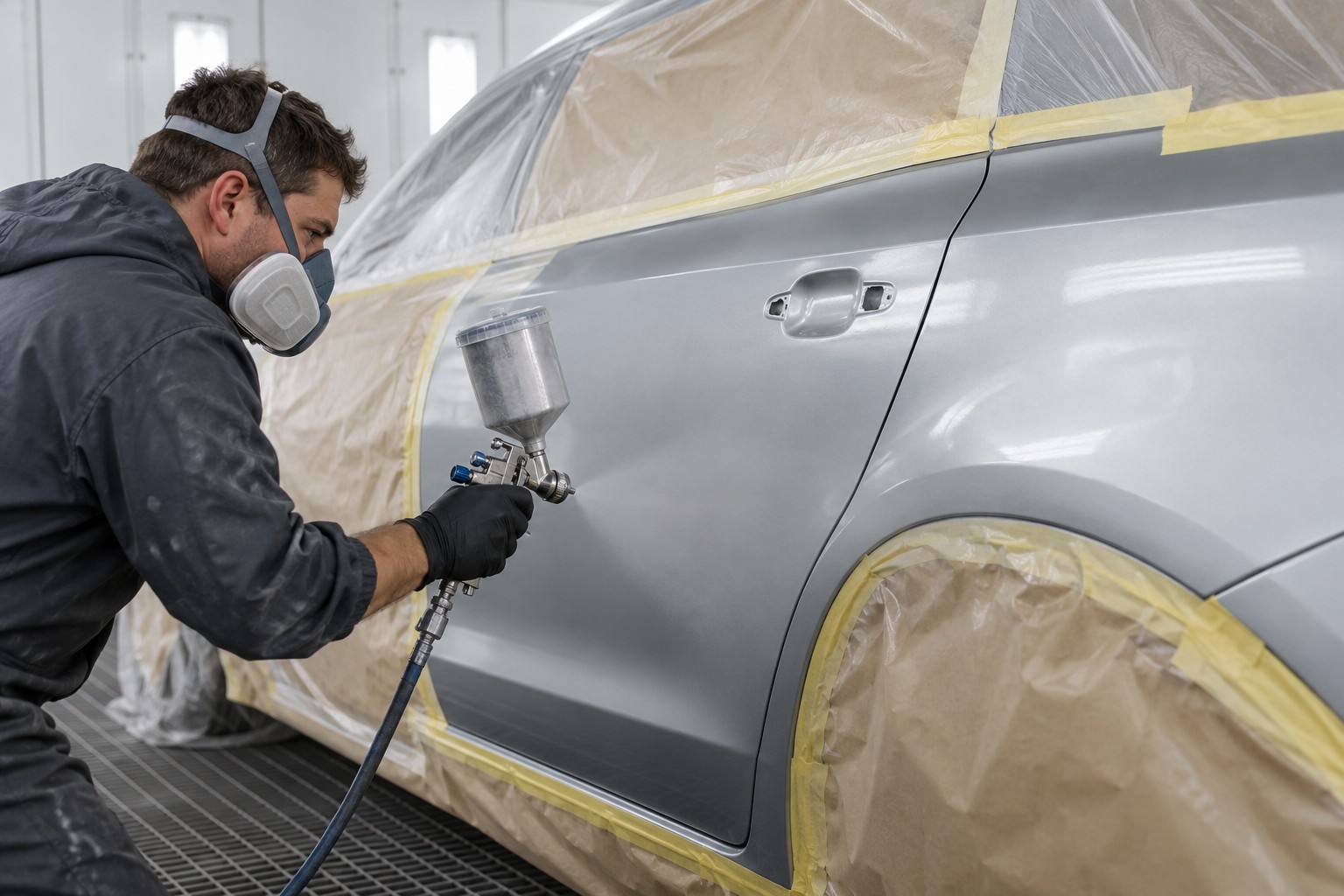
Two coats are going on, and they stop in different places.
The colour stops inside the next panel. It is laid on progressively lighter as it travels. The new paint thins away into the old rather than meeting it at a line.
The clear coat does not stop there. Clear goes over the whole blend panel, edge to edge. Stopping it partway leaves a physical step in the finish, and that step is where the trouble turns up. The edge dulls, or it lifts, or a faint ring shows around the repair. None of it shows on the day you collect the car.
Colour is what a blend hides. The clear coat decides whether it stays hidden.
You can check this part yourself without knowing anything about paint. Look along the blend panel at a low angle, in daylight, from both ends. You are not looking for a colour difference. You are looking for a boundary in the gloss.
Solid colours are the easy case. One layer of pigment, and if the mix is right the panel is right. The trouble starts with colours that change depending on how you look at them.
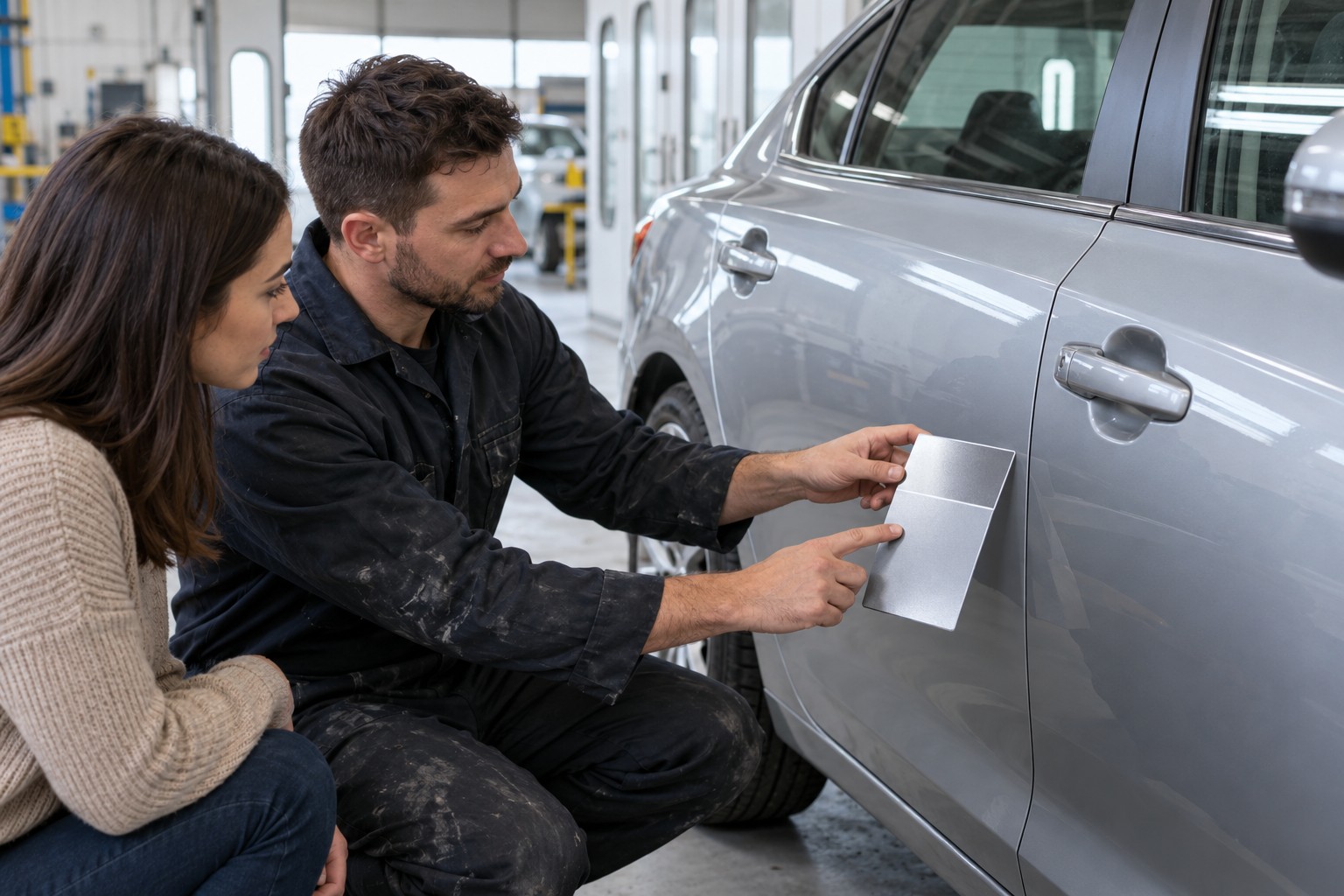
None of this is about catching anyone out. Any painter is happy to answer these, and the answers tell you how much thought has gone into the job.
A shop that answers those three clearly has planned the job. One that says the colour code will sort it out has not.
Blending is not a rescue for a bad colour match. It is the step that makes a good one disappear, and every decision inside it is made before the car is sprayed.
If a panel on your car needs painting, contact the Richmond workshop to discuss the damage and arrange an assessment. Ask which panels need blending and how the colour will be checked before work starts. What the rest of the work covers is set out on the spray painting service page.