
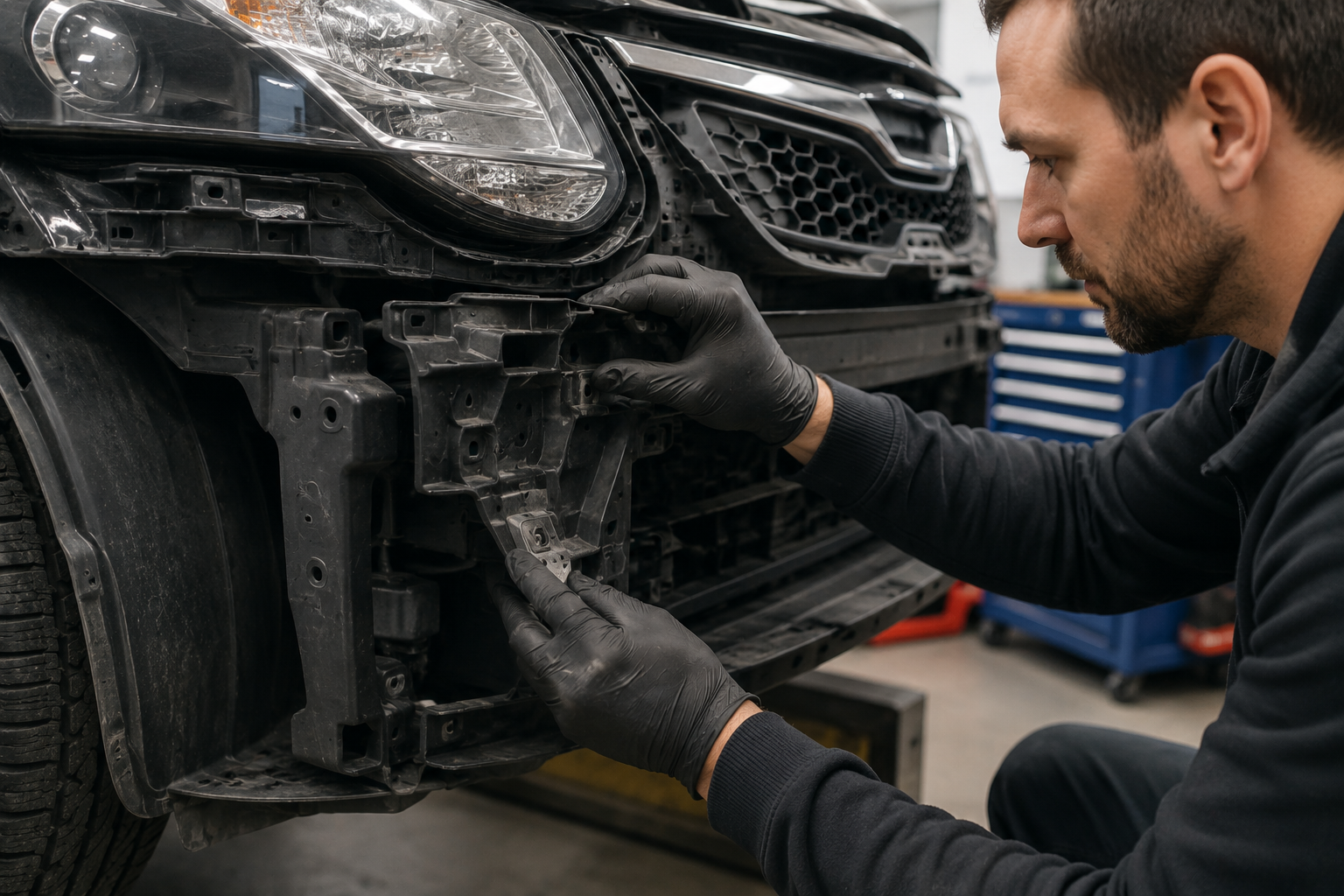
A scuff in the paint of a bumper is a refinish job. A crack or a split can usually be plastic welded and refinished, so the original bumper stays on the car. Broken mounting tabs, or a torn lower section, is where a repair stops making sense and the bumper is replaced.
Richmond’s shopping strips are tight kerbside parking and angled bays. The front corner of the bumper is what finds the pole, the bollard or the car in front. What decides the bumper repair cost is what the damage did to the plastic, not how bad it looks from the footpath.
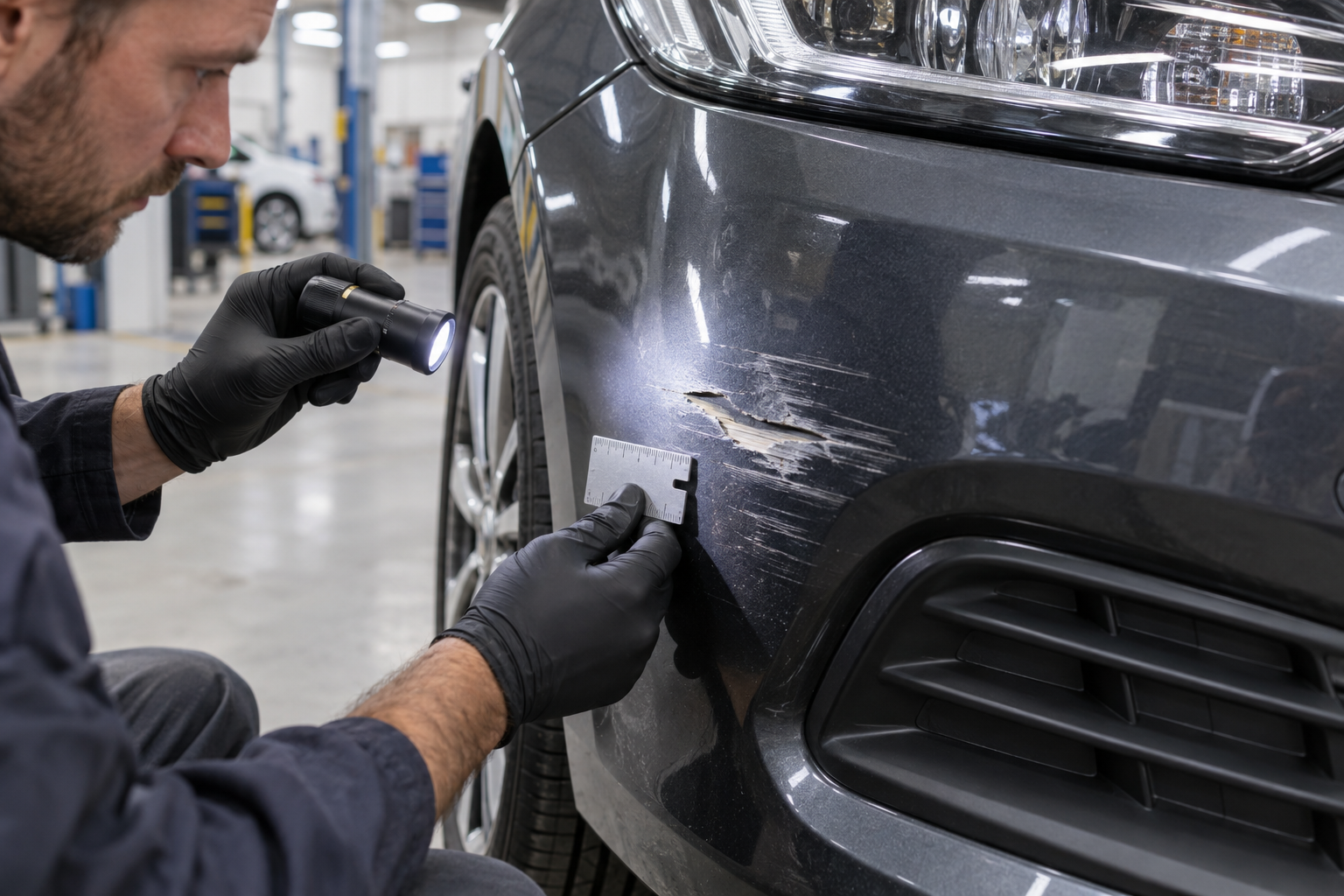
Bumper repair covers everything that keeps the original cover on the car. It takes in sanding a scuff back, pushing a dent out, welding a crack, and refinishing the panel.
A dent in a bumper with the paint still intact is usually a paintless job, and that sits at $150 to $400. Where the plastic itself is damaged, so a crack, a split or a deep gouge, the plastic work runs $250 to $600. Both bands cover the repair only. Paint is charged on top and has a band of its own, set out below.
The line between a paint job and a plastic job is depth. If you can catch a fingernail in the mark, it has gone past the clear coat. If you can see a different colour underneath, the primer is showing and the repair has to build back up first.
Three things move the number inside those bands.
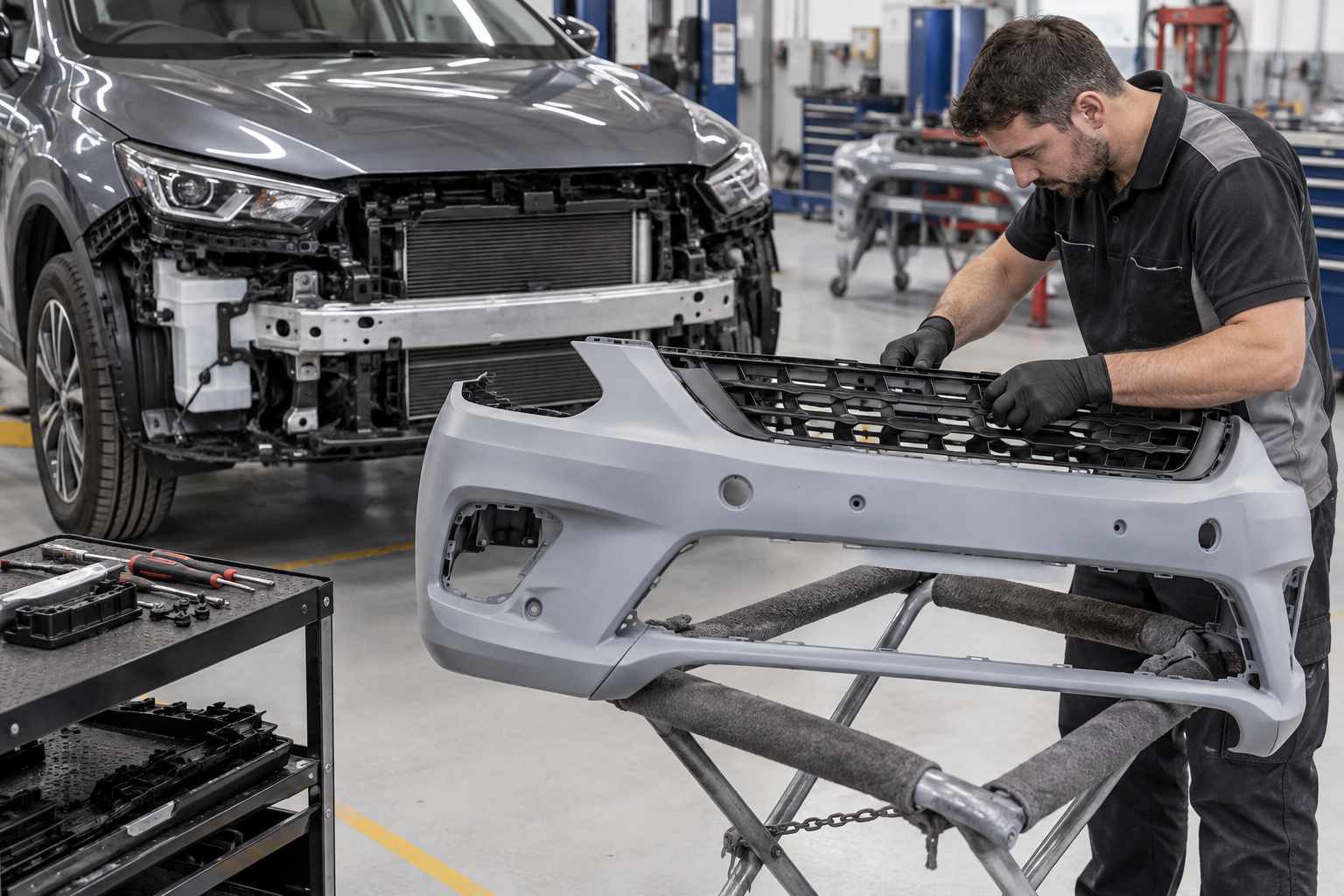
A bumper replacement is a new cover fitted to the car and painted to match it. A full front bumper replacement including paint is $800 to $2,500 or more. The spread is that wide because three separate things sit inside the one figure.
The part is the first. Bumper covers are model-specific and they arrive bare and primed, never in your colour. The fitting is the second. Grilles, fog light surrounds, brackets, clips and any sensors are moved across from the old cover to the new one. The paint is the third, and it is charged the same way it would be on a repair.
That is why the cost to fix front bumper damage varies so much between two cars with the same scrape. A base model hatch with a plain painted cover sits near the bottom of the range. A late model car with parking sensors, a camera, a chrome insert and a pearl finish sits near the top.
If the figure lands close to your excess, the claim decision is worth doing properly. Your product disclosure statement sets out what your policy covers and what it does not. Read that rather than going on what you have been told. We have set out whether a small repair is worth claiming on in more detail.
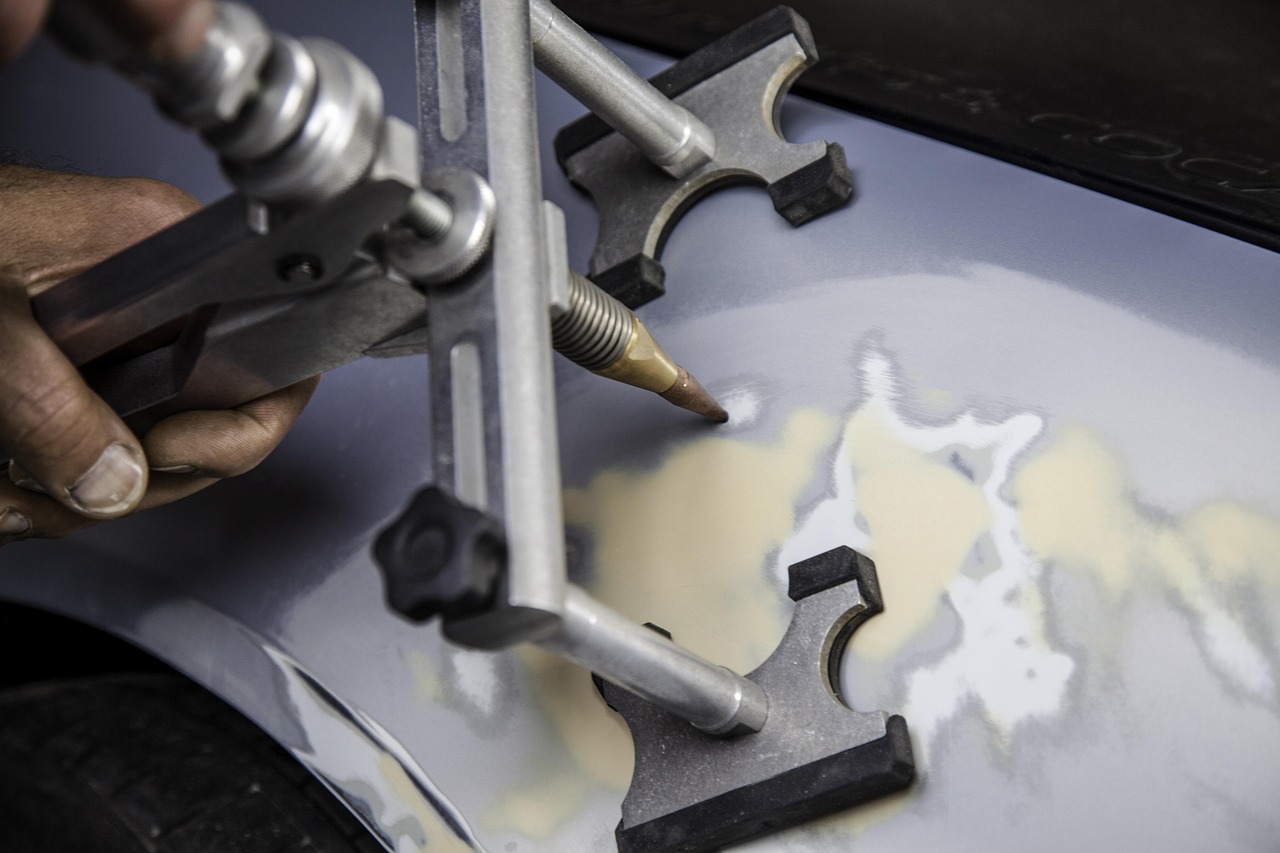
The front bumper on a car is not the steel bar most people picture. What you can see is a moulded plastic cover. Around 98 per cent of modern bumper covers are polypropylene or a TPO blend. TPO is short for thermoplastic olefin. It is plastic mixed with rubber, so it flexes and springs back instead of creasing. Behind that cover sit a foam absorber and a reinforcement bar, and those are the parts built to take a hit.
That construction is why a bumper is not fixed the way a steel panel is. Steel is pulled and beaten back into shape. A plastic cover is warmed, reshaped and welded, and missing material is built back up and sanded flat. Plastic welding and hot air welding are proper repair methods with training behind them, not a patch-up. Metal is judged on different grounds, and how the call gets made on a metal panel is its own question.
The front face of a bumper tells you how bad it looks. The back of it tells you what it will cost.
The thing that most often turns a repair into a replacement is the mounting tabs. These are the thin plastic clips and lugs moulded into the back edges of the cover. They hold it tight against the guards and the bonnet line. They snap easily, even in a slow knock. They cannot be welded back to full strength. Once they are gone the cover will not sit flush, however good the front face looks.
| Damage | Usual outcome | Why |
|---|---|---|
| Scuff or scratch in the paint | Repair | The plastic is sound, so it is sanded back and refinished. |
| Dent with the paint unbroken | Repair | The plastic can be warmed and pushed back into shape. |
| Crack or split in the face | Repair | Welding rebuilds the material, then the area is refinished. |
| Hole, or a torn lower section | Usually replace | Too much material is missing to rebuild to full strength. |
| Broken mounting tabs or clips | Usually replace | The cover cannot be held flush once the mounts are gone. |
There is a money line as well. Once the plastic work plus the paint gets close to what a new cover costs fitted and painted, replacing it is usually the better buy. That test is specific to plastic. Metal panels are dented rather than cracked, and they are priced per dent. That means what car dent repair costs works on a different basis again.
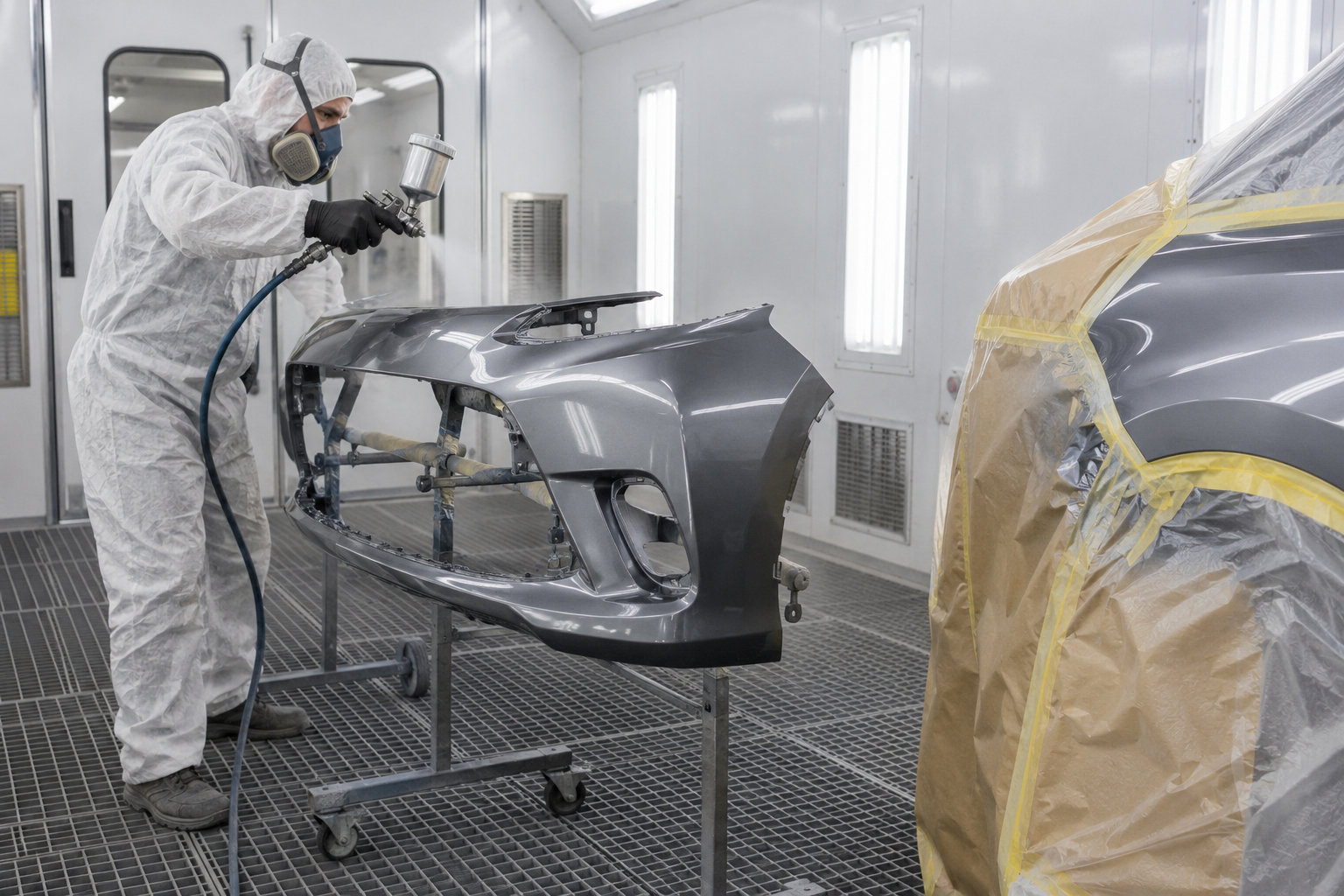
Paint on a bumper is quoted separately from the plastic work and runs $300 to $700. It is a separate trade with its own materials and booth.
Colour match is harder on a bumper than on a door, for a simple reason: it is plastic sitting next to metal. Plastic is sprayed over a different primer and with a flex additive. That lets the finish move with the panel instead of chipping off it. The same paint code can read very slightly differently across the two materials. Metallic and pearl finishes make that harder again. They carry fine flakes, and the way those flakes lie down changes with the spray pattern.
It is also why the guard or the bonnet edge sometimes appears on the quote. Blending the new colour a short way into the panels either side is what stops the eye finding a hard edge between them. It means spraying a panel that was never damaged. That looks wrong on a quote until you have seen the alternative in daylight.
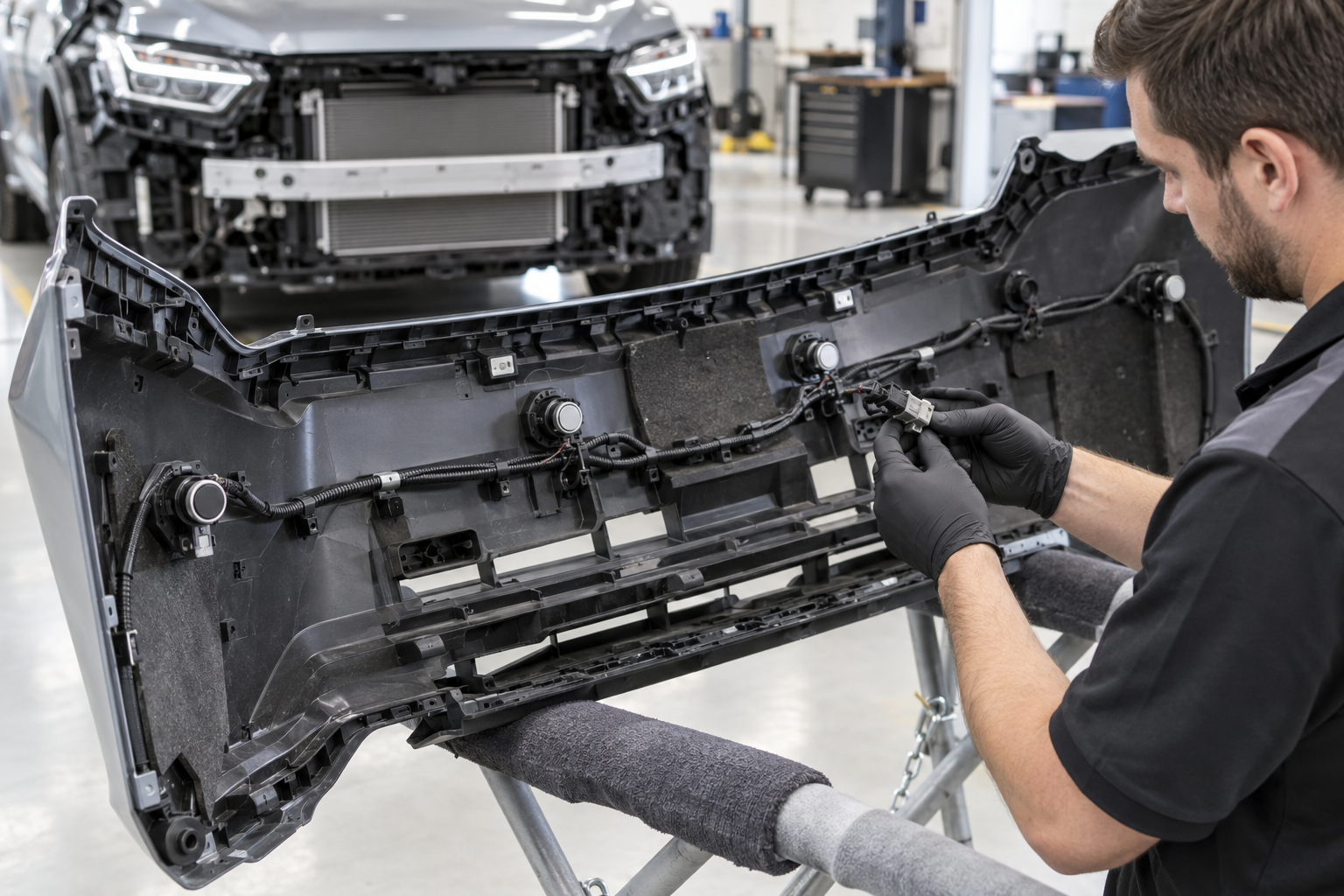
Plenty of bumpers now hold parking sensors, radar for cruise control and autonomous braking, and a forward-facing camera. If any of those sit behind the damaged area, they may need recalibrating once the bumper is back on the car. That is a separate line on the quote and it is not part of the paint or the plastic work.
A small looking front end knock can be dearer than the same knock further back. There is more on why minor front end damage costs more.
It is a moulded plastic cover, almost always polypropylene or a TPO blend. The parts designed to absorb an impact sit behind that cover rather than in it.
Usually, yes. The plastic is welded back together and the area refinished, so the original cover stays on the car. It only becomes a replacement when too much material is missing to rebuild to full strength.
Repairing is normally the cheaper of the two. The gap narrows as the plastic work and the paint together approach what a new cover costs fitted and painted.
Yes, wherever the repair breaks the paint surface. That is why plastic work and paint appear as two lines on a quote rather than one.
They may, if the sensors, radar or camera sit behind the area that was repaired or replaced. It is quoted on its own rather than folded into the paint price.
Take one photograph of the damaged corner straight on. Then turn the wheel and take a second one of the mounting points behind it. Those clips and lugs are what decide repair or replacement, and almost nobody thinks to photograph them. A quote written without them is half a guess. Send both through for a written quote and you get a number rather than a range. Bumper work at Automotive Panel Service sits inside panel beating. The plastic, the paint and any recalibration are priced in the one place.