
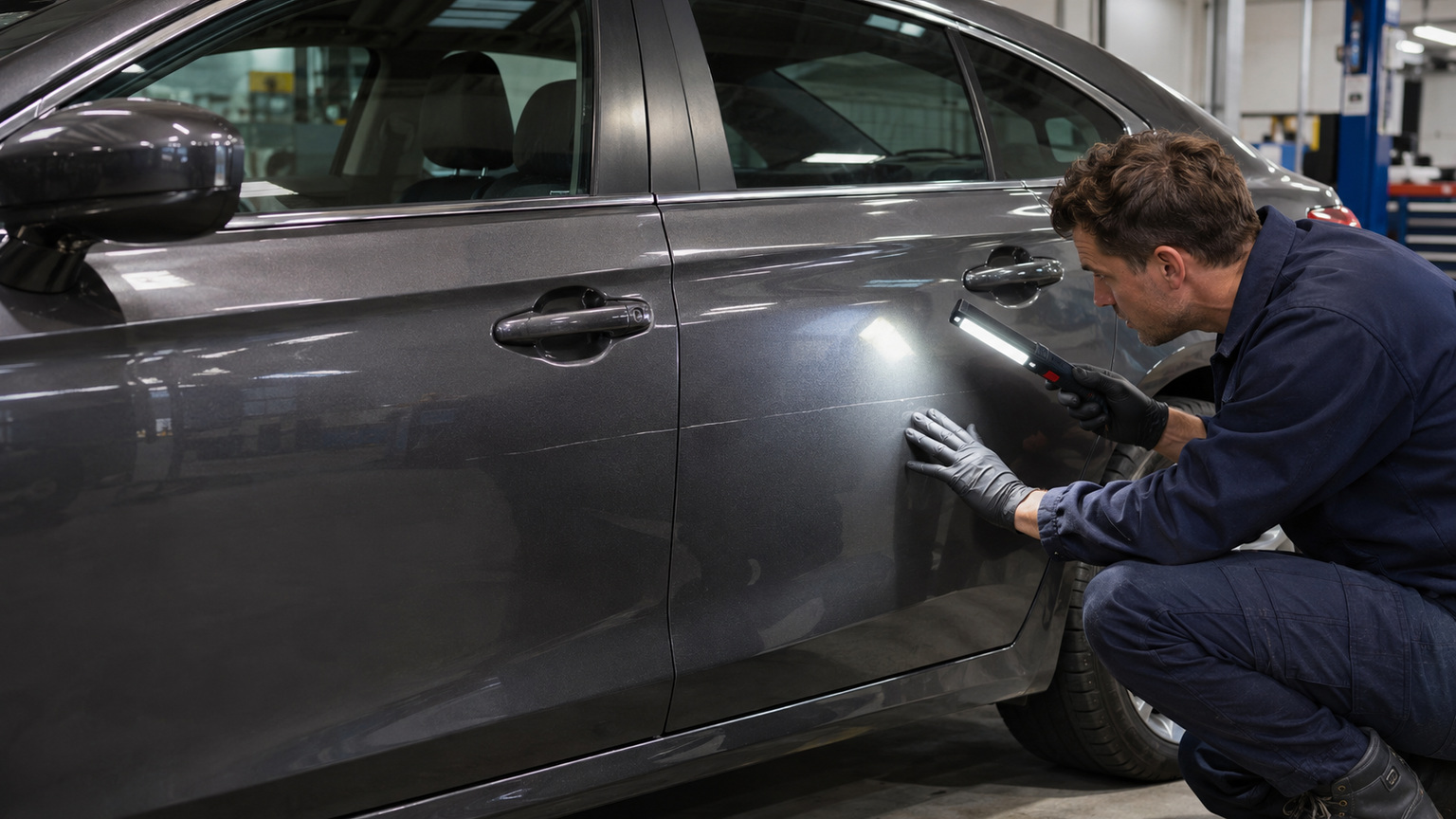
A keyed car can normally be fixed panel by panel, without repainting the whole car. Each panel the key line crosses is refinished, and the panel beside it may be painted as well so the new colour fades out evenly. Polish only removes the line if it stayed in the clear coat, the clear protective layer on top of the paint.
Walking out to a car left on a Richmond street overnight and finding a long scratch down one side is upsetting. It can feel personal, and the first worry is that the whole car now needs repainting. If the rest of the paint is in good condition, it doesn’t.
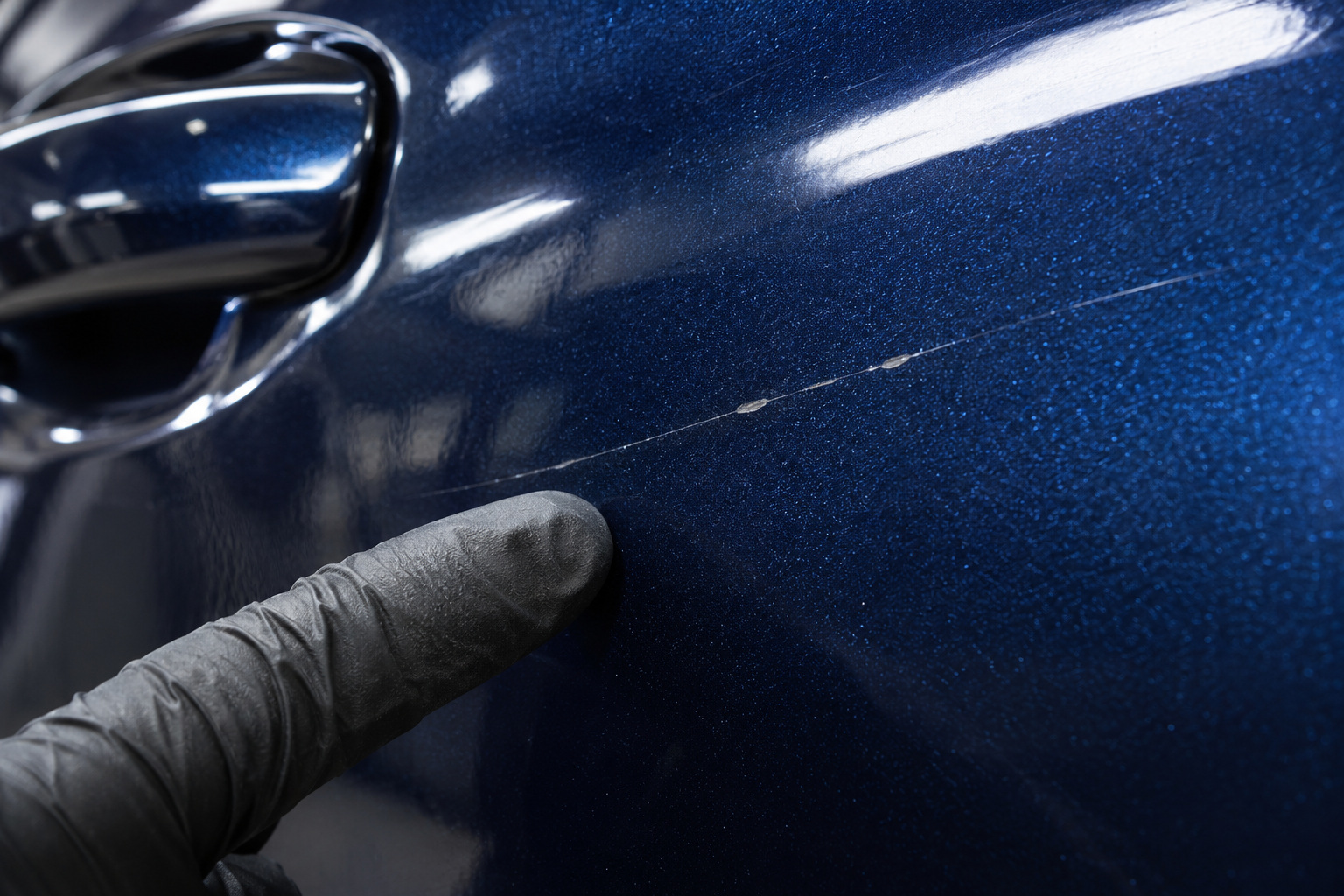
Car paint is built in layers. Primer goes on first to give the paint something to bond to, then the colour, then the clear coat over the top.
A key is a hard point pushed along the paint on purpose. That is why the line often cuts past the clear coat into the colour, the primer or the metal underneath. A brush against a pole or a shopping trolley is different. It often leaves paint transfer or a scuff sitting on the surface.
The depth decides what kind of repair you are looking at, so check how deep the scratch goes before you buy anything to fix it. If the line catches under your fingertip, or you can see primer or metal in it, polishing won’t remove it. Polish takes off a microscopic amount of clear coat to level the surface. It can’t put back paint that is missing.
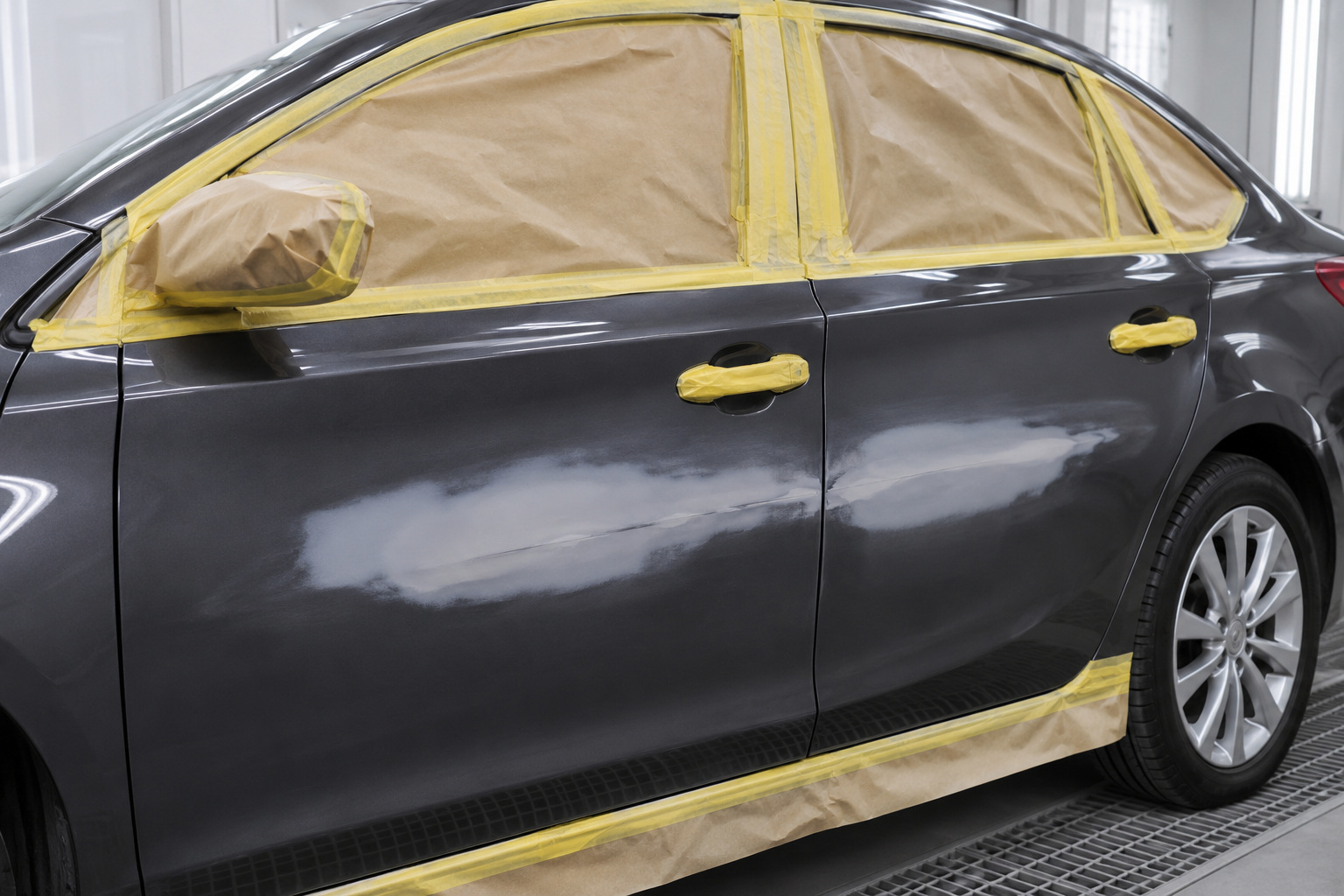
A key line is often long enough to run across a join, such as from the front door to the rear door, or from a rear door onto the rear quarter panel. Each panel it crosses is normally refinished as its own panel. That means it is sanded and prepared, primed where the damage has gone deep enough to need it, then given new colour and clear coat.
The panel next to the repair may be painted too. A join between panels is a hard edge that catches the light, so the painter fades the new colour out across the neighbouring panel instead of stopping right at the join. The painter’s side of that step is covered in why a respray gets blended.
That is still the damaged side of the car, not the whole car. A full respray is a separate decision, made when the paint is faded, peeling or chalky all over. If the key only touched one door, the reasoning in when a single panel respray makes sense applies instead.
How much of the car gets painted comes down to four things:
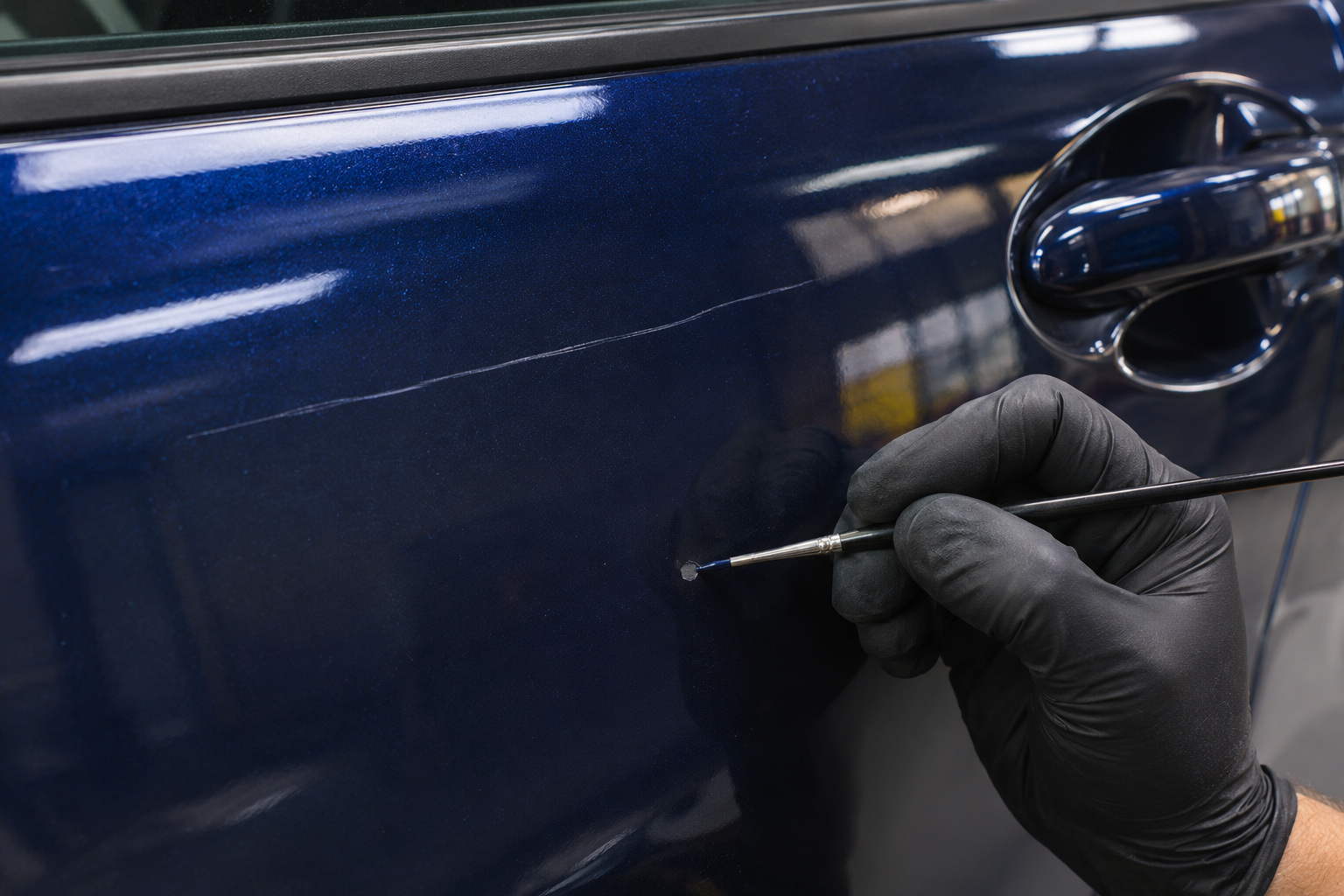
Touch-up paint suits tiny chips and small isolated marks. It makes them less obvious and helps seal the exposed spot. It is improvement rather than perfection, and a touched-up spot can still show in bright sun, especially on metallic, pearl or darker colours.
A key line is a different shape. Dabbing touch-up along the length of a door leaves a long, uneven strip of new paint, which is more likely to draw the eye than hide the damage.
For a line that long, refinishing each panel it crosses replaces the damaged layers instead of sitting on top of them. For a small mark on its own, the choice between polish, touch-up or car spray painting works differently, and a dab of paint can be the sensible option.
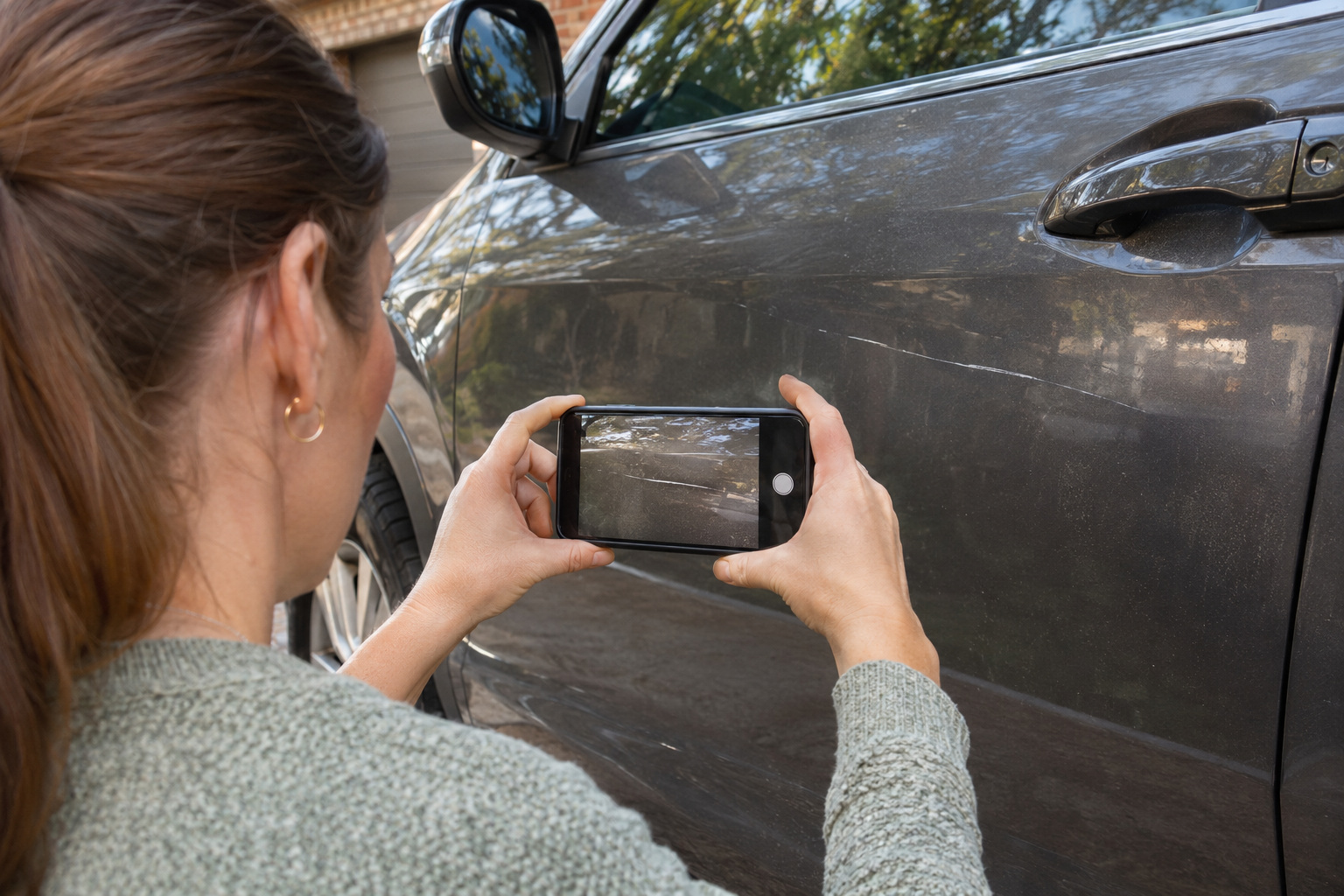
Keying is deliberate damage, which makes it a different event from a bump in a car park. Whether your policy covers it, what excess applies and what the insurer needs from you are all set out in your own policy wording. That wording is called the product disclosure statement, or PDS.
Check the PDS for whether your insurer wants the damage reported to police before you lodge anything.
Whichever way you go, photograph the whole length of the line first, close up and from a step back. Do it before any touch-up or any cleaning with abrasive products, so the record shows the damage as you found it.
Whether a claim is worth making is a separate question. The trade-offs are worked through in whether to claim a minor scratch on insurance.
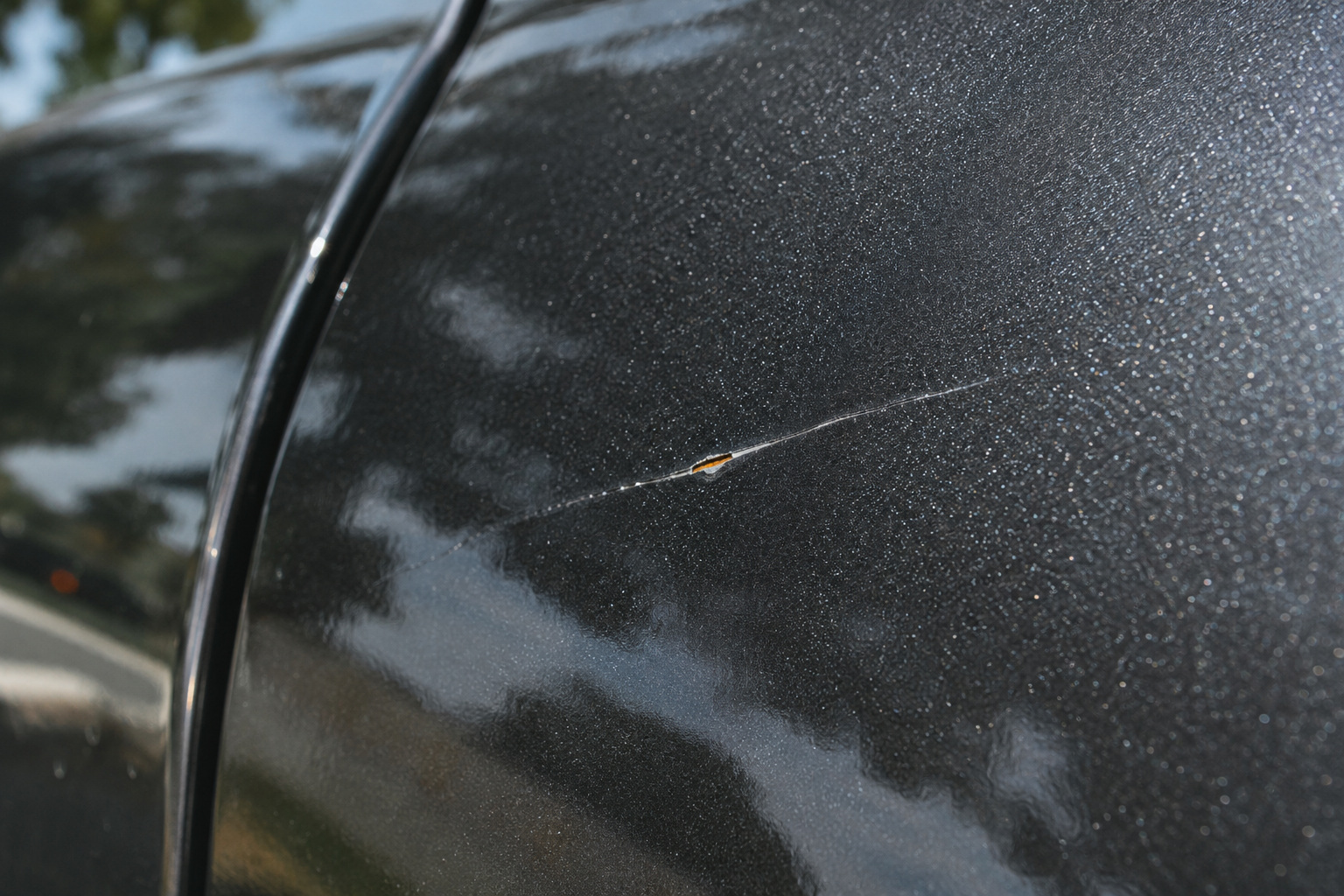
If you can see primer or bare metal in the line, that is the part not to leave. Bare metal can start to oxidise after wet weather and road grime. Surface rust starts where a scratch lets moisture reach the metal, and it is easier to deal with before it spreads.
Until the car is repaired:
Automotive Panel Service can look at the line at the Richmond workshop on Murphy Street and tell you which panels need refinishing. Spray painting work at the workshop runs from touch-ups to full resprays, so the repair can be sized to the panels the key touched. When you’re ready, you can request a quote online.