
You reverse into a bollard in a Richmond car park, get the bumper sorted, and the quote comes back with a line you didn’t expect: ADAS recalibration. It sounds technical, it adds to the bill, and it’s fair to ask what it is and why it’s there.
ADAS recalibration resets your car’s driver-assist sensors – the cameras, radar and parking sensors behind your panels and windscreen – back to factory settings after repair work moves them. On a car built with these systems, it isn’t an optional extra. Panel work near a sensor can shift it by a fraction of a degree, and that small shift is enough to throw the system off. Recalibration puts the sensor back where the carmaker set it.
ADAS stands for advanced driver-assistance systems. These are the safety features that watch the road and step in when needed. Most drivers use them every day without thinking about the name. They include:
All of these rely on cameras, radar and small sensors built into the windscreen, bumpers, grille and mirrors. When one of those parts is repaired or moved, the sensor behind it can shift out of position.
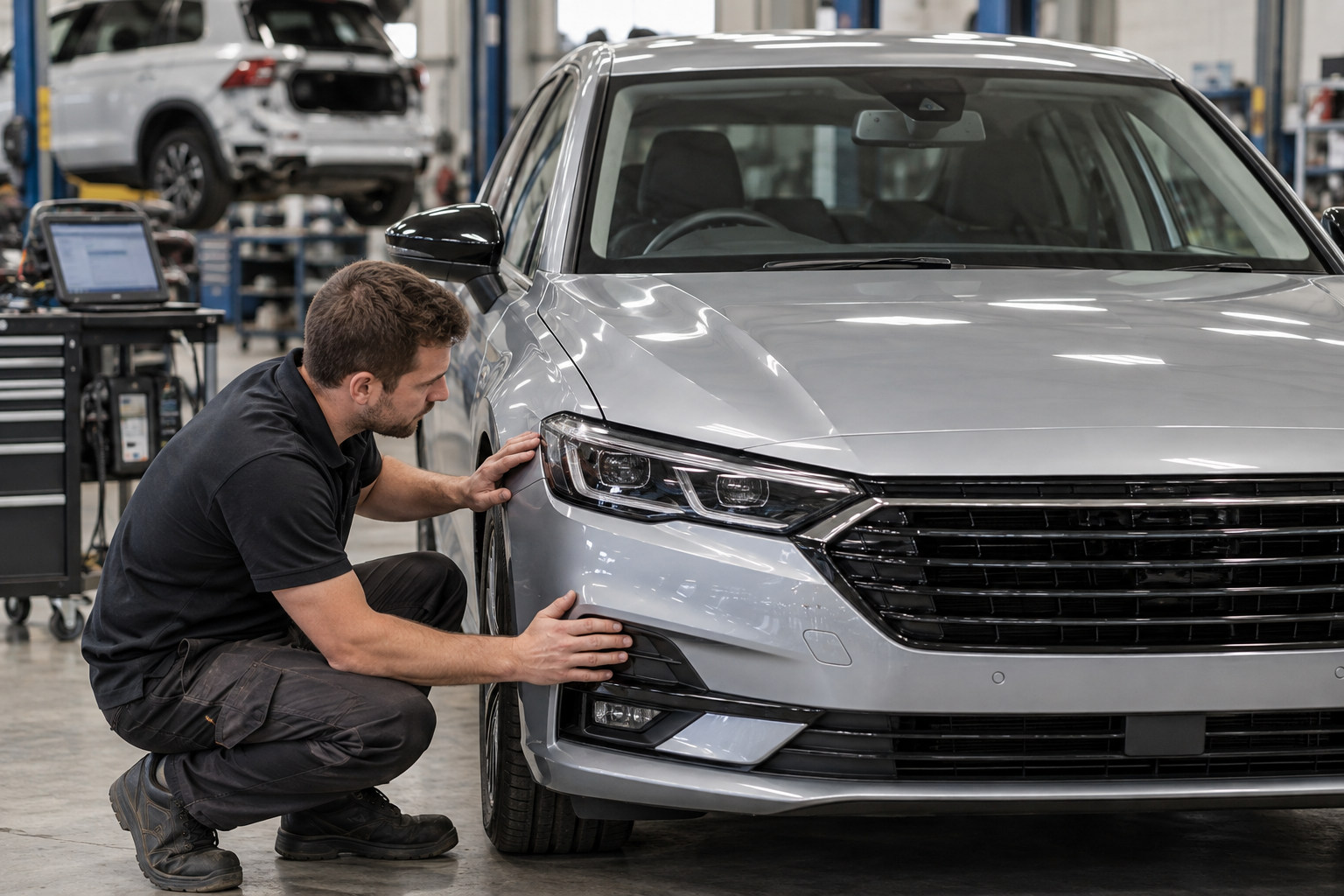
Recalibration is needed whenever repair work disturbs a sensor or changes the angle it sits at. That covers more jobs than most people expect.
Which sensors are involved depends on the make, model and what the carmaker asks for. Some cars need recalibration after a job like this. Some don’t. A scan of the car tells the repairer which systems are fitted and what each one needs.
| Repair work | Sensor affected | Why recalibration is needed |
|---|---|---|
| Windscreen replacement | Front-facing camera behind the mirror | The camera comes out with the glass, so it has to be realigned to the new screen. |
| Bumper or grille repair | Front radar, parking sensors | The radar for cruise control and AEB sits behind the bumper, so moving it shifts its aim. |
| Camera, radar or sensor replacement | The replaced part | A new sensor starts with no calibration and has to be set to factory spec. |
| Wheel alignment or suspension work | Front and side sensors | Changing ride height or the car’s geometry changes the angle the sensors see. |
| Structural or chassis repair | Several sensors at once | Straightening the body can move more than one mounting point together. |
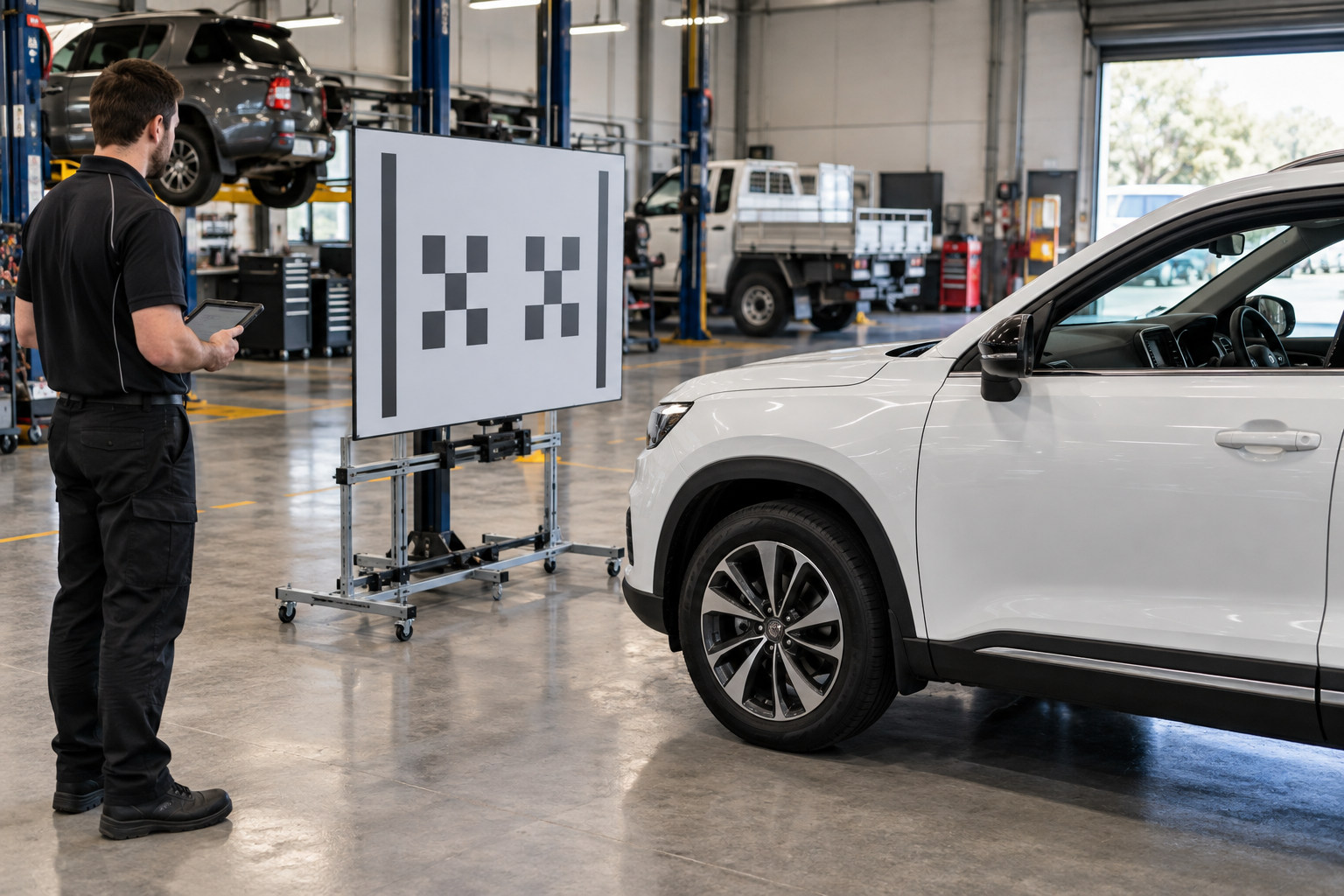
There are two ways to recalibrate, and the carmaker decides which one your car needs.
Static calibration happens in the workshop. The car stays still while printed targets are set at exact distances in front of it, and a scan tool resets the sensors against those targets.
Dynamic calibration happens on the road. A technician drives the car at set speeds with diagnostic gear plugged in, and the sensors reset themselves against real lane markings and traffic.
Some cars need one method. Some need both – static first, then a road drive to confirm it.
The carmaker decides whether your car needs static, dynamic, or both. The repairer follows that, not a preference.
A driver-assist sensor is set to a fraction of a degree. A camera that ends up a millimetre out of position can be reading the road several feet off by the time you’re at highway speed. That’s the gap between the system seeing a car in your lane and reading clear road ahead.
When a sensor is out, there’s often no warning light. The car feels normal while the safety system misjudges distance in the background. Two things can go wrong. The system can react when it shouldn’t, braking or warning on a clear road. Or it can miss a real hazard and not react at all. The second one is the dangerous one, because nothing tells you it’s happening.
A camera a millimetre out of position can be reading the road several feet off at highway speed.
This is why recalibration is treated as part of finishing a repair, not an add-on. The Motor Trades Association of Australia has warned repairers that skipping calibration, or failing to record it, can leave them legally exposed if an ADAS-related crash happens later. A repairer doing the job properly won’t let you waive it.
Cost depends on the car, how many sensors are involved, and whether it needs static, dynamic or both. Cars that need both methods, or that carry several sensors, cost more to recalibrate.
There’s no set price. The only accurate figure is a quote for your own car, once we know the make, model and the work involved, and we’ll include any recalibration in your written quote.
When the repair is part of an insurance claim, recalibration usually sits inside the claim, because it’s part of returning the car to a safe, finished state. Whether it’s covered, and whether an excess applies, comes down to your policy. Your product disclosure statement (PDS) is the document that sets out what’s included, so it’s the place to check before the work starts. For how claiming works after smaller damage, our guide on whether to claim on insurance walks through the maths.
Bring the quote in and we’ll go through it with you, including which sensors your car has and why they need resetting after the work. You can book that through our smash repair service, or send it over with a claim through our insurance claim management team.